Table of Contents
- The Unique Challenges of Roofing Historic Lake Bluff Homes
- Why Authentic Roof Matching Matters for Property Value and Character
- Common Historic Roofing Materials We Restore and Replicate
- How We Source and Match Slate, Shake, and Tile Profiles
- Our Restoration Process: Assessment, Documentation, and Craftsmanship
- Modern Solutions That Honor Original Design: Premium DaVinci Slate and Shake
- Navigating Local Permits, Preservation Guidelines, and Insurance Claims
- Why Lake Bluff Homeowners Trust Our 35+ Years of Exterior Expertise
- Scheduling Your Historic Roof Consultation With Owen Enterprises
- Frequently Asked Questions (FAQ)
The Unique Challenges of Roofing Historic Lake Bluff Homes
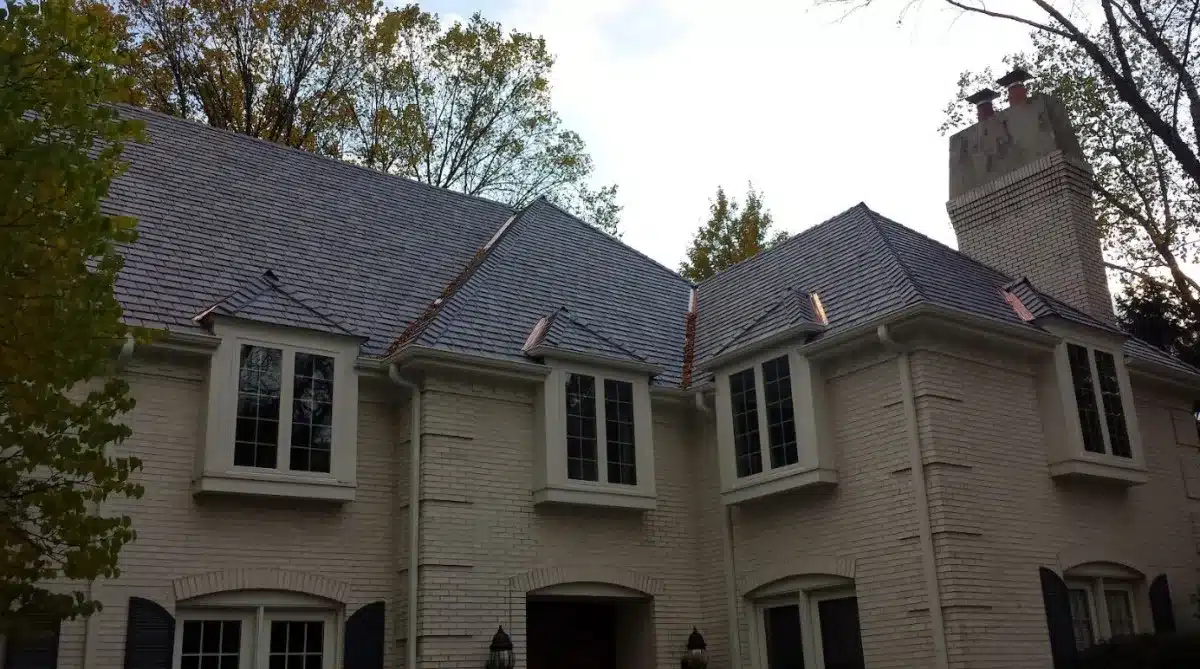
Lake Bluff’s tree-lined streets are home to some of the North Shore’s most architecturally significant residences, including early 1900s Tudor revivals, shingle-style cottages, and Prairie School homes designed during Chicago’s golden era of residential architecture. Roofing these homes is rarely a straightforward replacement job. Original materials may be discontinued, structural decks often need reinforcement, and decorative elements like copper finials, hand-cut hip caps, and graduated slate courses demand specialized skills.
We also see practical complications: steep pitches that make staging difficult, brittle slate that cracks under foot traffic, and flashing details that were custom-formed by craftsmen decades ago. Add in the lake-effect weather swings, freeze-thaw cycles, and ice damming risks common to Lake County, and you have a project that punishes shortcuts.
Quick takeaway: Before any historic roof project begins, insist on a contractor who walks the roof, documents existing conditions in detail, and discusses staging that protects fragile masonry and landscape features below.
Why Authentic Roof Matching Matters for Property Value and Character
A historic roof is not just weather protection. It is one of the most visible design elements on the house, often making up 40% or more of the front elevation’s visual mass. Replacing patterned slate with generic asphalt, or swapping hand-split cedar for thin machine-cut shingles, flattens the architectural story the home was designed to tell.
For Lake Bluff homeowners, this matters for three reasons:
- Resale value. Buyers in this market pay a premium for authenticity and walk away from homes that look “remuddled.”
- Neighborhood character. Lake Bluff’s historic streetscapes are part of why properties hold value, and each home contributes to that aesthetic.
- Insurance and appraisal. Like-kind, like-quality replacement standards often require period-accurate roofing materials when filing claims on designated or contributory homes.
Quick takeaway: Treat the roof as part of the home’s architectural identity, not a commodity purchase.

Common Historic Roofing Materials We Restore and Replicate
Across the homes we have worked on in Lake Bluff, Lake Forest, and the surrounding villages, a few materials appear again and again:
- Natural slate in grays, greens, purples, and reds, often laid in graduated or patterned courses
- Clay tile, including Ludowici barrel and flat profiles common on Mediterranean and Spanish Revival homes
- Hand-split or tapersawn cedar shakes on Tudor, English cottage, and shingle-style residences
- Standing seam and flat-lock copper on dormers, bays, turrets, and porch roofs
- Decorative metal like terne, zinc, and lead-coated copper for valleys, ridges, and finial caps
Each material has its own quirks. Slate requires hook or copper nail fastening over rosin-sized felt. Clay tile needs battens and a robust underlayment system. Cedar wants ventilation behind the field to extend its service life. Knowing these details is what separates a restoration from a replacement.
How We Source and Match Slate, Shake, and Tile Profiles
Matching is where most contractors fall short. We approach it as a sourcing and craftsmanship problem rolled into one.
For slate roof restoration, we identify the quarry of origin when possible, looking at color, grain, and weathering pattern. Vermont and Pennsylvania slates dominate North Shore homes from the late 19th and early 20th centuries, and many of those quarries still operate. When a quarry is closed, we work through salvage networks and reclaimed-slate suppliers to find tiles that blend into the existing field.
For cedar, we specify thickness, exposure, and cut method (hand-split versus tapersawn) to match the original texture. For clay tile, we measure barrel diameter, pan width, and headlap before sourcing replacements, since even small profile differences create visible seams.
Quick takeaway: Bring samples of the existing material to the consultation. A two-inch slate fragment or a single shake tells us more than a dozen photos.
Our Restoration Process: Assessment, Documentation, and Craftsmanship
Our historic roof restoration projects follow a consistent process designed to protect both the structure and the original design intent.

- On-site assessment. We inspect the roof field, flashings, decking, ventilation, and interior attic conditions. We note failure points, original details worth preserving, and prior repairs that need to be reversed.
- Photographic and dimensional documentation. Every elevation, ridge detail, valley, and decorative element is photographed and measured before work begins. This becomes our reference set during reinstallation.
- Material specification. We finalize sourcing for slate, shake, tile, or metal, including underlayment, fasteners, and flashing alloys appropriate to the era.
- Structural prep. Sagging rafters are sistered, decking is replaced with materials that accept the original fastening method, and ice and water protection is installed where code requires.
- Craftsmanship-led installation. Our crews hand-cut hips, ridges, and valleys, replicate exposure patterns, and form custom flashings in copper or coated steel.
- Final walkthrough. We review the completed roof with the homeowner against the documentation set so nothing is left to interpretation.
Modern Solutions That Honor Original Design: Premium DaVinci Slate and Shake
Not every Lake Bluff home is a candidate for natural slate or true cedar. Sometimes the original framing cannot support 800 pounds per square of stone. Sometimes the budget needs a smarter path. Sometimes a homeowner wants the look of slate with a 50-year warranty and Class 4 impact resistance.
This is where premium synthetic materials shine. Our DaVinci slate and shake installations replicate the chiseled edges, varied thickness, and color blending of natural materials at a fraction of the structural load. We can specify custom color blends to match an existing slate field, mix multiple widths to mimic graduated coursework, and detail hips and ridges to look hand-cut.
DaVinci synthetic slate is particularly useful when:
- Only a portion of the roof needs replacement and weight must stay consistent
- Hail and wind exposure favor a Class 4 impact-rated product
- The original quarry is closed and salvaged stock is limited
- Long-term maintenance budgets favor a single sourced product
Quick takeaway: Synthetic does not mean generic. Specified well, it preserves curb appeal while solving real structural and budget constraints.
Navigating Local Permits, Preservation Guidelines, and Insurance Claims
Lake Bluff and neighboring villages have building permit requirements that apply to most roof replacements, and certain properties fall under additional review when they are listed or sit within historic overlays. We handle the permit application, drawings, and material submittals so homeowners do not have to learn the process from scratch.
When storm damage is involved, the insurance side often determines whether period-accurate replacement is feasible. Our team includes licensed public insurance adjusters who advocate for like-kind, like-quality settlements, document the historic value of original materials, and work directly with carriers on scope and pricing. If you want a deeper look at how that coordination works, our overview of working with licensed public adjusters and roofing contractors walks through the 2026 process step by step.
Quick takeaway: Get the adjuster, contractor, and permit reviewer aligned early. It prevents costly mid-project surprises.

Why Lake Bluff Homeowners Trust Our 35+ Years of Exterior Expertise
Since 1989, we have worked on roofs, siding, and windows across the Chicago suburbs, and a meaningful share of that work has been on heritage homes where craftsmanship matters as much as material. That track record gives us:
- Deep relationships with slate quarries, cedar mills, and copper fabricators
- Crews trained on steep-slope and decorative work, not just asphalt tear-offs
- Licensed public insurance adjusters in-house for storm-damaged historic properties
- 24/7 emergency response when a tree limb or wind event opens up a roof at 2 a.m.
- Capability across the full exterior envelope, including siding, windows, decks, and pergolas
Historic roofing is the kind of work that rewards experience, and we have spent more than three decades earning ours on homes that matter to the families who own them.
Scheduling Your Historic Roof Consultation With Owen Enterprises
If you own a historic or character home in Lake Bluff and you are weighing a restoration, partial repair, or full reroof, the best next step is a no-pressure assessment. Here is what to have ready:
- A few exterior photos from each elevation
- Any documentation from prior roof work or insurance claims
- Notes on visible issues: leaks, missing pieces, sagging areas, ice damming history
- A sample of the existing material if one is available
From there, we will schedule an on-site visit, document the roof, walk you through material options, and prepare a written scope that respects the architecture and your budget. Reach out through owenenterprises.com or call our office to set up a consultation. We are happy to discuss whether natural slate, reclaimed cedar, hand-formed copper, or a premium synthetic system is the right fit for your home and your timeline.
Frequently Asked Questions (FAQ)
How do we match roofing materials on a historic Lake Bluff home?
We begin with a detailed site assessment, documenting the original profile, exposure, color variation, and weathering patterns of the existing roof. From there we source authentic salvaged slate, cedar, or tile when available, or specify period-accurate replacements such as DaVinci synthetic slate and shake that replicate the dimensions and texture of the original. Samples are reviewed on site under natural light before any installation begins.
Can DaVinci synthetic slate be used on a heritage home without compromising its character?
Yes. DaVinci composite slate and shake are engineered to mirror the thickness, irregular edges, and color blends of natural materials, which makes them well suited to homes where authenticity matters. They also offer improved impact resistance and a lighter structural load, which is helpful on older framing that was not designed for repeated slate replacement cycles.
What should we expect when working with local preservation guidelines and insurance claims?
We handle the permitting process with the Village of Lake Bluff and coordinate with any applicable historic review requirements before work begins. Our team includes licensed public insurance adjusters, so if storm damage is involved we can document the loss, prepare the claim, and advocate for materials that match the home’s original character rather than a standard substitute.