Table of Contents
- 1. Weight and Structural Demands on Your Home
- 2. Upfront Material and Installation Costs
- 3. Durability Against Chicago Weather Extremes
- 4. Color Consistency and Curb Appeal Options
- 5. Impact and Wind Resistance Ratings
- 6. Lifespan and Manufacturer Warranties
- 7. Environmental Sustainability and Recyclability
- 8. Long-Term Maintenance and Repair Considerations
- Frequently Asked Questions (FAQ)
1. Weight and Structural Demands on Your Home
Choosing a slate roof used to mean accepting a tradeoff: gorgeous curb appeal paired with serious structural, budget, and maintenance headaches. For Chicago suburban homeowners weighing DaVinci synthetic slate vs natural stone, the calculus has shifted. After more than 35 years installing premium roofs across Hinsdale, Naperville, Wheaton, Glen Ellyn, and the surrounding communities, we have seen which materials hold up to lake-effect winters, hail storms, and brutal freeze-thaw cycles, and which ones quietly drain your wallet for decades.
Here are the eight reasons DaVinci composite slate tiles consistently outperform quarried slate on the homes we work on.
Natural slate is heavy. A typical quarried slate roof loads your structure with 800 to 1,500 pounds per square (100 square feet), which often forces homeowners to reinforce rafters, trusses, and load-bearing walls before installation can even begin. On older Chicago suburban homes built in the 1950s through 1990s, that engineering work can add tens of thousands of dollars and weeks of delays.
DaVinci synthetic slate weighs roughly 280 pounds per square, which is comparable to a heavyweight asphalt shingle. That means no structural retrofits, no engineering reports, and no surprise framing bills.
Takeaway: Before you commit to natural slate, get a structural assessment. In most cases, we can install DaVinci on your existing roof deck with zero reinforcement, saving you significant time and money.
2. Upfront Material and Installation Costs
Quarried slate is among the most expensive roofing materials available, often running $1,500 to $3,000 per square installed once you factor in specialty labor, custom flashings, and shipping from quarries in Vermont, Pennsylvania, or overseas. Skilled slate installers are a shrinking trade, which keeps labor rates climbing every year.
Composite slate tiles cost roughly 40 to 60 percent less to install. The tiles cut with standard roofing tools, install with familiar techniques, and ship from domestic manufacturing facilities with predictable lead times.

Takeaway: If you love the slate aesthetic but the natural slate quote made you flinch, request a DaVinci estimate. You will typically get the same visual impact for the price of a high-end architectural or metal roof.
3. Durability Against Chicago Weather Extremes
Chicagoland roofs absorb a punishing climate: 20 below zero in January, 95 degrees in July, ice dams in February, and hailstorms in May. Natural slate is dense and beautiful, but it is also brittle. Freeze-thaw cycles cause delamination, where the layered stone splits apart, and tile cracking is common after hail events or even a roofer walking the wrong path.
DaVinci tiles are engineered from a virgin resin polymer with UV and impact stabilizers built into every tile. They flex slightly under impact rather than shattering, and they shrug off the freeze-thaw cycle that slowly destroys natural stone.
Takeaway: Ask any roofer how many slate repairs they make each spring in our area. Then ask how many composite slate repairs they make. The difference tells the whole story.
4. Color Consistency and Curb Appeal Options
Natural slate color depends entirely on the geological seam it was quarried from. Two pallets from the same quarry can vary noticeably, and matching replacement tiles 15 years from now is nearly impossible. Many natural slates also “weather” unpredictably, with some greens turning buff and some purples fading to gray.
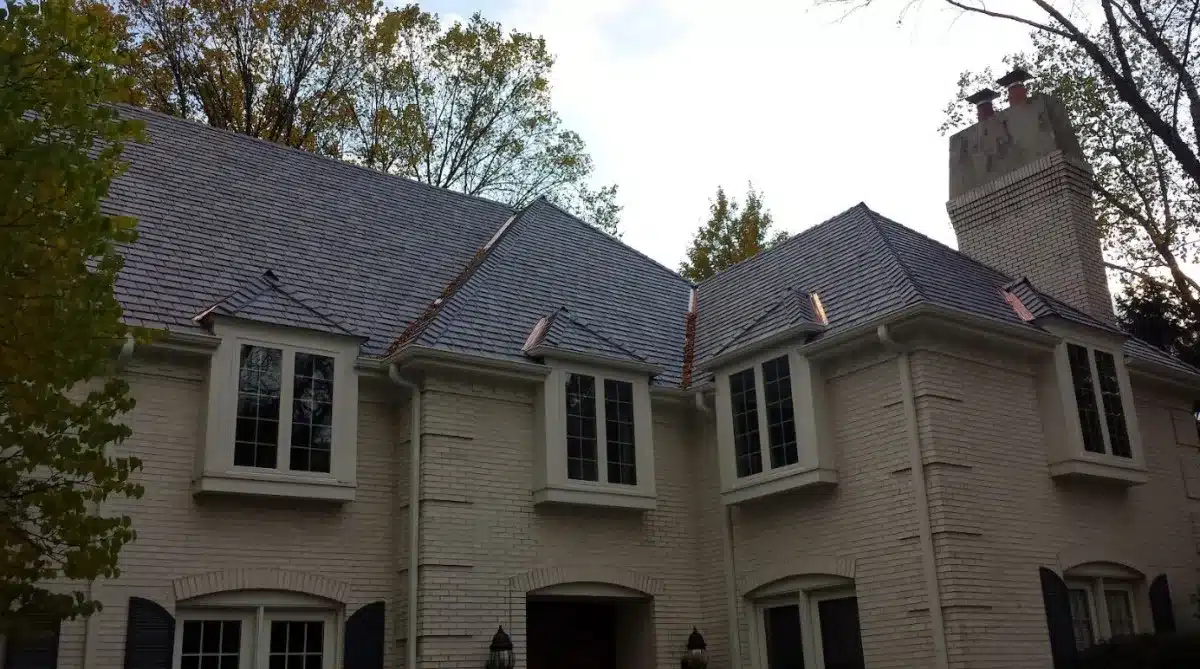
DaVinci offers more than 50 standard color blends and unlimited custom blends, with consistent color from batch to batch. You can specify a multi-width, multi-color blend that mimics aged European slate, or a uniform Bellaforte profile for a cleaner contemporary look. The color is molded throughout the tile, so chips and scratches do not expose a different base material.
Takeaway: Order a sample board and lay it against your siding, brick, and trim in natural light before deciding. Our design team helps homeowners build custom blends that complement the existing exterior.
5. Impact and Wind Resistance Ratings
Insurance carriers in Illinois increasingly scrutinize hail and wind claims, and your roof’s certified ratings matter. Natural slate carries no standardized impact rating because performance varies by quarry, thickness, and individual tile.

DaVinci synthetic slate holds a Class 4 impact rating (the highest available under UL 2218) and a Class A fire rating, and is tested to withstand wind speeds up to 110 mph. Many insurance carriers offer premium discounts for Class 4 roofs, which can offset a meaningful portion of the installation cost over time.
Takeaway: Call your insurance agent before signing a contract and ask what discount applies to a Class 4 impact-rated roof. Then ask what coverage limits apply if you stay with natural slate.
6. Lifespan and Manufacturer Warranties
Natural slate can last 100 years or more in ideal conditions, which is the headline most homeowners hear. The fine print: that lifespan assumes the underlayment, flashings, fasteners, and slope all cooperate, and that the slate itself was quality-graded. Most natural slate roofs need significant repair work within 30 to 50 years, and warranty coverage from quarries is typically limited or nonexistent.
DaVinci backs its tiles with a 50-year limited lifetime warranty that is transferable to subsequent owners. When paired with proper installation by certified crews, you get documented, enforceable coverage rather than a vague promise about geological durability.
Takeaway: Read the warranty document, not the brochure. A real 50-year manufacturer warranty paired with our workmanship coverage is worth more than a verbal estimate of 100-year stone life. Our exterior warranties and maintenance guide walks through what to look for.
7. Environmental Sustainability and Recyclability
Natural slate carries a heavy environmental footprint that rarely gets discussed. Quarrying consumes energy, generates significant waste rock, and the finished product often travels thousands of miles by ship, rail, and truck before reaching a Chicago job site.
DaVinci tiles are manufactured in Kansas, contain no harmful chemicals, and are 100 percent recyclable at end of life. The manufacturing process generates minimal waste, and tile offcuts from your installation go back into the production stream. For homeowners pursuing energy-efficient or LEED-conscious renovations, composite slate fits cleanly into the project.
Takeaway: If sustainability factors into your decisions, ask for the environmental product declaration. The numbers favor composite slate by a wide margin.
8. Long-Term Maintenance and Repair Considerations

When a natural slate cracks (and they do), repair is a specialty job. You need a slater who can source matching tiles, remove the broken piece without damaging neighbors, and reinstall using copper hooks or nails. Finding that craftsperson 20 years from now is a real risk as the trade shrinks.
DaVinci repairs use the same tiles, the same color blend, and the same installation techniques that any qualified roofing contractor can perform. Replacement tiles remain available decades after installation because manufacturing is current and ongoing.
We also offer 24/7 emergency roofing service and in-house licensed public insurance adjusters, so if a storm does damage your roof, we handle the claim, the temporary protection, and the permanent repair under one roof. Working with certified DaVinci slate installers ensures your warranty stays intact and your repairs are done correctly.
Takeaway: Plan for the next 50 years, not just the next 5. A roof that any qualified contractor can service is worth more than a roof that requires a vanishing specialty trade.
The Clear Choice for Chicago Suburban Homes
When you weigh structural demands, installation cost, weather durability, design flexibility, certified performance ratings, warranty strength, environmental impact, and lifetime maintenance, DaVinci composite slate is the standout among luxury roofing materials and the strongest of the natural slate alternatives available today. You get the timeless slate aesthetic without the brittleness, weight, cost, or sourcing headaches.
If you are considering a slate roof comparison for your home in the Chicago suburbs, we would be glad to walk your property, review your structure, and build a custom DaVinci color blend that complements your exterior. With more than 35 years of local experience and certified installation crews, we deliver the roof that should have been the obvious choice all along.
Frequently Asked Questions (FAQ)
Is DaVinci synthetic slate strong enough to handle Chicago winters?
Yes, and in our experience it often outperforms natural slate in our climate. DaVinci composite tiles carry a Class 4 impact rating and a Class F wind rating up to 110 mph, which helps them resist the freeze-thaw cycles, hail, and lake-effect storms common across the Chicago suburbs. Natural slate can crack or delaminate under these same conditions.
Will a DaVinci synthetic slate roof require structural reinforcement on our home?
In most cases, no. Natural slate weighs roughly 800 to 1,500 pounds per square, which frequently requires us to reinforce the framing before installation. DaVinci tiles weigh about 280 pounds per square, so we can typically install them directly over standard residential framing without additional structural work.
How does long-term maintenance compare between synthetic and natural slate?
We find synthetic slate to be considerably easier to maintain over its lifespan. Individual DaVinci tiles can be replaced without the specialized slate-working skills required for natural stone, and the color and profile remain consistent across production batches. Natural slate repairs often involve sourcing matching stone and hiring increasingly rare slate specialists, which adds time and cost.