Table of Contents
- The Unique Roofing Challenges Facing Chicago's Historic Homes
- Why Authentic Slate and Cedar Shake Fall Short Today
- How DaVinci Slate and Shake Replicates Historic Character
- Architectural Authenticity for Chicago's Heritage Neighborhoods
- Performance Benefits: Durability, Weather Resistance, and Warranty Protection
- Our 35+ Years of Expertise Installing Premium DaVinci Roofing
- Navigating Historic District Guidelines and Approval Processes
- Caring for Your DaVinci Roof Through Chicago's Seasons
- Schedule a Consultation for Your Historic Home
- Frequently Asked Questions (FAQ)
The Unique Roofing Challenges Facing Chicago’s Historic Homes
Chicago’s historic neighborhoods tell stories through their rooflines. From Oak Park’s Prairie-style masterpieces to the Queen Anne Victorians of Evanston and the Tudor Revivals of Hinsdale, these homes carry architectural details worth preserving. The roof is often the most prominent of those details, and choosing the right replacement material can either honor a home’s heritage or undermine decades of character.
We’ve spent more than three decades helping Chicago suburban homeowners protect both the structure and the soul of their historic properties. Here’s what we’ve learned about why DaVinci slate and shake has become our recommended solution for heritage homes.
Historic homes in the Chicago area face a difficult combination of pressures. Original slate and cedar roofs installed 80 to 120 years ago are nearing the end of their service life. Many homeowners are dealing with cracked tiles, slipped shakes, exposed underlayment, and flashing details that no longer keep water out.
Add Chicago’s climate to the equation and the challenge grows. Roofs here endure:
- Freeze-thaw cycles that can fracture natural stone and split aged wood
- Heavy lake-effect snow loads that strain weakened decking
- Summer hailstorms and 60+ mph straight-line winds
- UV exposure that bakes organic materials for months
Many of these homes also sit within designated historic districts, meaning replacement materials must satisfy preservation guidelines while standing up to weather that grows more volatile each year.
What to do next: If your roof is more than 60 years old or showing visible damage, schedule a professional inspection before the next storm season rather than waiting for active leaks.
Why Authentic Slate and Cedar Shake Fall Short Today
Natural slate and cedar shake are beautiful materials, but they come with serious drawbacks in 2026. Quarried slate can weigh 800 to 1,500 pounds per square, which often requires structural reinforcement that adds tens of thousands of dollars to a project. Quality varies widely by quarry, and sourcing matching replacement tiles for repairs has become increasingly difficult.
Cedar shake faces its own issues. Even premium grades are vulnerable to:

- Rot and mold in our humid summers
- Insect damage and moss growth
- Curling and splitting from freeze-thaw stress
- Class A fire concerns in dense suburban neighborhoods
- Insurance premium increases or coverage limitations
Both materials also demand frequent maintenance and carry comparatively short warranties when measured against modern composite alternatives. For homeowners who want historic character without the headaches, the math rarely favors authentic materials anymore.
How DaVinci Slate and Shake Replicates Historic Character
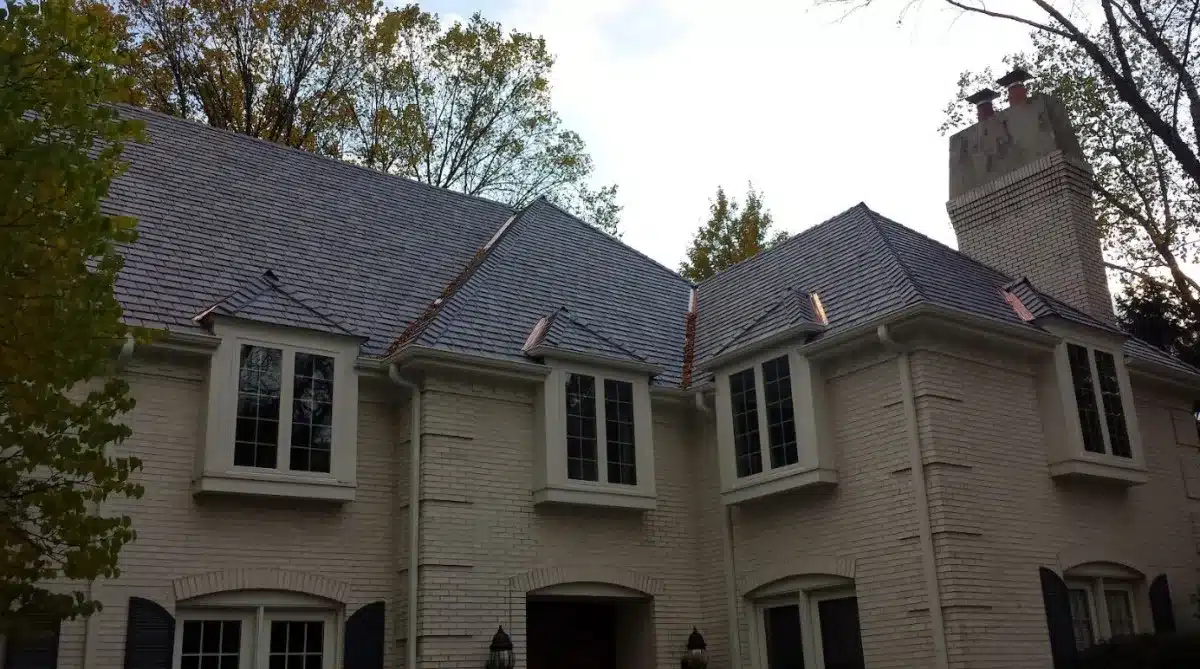
DaVinci roofing is a premium polymer composite engineered specifically to mirror the look of hand-split shake and quarried slate. The tiles are molded from actual natural samples, so every shadow line, chiseled edge, and grain variation reflects the real thing. From the ground, even trained eyes have a hard time telling the difference.
What separates DaVinci slate and shake from earlier synthetic products is the depth of customization. Homeowners can specify:
- Multi-width tile patterns that match original installations
- Custom color blends pulled from a 49-color palette
- Variable thickness profiles for authentic shadow lines
- Straight or staggered coursing to fit period architecture
For a 1910 Tudor with weathered gray slate or a 1925 Craftsman with warm cedar tones, we can build a custom blend that disappears into the neighborhood’s existing aesthetic.
Architectural Authenticity for Chicago’s Heritage Neighborhoods
The Chicago suburbs are home to some of the country’s most architecturally significant residential streetscapes. In communities like Oak Park, Evanston, Wilmette, Hinsdale, Riverside, and Lake Forest, the roofline contributes as much to a home’s identity as its windows, siding, or trim work.
A few examples of how we match materials to architectural style:
- Prairie and Foursquare homes: Multi-width slate profiles in muted greens, grays, and purples that echo Wright-era palettes
- Queen Anne Victorians: Bellcast and fish-scale patterns with mixed color blends for layered visual texture
- Tudor Revivals: Heavy shake profiles in weathered browns to suggest age and craftsmanship
- Colonial Revivals: Uniform slate in classic black, gray, or slate-green for symmetry and restraint
This level of specificity is what historic district commissions look for, and it’s what neighbors notice when a renovation is done right.
Performance Benefits: Durability, Weather Resistance, and Warranty Protection

Authentic character is only half the value proposition. DaVinci products are engineered for modern performance standards that natural materials cannot match.
Key performance specifications include:
- Class 4 impact resistance, the highest UL 2218 rating, which often qualifies homeowners for insurance premium discounts
- Class A or Class C fire ratings depending on installation assembly
- 110 mph wind warranty with proper installation
- 50-year limited lifetime warranty that’s transferable to a future owner
- UV stabilizers built into the polymer to prevent fading
The tiles also weigh roughly a quarter of what natural slate does, eliminating most structural reinforcement requirements. For homeowners thinking about long-term value, that warranty and the avoided maintenance costs frequently make composite the more economical choice over a 30-year window.
Our 35+ Years of Expertise Installing Premium DaVinci Roofing
Specifying DaVinci is one thing. Installing it correctly on a complex historic roof is another. We’ve spent more than 35 years working on Chicago suburban homes, and that experience matters when a project involves intricate dormers, turrets, copper valleys, decorative ridge caps, and century-old decking that needs evaluation before new material goes down.
Our crews are trained and certified DaVinci slate installers, and we manage every project from tear-off through final inspection. That includes proper underlayment selection, ice and water shield placement at vulnerable details, ventilation upgrades, and flashing fabrication that matches original profiles.
We also keep licensed public insurance adjusters on staff. When storm damage is involved, we help homeowners document losses and negotiate fair settlements so the replacement project actually gets fully funded.
Navigating Historic District Guidelines and Approval Processes
Replacing a roof in a designated historic district means working through a Certificate of Appropriateness or similar review before any tear-off begins. Each municipality handles this differently, and the timelines can stretch from a few weeks to several months.
We help homeowners through the process by:
- Preparing material specification packets with manufacturer documentation
- Providing physical product samples for commission review
- Submitting color blend renderings showing the finished roof in context
- Attending preservation commission meetings when needed
- Coordinating with architects or preservation consultants on complex projects
DaVinci has been approved in historic districts across the country, including several within the Chicago suburbs. That track record makes commission approvals significantly smoother than introducing an untested product.

What to do next: Before submitting any application, confirm whether your property is individually landmarked or sits within a district overlay. The requirements differ.
Caring for Your DaVinci Roof Through Chicago’s Seasons
One of the practical advantages of composite roofing is how little it asks of you year to year. Still, a few seasonal habits will keep it performing at its best through Chicago’s weather swings.
A simple annual checklist:
- Spring: Clear debris from valleys and gutters after the last freeze
- Summer: Inspect flashing and sealants after major storms
- Fall: Remove leaves trapped behind chimneys and dormers
- Winter: Monitor for ice dam formation at eaves and address ventilation issues promptly
Unlike cedar, there’s no staining, sealing, or treating required. Unlike natural slate, you won’t be hunting down matching replacement tiles a decade from now. We offer maintenance inspections for homeowners who’d rather have a professional handle the seasonal check, and our 24/7 emergency response is available if a major storm rolls through.
Schedule a Consultation for Your Historic Home
Replacing the roof on a historic home is one of the most consequential decisions a homeowner will make. The right material protects your investment, honors your home’s architectural legacy, and stands up to whatever the next 50 years of Chicago weather brings.
We’d be glad to walk your property, evaluate your existing roof, and put together a detailed proposal that includes DaVinci product samples, custom color blends, and a clear timeline. If your project involves a historic district, we’ll outline the approval steps and handle the documentation.
Reach out through owenenterprises.com to schedule a consultation. Whether you’re planning a proactive replacement or dealing with active storm damage, we’re ready to help you preserve what makes your home worth preserving.
Frequently Asked Questions (FAQ)
How does DaVinci slate roofing compare to authentic slate for historic Chicago homes?
DaVinci composite slate replicates the depth, texture, and color variation of quarried slate while weighing a fraction of the original material. This means we can install it on historic homes without the structural reinforcement that natural slate often requires, and it stands up better to Chicago’s freeze-thaw cycles, hail, and high winds. The visual result satisfies most historic district review boards while delivering a 50-year limited warranty.
Will DaVinci slate or shake be approved in our Chicago historic district?
In most of the historic districts we work in across the Chicago suburbs, DaVinci products have been approved because they preserve the architectural character that review boards are tasked with protecting. We handle the documentation, product samples, and board presentations as part of our project process, and we draw on more than 35 years of local experience to anticipate the questions commissioners typically ask. Approval timelines vary by municipality, so we recommend starting the conversation early.
What kind of maintenance does a DaVinci roof require through Chicago winters?
DaVinci tiles resist moisture absorption, cracking, and the curling that affects natural cedar and slate, so seasonal upkeep is minimal. We recommend an annual inspection to clear debris from valleys and gutters, check flashing around chimneys and dormers, and confirm no tiles were displaced by severe storms. If damage does occur, our team is available 24/7 for emergency repairs and can match replacement tiles to your existing roof.