Table of Contents
- The Preservation Challenge Facing Lake Bluff Historic Homes
- Why Authentic Slate and Cedar Shake Matching Matters
- Our 35-Year Approach to Historic Roof Restoration
- Sourcing and Matching Original Slate Profiles, Colors, and Textures
- Cedar Shake Selection: Grade, Cut, and Weathering Considerations
- DaVinci Synthetic Slate and Shake as a Long-Term Alternative
- Navigating Lake Bluff Architectural Review and Permitting
- Protecting Your Investment: Insurance Claims and Storm Damage Support
- What to Expect During Your Historic Roof Project With Us
- Frequently Asked Questions (FAQ)
The Preservation Challenge Facing Lake Bluff Historic Homes
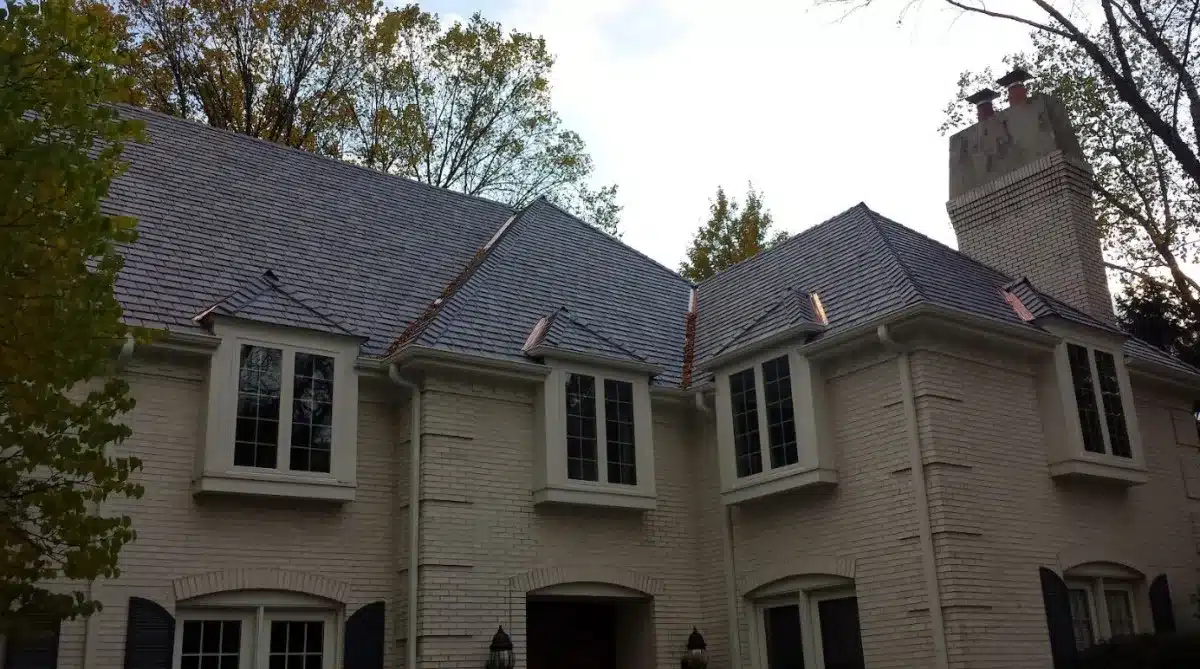
Lake Bluff’s architectural character runs deep, from turn-of-the-century Queen Annes near the ravines to Tudor Revivals and grand estates along Sheridan Road. Many of these homes still wear their original slate or cedar shake roofs, and after 80 to 120 years of Chicago winters, those roofs are asking for attention.
The challenge isn’t just replacing worn material. It’s honoring the original design intent while meeting modern performance standards, local ordinances, and insurance realities. A poorly matched roof can strip a landmark home of its character and reduce its value. A well-matched restoration protects both the structure and the story.
Takeaway: Before any tear-off begins, document your existing roof with detailed photos of the field, ridges, hips, valleys, and any decorative patterns. These details guide accurate replacement.
Why Authentic Slate and Cedar Shake Matching Matters
Historic roofing is one of the most visible architectural features on a home. When the profile, color blend, exposure, or shadow line is wrong, the whole facade feels off, even to visitors who can’t name why. Assessors and preservation boards notice immediately.
Authentic matching matters for three reasons:
- Property value. Buyers of historic homes pay premiums for authenticity. A period-accurate roof replacement can add measurable resale value.
- Approval and compliance. Lake Bluff’s historic preservation guidelines often require in-kind materials or approved equivalents.
- Performance longevity. Original roof designs used specific pitches, exposures, and flashing details for a reason. Respecting them prevents ice dams, wind-lift damage, and premature failure.
Historic home roofing is a specialty, and shortcuts here tend to become expensive corrections later.
Our 35-Year Approach to Historic Roof Restoration
We’ve spent more than three decades restoring roofs across the North Shore and Chicago suburbs, and we’ve refined a process that respects both the craft and the calendar. Every historic project we take on follows the same disciplined path:

- On-site assessment with attic and exterior inspection, moisture readings, and structural review.
- Material analysis of existing slate quarry source, shake grade, and weathering pattern.
- Preservation coordination with the homeowner, architect if involved, and Lake Bluff’s review authorities.
- Sample approval before any bulk order is placed.
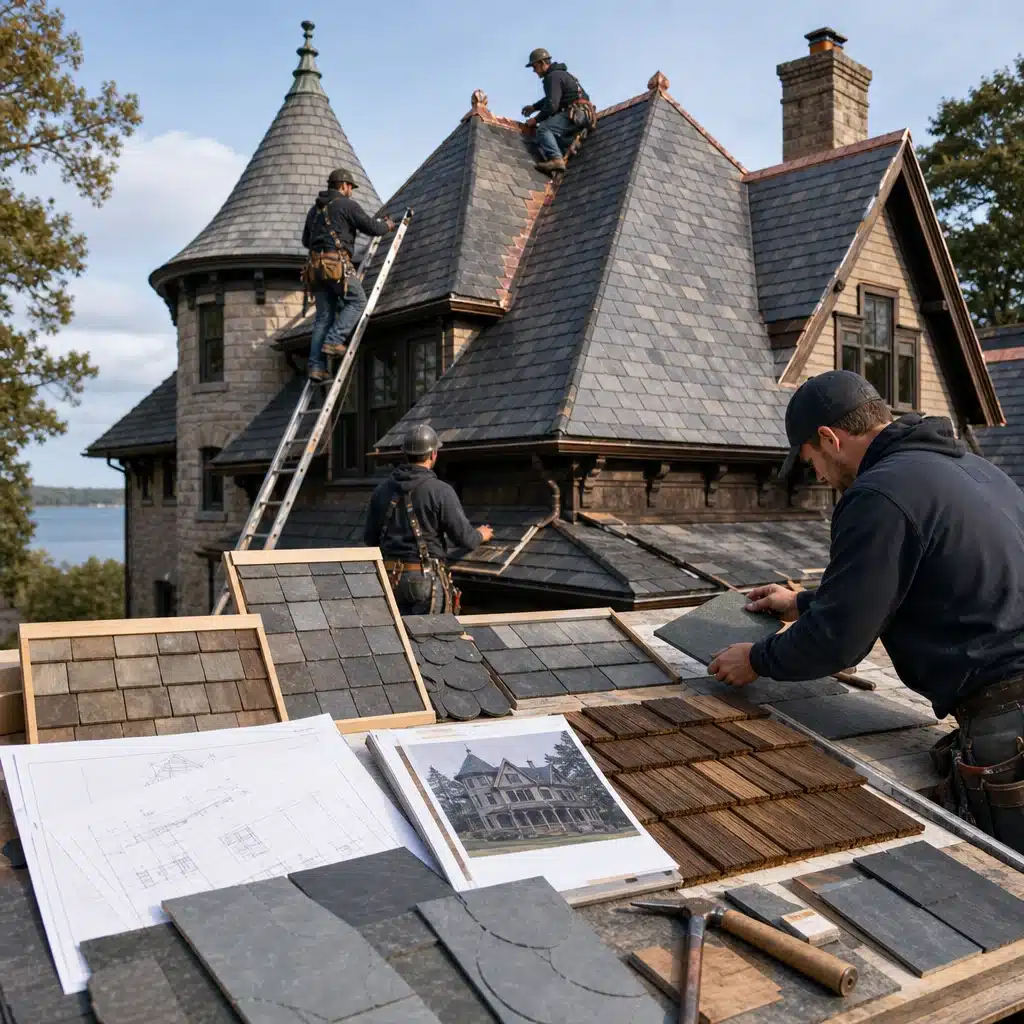
- Craftsman installation by roofers trained specifically in slate and cedar work.
- Final walkthrough with photo documentation for your records and future insurance needs.
We don’t rotate general labor onto slate or cedar jobs. These roofs need dedicated hands, and that’s what we assign.
Takeaway: Ask any contractor how many historic roofs their crew personally installed in the last two years. Volume in this specialty matters more than years in business.
Sourcing and Matching Original Slate Profiles, Colors, and Textures
Slate is not a commodity. Vermont, New York, Pennsylvania, and Virginia quarries each produce stone with distinct color families, thickness, and weathering behavior. A Buckingham black weathers very differently than an unfading green from Vermont.
When we approach slate roof restoration, we look at:
- Quarry origin of the existing stone, verified through sample analysis when needed
- Thickness and size of original tiles, often 3/16 to 1/4 inch on residential homes, sometimes graduated
- Color blend ratios across purples, greens, grays, and blacks
- Cut pattern including standard, hexagonal, French, fish-scale, or diamond
- Exposure and headlap original to the design
We keep working relationships with domestic quarries and reclaimed slate suppliers, so when a home calls for salvaged Monson black or a specific Vermont sea green, we can typically source it. For period-accurate roof replacement, that supply network matters as much as the installation itself.
Cedar Shake Selection: Grade, Cut, and Weathering Considerations
Cedar shake roofing carries its own set of decisions. Not all cedar is equal, and the wrong grade will underperform badly in Lake Bluff’s freeze-thaw cycles.
Here’s what we specify and why:
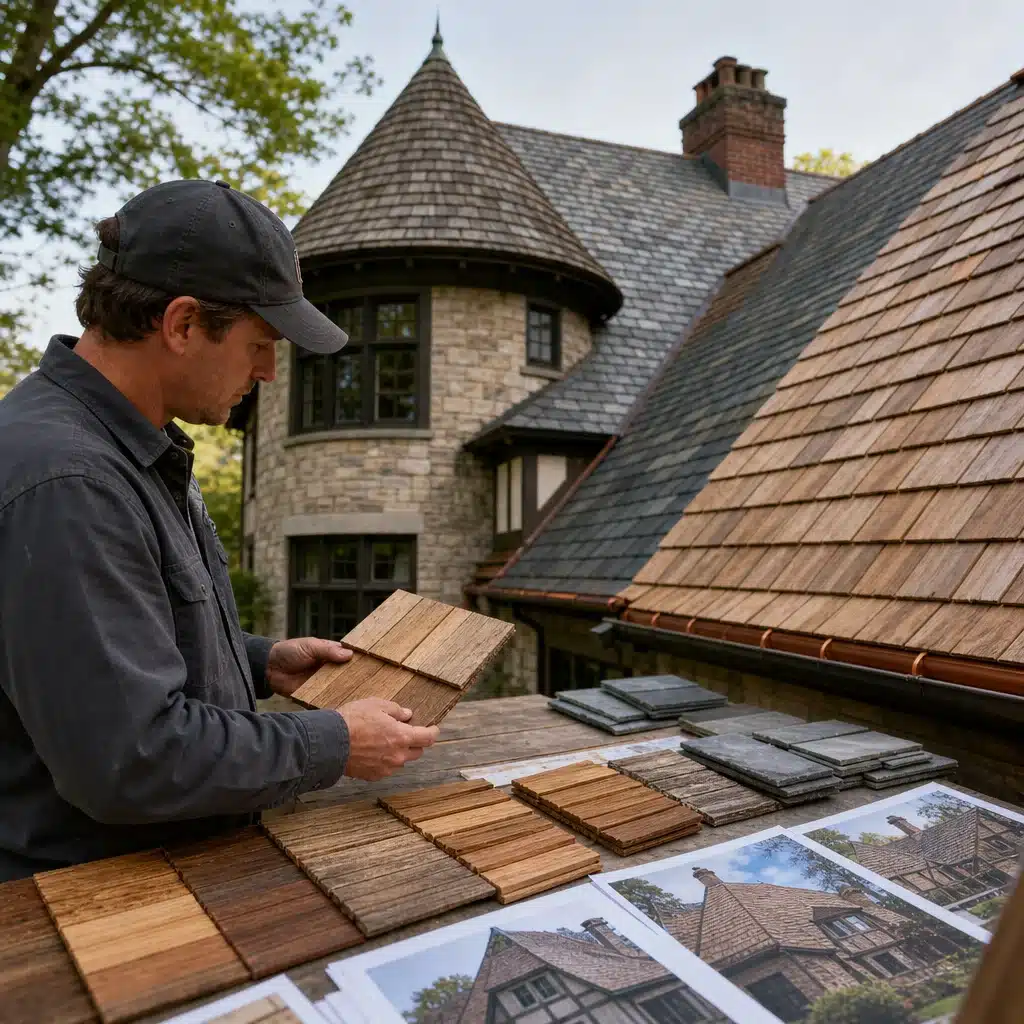
- Grade. Certi-Split or Certi-Sawn Number 1 Blue Label is our default for historic work. It’s 100 percent heartwood, edge-grain, and clear.
- Cut. Hand-split shakes give a rustic, deeply textured look. Tapersawn offers a cleaner, more uniform appearance often seen on Tudors and estate homes.
- Thickness. Medium (1/2 inch) or heavy (3/4 inch) shakes deliver longer service life and better shadow lines.
- Treatment. Factory fire-retardant and preservative treatments extend cedar’s usable life considerably in our climate.
- Weathering plan. We advise homeowners on natural silvering timelines and optional stains that preserve original tones.
Takeaway: If your current cedar roof is curling, cupping, or shedding granules within 15 years, it was likely under-graded. Insist on documented grade certification.
DaVinci Synthetic Slate and Shake as a Long-Term Alternative
Not every historic home is a candidate for natural slate or cedar, and not every homeowner wants the maintenance cycle that comes with them. That’s where DaVinci polymer roofing has changed the conversation.
DaVinci synthetic slate and shake replicates the profile, thickness variation, and color depth of natural materials with impressive accuracy. It carries a Class 4 impact rating, Class A fire rating with underlayment, and a 50-year limited warranty. For homeowners weighing lifecycle cost, weight loading on older structures, and hail resilience, it’s often the better long-term answer.
We’ve installed DaVinci across dozens of historic-style homes in the area, and the results routinely pass preservation review when submitted with proper samples. If you want the full breakdown, our overview of DaVinci synthetic slate advantages covers weight, cost, and performance details.
Takeaway: Ask your structural engineer whether your existing framing can carry natural slate’s 800 to 1,000 pounds per square. If not, synthetic slate roofing may be the only responsible choice.
Navigating Lake Bluff Architectural Review and Permitting
Lake Bluff takes its architectural heritage seriously, and roof projects on designated historic properties typically require review beyond a standard building permit. Requirements can include material samples, elevation drawings, and sometimes a public hearing.
We handle this coordination for our clients. Our team prepares:
- Material and color sample boards
- Manufacturer specification sheets
- Elevation photos with proposed materials rendered or overlaid
- Written scope of work aligned with preservation guidelines
Timelines vary, but a typical review adds four to eight weeks to project start. We build that into your schedule from day one so there are no surprises.
Takeaway: Never sign a contract with a roofer who dismisses the review process or promises to “just do the work.” Non-compliant installations can result in stop-work orders and forced removal.
Protecting Your Investment: Insurance Claims and Storm Damage Support
Historic roofs and storm damage make for complicated insurance claims. Adjusters may not understand the true replacement cost of matched slate or premium cedar, and standard policy language often falls short of what these roofs actually cost to restore properly.
We hold licensed public insurance adjuster credentials on staff, which means we can advocate directly with your carrier for like-kind, like-quality replacement. That distinction matters. It’s the difference between a check that covers architectural asphalt shingles and one that covers proper period-accurate roof replacement.
Our storm response also runs 24/7. When a summer derecho or ice storm damages your roof, we tarp, document, and stabilize immediately, then walk you through the claim. If you want more detail on how we approach carrier negotiations, our guide to insurance claims help explains the process step by step.
Takeaway: Photograph your roof every two to three years in normal condition. That baseline documentation strengthens any future claim significantly.
What to Expect During Your Historic Roof Project With Us
Historic restoration projects are more involved than standard re-roofs, and we set clear expectations from the first conversation.
Here’s the typical arc of a Lake Bluff project with our team:
- Weeks 1 to 2: Site assessment, material analysis, and initial proposal
- Weeks 3 to 4: Sample approval, contract, and preservation submittal
- Weeks 5 to 12: Review approval and material sourcing, especially for reclaimed or custom-blend slate
- Weeks 13 to 15: Installation window, weather permitting
- Post-project: Final documentation, warranty registration, and maintenance schedule
Throughout the project, you’ll have a dedicated project manager, daily site cleanup, and full property protection including landscape covering and gutter guards during tear-off.
If you own a historic home in Lake Bluff and your roof is showing its age, or if a recent storm has forced the timeline, we’re ready to help. Reach out through owenenterprises.com to schedule an assessment, and we’ll bring 35 years of specialized experience to your project from the first walk-around.
Frequently Asked Questions (FAQ)
How do we match slate and cedar shake on historic Lake Bluff homes?
We start by evaluating the existing roof to document profile dimensions, color variation, exposure, and weathering patterns. From there we source slate from quarries that produce comparable stone and select cedar shakes by grade, cut (typically hand-split or taper-sawn), and species to align with the original specification. When exact matches are unavailable, we blend materials or recommend period-accurate alternatives that satisfy architectural review.
Is synthetic slate acceptable for historic homes in Lake Bluff?
In many cases, yes. DaVinci synthetic slate and shake products replicate the shadow lines, thickness, and color blends of natural materials closely enough to gain approval from local review boards, though every district applies its own standards. We handle the submission process and provide physical samples and documentation so decision-makers can evaluate the product before approval.
How long does a historic roof restoration project typically take?
Timelines vary based on material sourcing, permit review, and roof complexity, but most projects run six to twelve weeks from contract to completion. Natural slate and specialty cedar often require longer lead times for procurement, while synthetic alternatives can shorten the schedule. We provide a detailed timeline after the initial assessment and keep you informed at each phase.