Table of Contents
- Why Chicago Suburban Homeowners Are Rethinking Slate Roofing
- What Natural Slate Roofing Offers and Where It Falls Short
- How DaVinci Composite Slate Is Engineered to Perform
- Weight, Structural Load, and Home Compatibility
- Durability and Weather Resistance in Midwest Climates
- Cost, Lifespan, and Long-Term Value Comparison
- Aesthetic Options, Color Retention, and Curb Appeal
- Warranty, Insurance, and Maintenance Considerations
- Why We Recommend and Install DaVinci Slate Across the Chicago Suburbs
- Schedule Your Roofing Consultation With Owen Enterprises
- Frequently Asked Questions (FAQ)
Why Chicago Suburban Homeowners Are Rethinking Slate Roofing
Slate has long been the calling card of stately homes across Hinsdale, Naperville, Winnetka, and Oak Park. It signals permanence, taste, and quality construction. But in 2026, more homeowners are pausing before committing to a natural slate roof, and for good reason.
Roof structures on many suburban homes were not engineered to carry the weight of quarried stone. Insurance carriers have grown stricter about hail-prone materials. Skilled slate installers are increasingly hard to find, and repair sourcing can drag on for months. At the same time, composite slate tiles have matured into a serious alternative that mirrors the look of stone without the drawbacks.
Takeaway: Before you replace like-for-like, get a structural and material review from a contractor who installs both traditional and synthetic systems.
What Natural Slate Roofing Offers and Where It Falls Short
Natural slate is beautiful, fire-resistant, and can last 75 to 150 years when installed correctly. The material itself is quarried, split by hand, and unmistakable up close. For historic properties or landmark districts, it may be the only appropriate choice.
The trade-offs are significant:
- Weight: Natural slate runs 800 to 1,500 pounds per square (100 sq ft), often requiring reinforced framing.
- Brittleness: Tiles crack under foot traffic, falling branches, and Midwest hail.
- Cost: Installed pricing frequently lands between $25 and $50 per square foot.
- Labor scarcity: Fewer certified slaters mean longer project timelines and higher repair costs.
- Color variability: Some slate quarries produce tiles that fade or delaminate over decades.
For a typical Chicago suburban home built after 1960, the structural and financial hurdles often outweigh the prestige factor.
Takeaway: Natural slate remains a fit for specific historic homes, but it is not the default answer for most suburban roofs.
How DaVinci Composite Slate Is Engineered to Perform
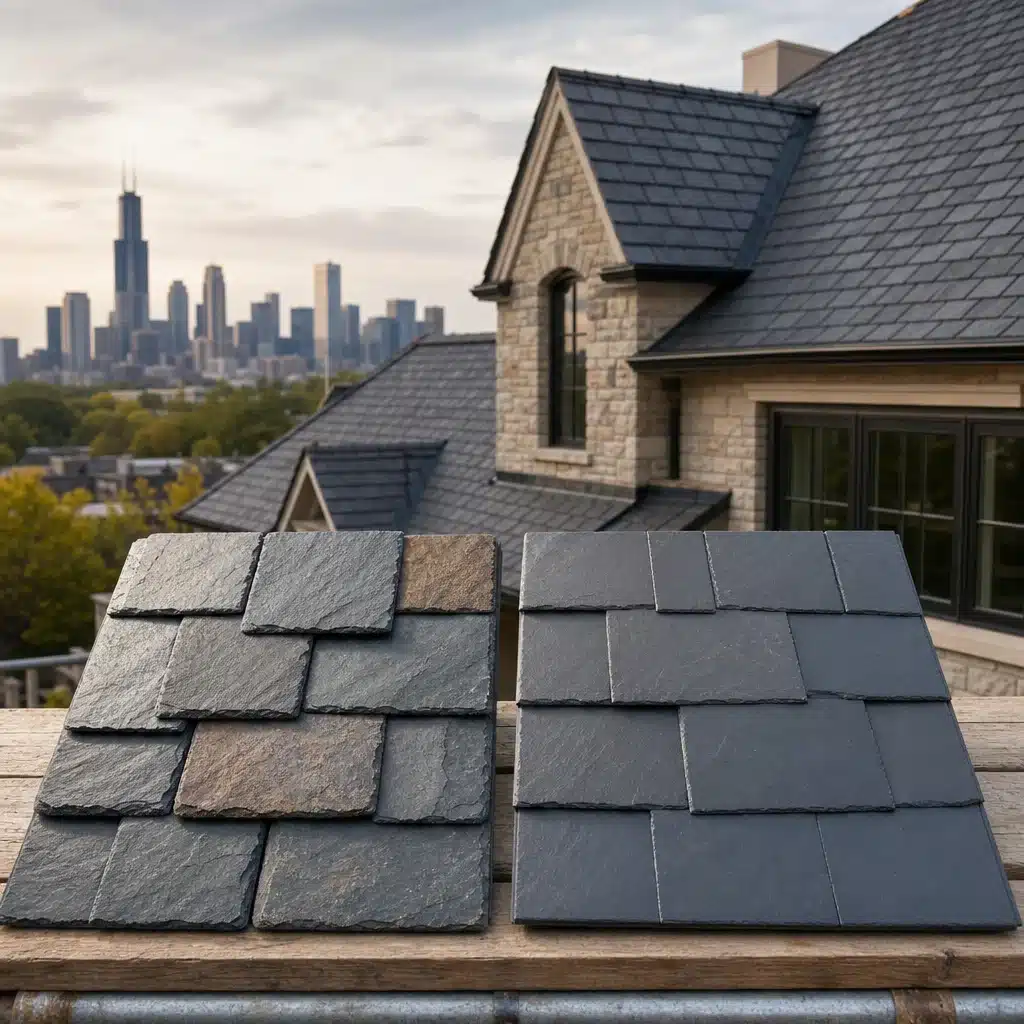
DaVinci Roofscapes manufactures composite slate tiles using virgin engineering-grade polymers combined with UV inhibitors and fire retardants. The result is a tile molded from real slate samples, complete with authentic thickness variations, chisel marks, and irregular edges.
Each tile is designed to solve the problems that plague natural stone. The polymer flexes rather than cracks under impact. The color runs through the full thickness of the tile, so scratches do not expose a different substrate. Every piece is engineered to a consistent installation profile, which speeds up labor and eliminates the sorting time slaters need for hand-split stone.
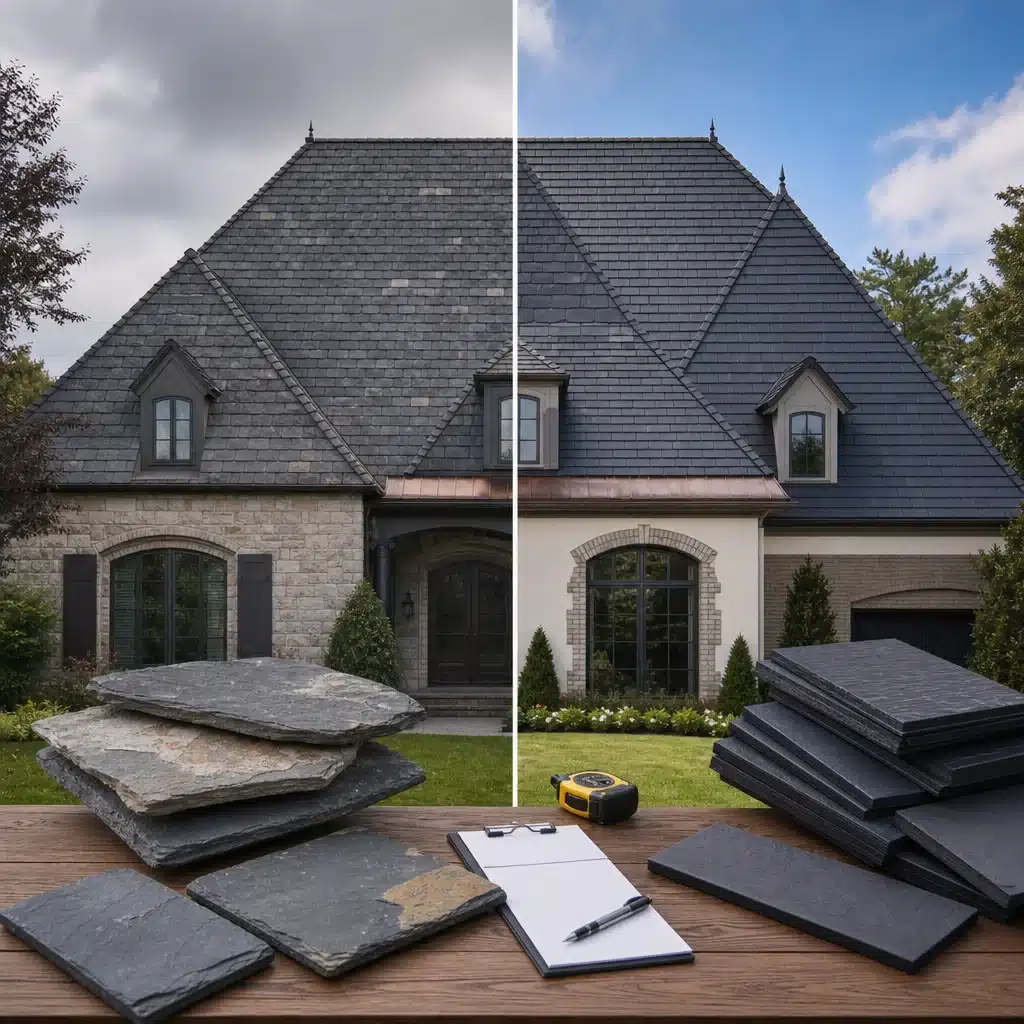
From ground level, or even from a second-story window, most people cannot tell the difference. That is by design.
Takeaway: Ask to see a DaVinci sample board in daylight next to a natural slate sample. The visual comparison is the fastest way to make an informed call.
Weight, Structural Load, and Home Compatibility
Weight is where the two materials diverge sharply. DaVinci composite slate weighs roughly 250 pounds per square, compared to over 1,000 pounds for natural stone. That difference matters enormously on retrofits.
Consider a 3,200 sq ft roof:
- Natural slate: approximately 32,000 to 48,000 pounds of dead load.
- DaVinci synthetic slate: approximately 8,000 pounds.
Most homes built in the last 60 years cannot accept a natural slate load without engineered reinforcement of rafters, trusses, and load-bearing walls. That structural work can add $15,000 to $50,000 to a project before a single tile goes up. DaVinci installs on standard roof decking with conventional fasteners, no framing upgrades required in the vast majority of cases.
Takeaway: If your home was not originally built for slate, composite is often the only realistic path to that look.
Durability and Weather Resistance in Midwest Climates
Chicago-area roofs face a punishing rotation: subzero winters, freeze-thaw cycles, summer hail, straight-line winds, and heavy wet snow loads. Natural slate handles cold well but is vulnerable to impact and freeze-thaw delamination over time.
DaVinci composite slate carries a Class 4 impact rating (the highest available) and a Class A fire rating. It is rated for wind speeds up to 110 mph with standard installation and higher with enhanced fastening. Freeze-thaw cycles do not affect the polymer the way they slowly erode certain natural slate deposits.
For homeowners who have replaced hail-damaged roofs more than once, the impact resistance alone often justifies the choice. Many insurance carriers offer premium discounts for Class 4 roofs.
Takeaway: Ask your insurance agent about impact-resistant roof discounts before finalizing your material selection.
Cost, Lifespan, and Long-Term Value Comparison
A useful slate roof cost comparison looks at installed cost, structural work, lifespan, and total cost of ownership.
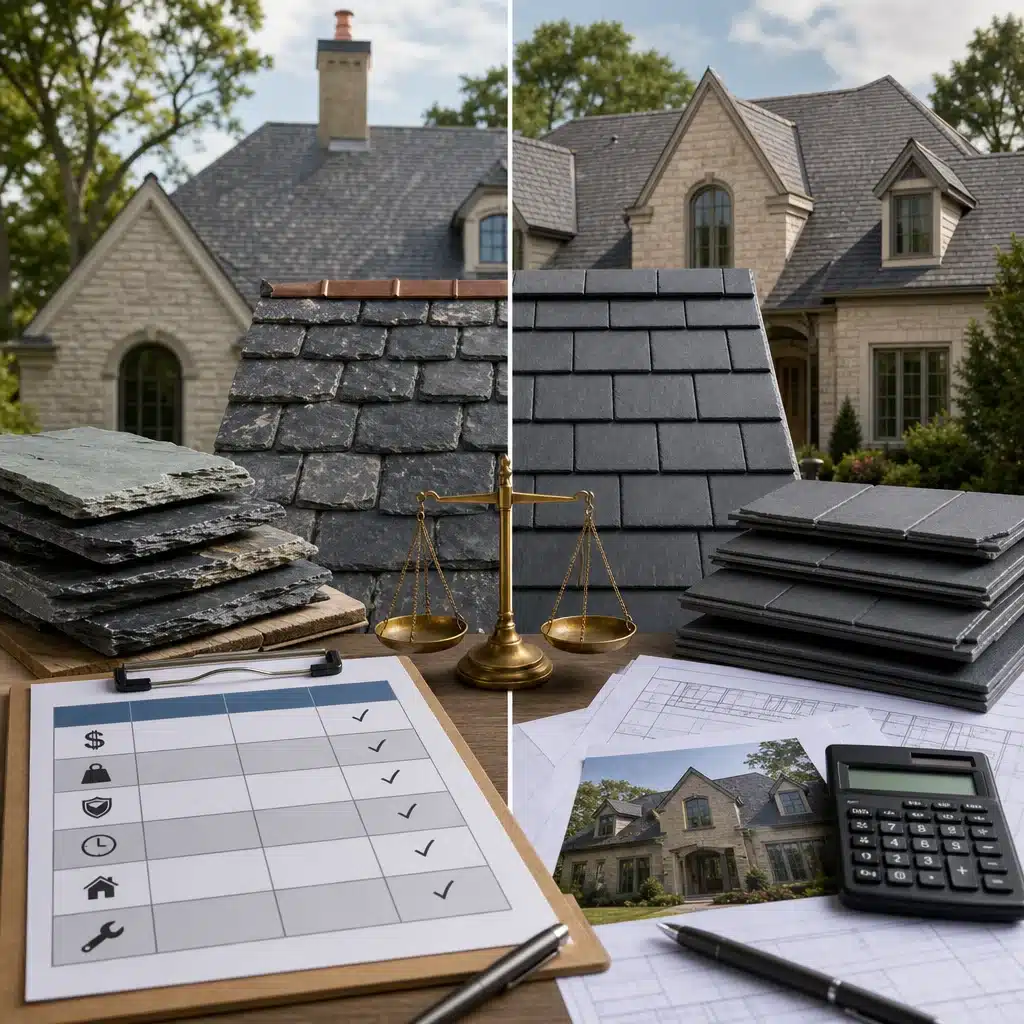
| Factor | Natural Slate | DaVinci Composite | |—|—|—| | Installed cost per sq ft | $25 to $50 | $12 to $20 | | Structural reinforcement | Often required | Rarely required | | Expected lifespan | 75 to 150 years | 50+ years, backed by warranty | | Impact resistance | Low to moderate | Class 4 (highest) | | Repair labor availability | Limited | Widely available |
On a typical 3,000 sq ft home, homeowners often save $40,000 to $80,000 by choosing composite once structural costs are factored in. That savings can fund matching siding, windows, or an outdoor living project.
Takeaway: Request line-item quotes for both materials so you can see structural and labor costs separately from material costs.
Aesthetic Options, Color Retention, and Curb Appeal
Luxury roofing materials should not force you to choose between authenticity and design flexibility. DaVinci offers more than 50 standard colors and unlimited custom blends across its Bellaforté Slate, Multi-Width Slate, and Single-Width Slate profiles. You can specify traditional gray and black, weathered greens and purples, or warm brown blends that complement stone and brick facades common across the western suburbs.
Because color is molded through the tile, fading is minimal. DaVinci publishes color retention data showing negligible change over decades of UV exposure. Natural slate, by contrast, can bleach or streak inconsistently based on the quarry lot.
For homeowners coordinating a full exterior refresh, we regularly design roof, siding, and trim palettes together to keep everything cohesive.
Takeaway: Order full-size sample tiles and view them on your roof plane at different times of day before committing to a color blend.
Warranty, Insurance, and Maintenance Considerations
DaVinci backs its composite slate with a 50-year limited warranty that includes coverage for fade, impact, and manufacturing defects. Natural slate carries no manufacturer warranty in the traditional sense, since the material is quarried rather than manufactured, and coverage depends entirely on the installer.
Maintenance is another quiet advantage. Composite tiles do not require the periodic tile-by-tile inspection natural slate demands. There is no delamination to monitor, no fragile field to walk across for gutter cleaning, and no specialty crew required for minor repairs.
Because we are licensed public insurance adjusters, we also help homeowners navigate storm damage claims. That matters when a hailstorm rolls through and you need documentation, scope of work, and code compliance handled correctly the first time. For a deeper look at how these materials compare in practice, see our full breakdown on DaVinci vs natural slate.
Takeaway: Keep your warranty documents, product batch numbers, and installation photos in one folder. You will want them if you ever file a claim or sell the home.
Why We Recommend and Install DaVinci Slate Across the Chicago Suburbs
With more than 35 years serving suburban Chicago, we have installed nearly every premium roofing product available. DaVinci consistently delivers the best balance of appearance, structural compatibility, weather performance, and long-term value for the homes we work on.
Our team includes certified DaVinci installers trained on the manufacturer’s exact fastening patterns, flashing details, and ventilation requirements. That certification protects your warranty and ensures the roof performs as engineered. We also offer 24/7 emergency roofing response, so if a storm strips shingles or damages tiles, we can secure the home the same day.
Roofing is one part of the exterior envelope. We coordinate siding, windows, decks, and pergolas under one contractor, which shortens timelines and keeps design decisions consistent.
Takeaway: Ask any roofing contractor to show proof of manufacturer certification, local references from the last 12 months, and their insurance adjusting credentials.
Schedule Your Roofing Consultation With Owen Enterprises
If you are weighing davinci vs natural slate roofing for a home in Hinsdale, Naperville, Glen Ellyn, Wheaton, Barrington, or anywhere across the Chicago suburbs, we are ready to help you make a confident decision. We will inspect your existing roof, evaluate your structure, review color options against your home’s palette, and provide clear line-item pricing.
Contact us at owenenterprises.com to schedule your consultation. Whether you are planning a full exterior renovation or responding to storm damage, our team will guide you through every step with the experience of more than three decades of local work behind us.
Frequently Asked Questions (FAQ)
Is DaVinci composite slate a good match for older Chicago suburban homes with existing roof structures?
Yes, and that is one of the main reasons we recommend it for retrofit projects across the area. DaVinci tiles weigh roughly a quarter of what natural slate does, so most homes can accept them without structural reinforcement. For historic properties where we want the authentic slate profile without adding thousands of pounds to the framing, composite slate is often the practical choice.
How does DaVinci slate hold up against Chicago-area freeze-thaw cycles and hail?
We install DaVinci because it is engineered specifically for climates like ours. The polymer composition resists the freeze-thaw cracking that shortens the life of many natural slate installations in the Midwest, and the tiles carry a Class 4 impact rating, which is the highest available for hail resistance. In our experience, this combination reduces both storm-related repairs and long-term maintenance costs.
What kind of warranty and insurance advantages come with a DaVinci slate roof?
DaVinci tiles are backed by a 50-year limited warranty, and because we are certified installers, our workmanship is documented to support that coverage. The Class 4 impact rating also qualifies many homeowners for reduced premiums with insurance carriers in Illinois. Our licensed public insurance adjusters can help you review your policy to confirm what discounts or claim benefits may apply.