Table of Contents
- 1. Assessing Overall Cedar Shake Condition and Age
- 2. Checking for Cracked, Split, or Curling Shakes
- 3. Inspecting for Moss, Algae, and Moisture Damage
- 4. Clearing Debris from Valleys and Gutters
- 5. Evaluating Flashing, Ridge Caps, and Sealants
- 6. Reviewing Attic Ventilation and Insulation Impact
- 7. Scheduling Professional Cedar Shake Inspections With Our Team
- 8. Planning Long-Term Maintenance and Premium Replacement Options
- Next Steps for Protecting Your Cedar Shake Investment
- Frequently Asked Questions (FAQ)
1. Assessing Overall Cedar Shake Condition and Age
Cedar shake roofs give Chicago suburban homes a distinctive, high-end character that few materials can match. But wood is a living material, and our freeze-thaw cycles, humid summers, and lake-effect storms put shakes under constant stress. Without a consistent maintenance routine, small issues become five-figure repairs. The checklist below is the exact framework we use in the field, refined over 35 years of caring for cedar roofs across the region.
The first question we ask on any cedar shake roof maintenance visit is simple: how old is this roof, and how has it aged? A quality cedar shake roof lifespan runs 30 to 40 years in our climate when maintained, but a neglected one can fail in half that time.
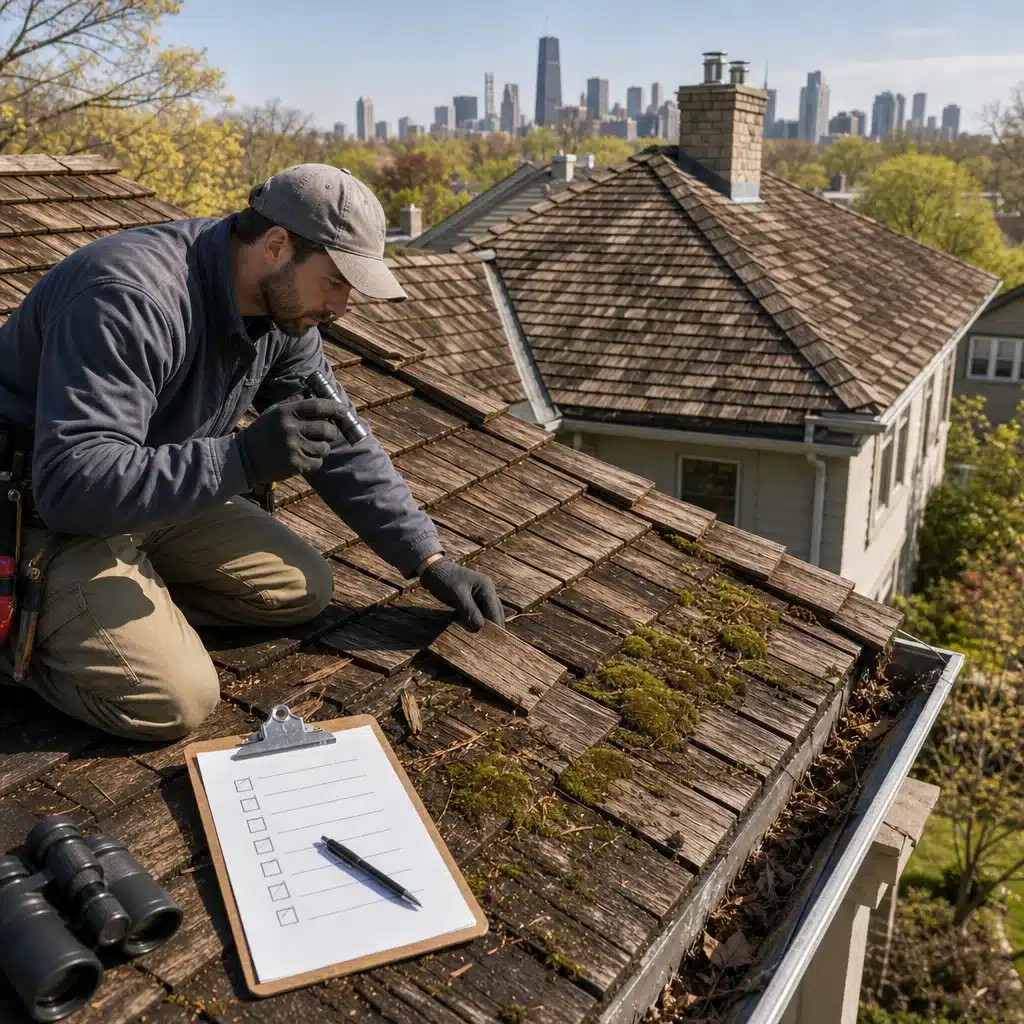
Walk the property and look at the roof from multiple angles. Uniform gray weathering is normal. What you don’t want to see is patchy discoloration, sagging planes, or areas where shakes look thinner than surrounding sections. Compare the current roof against original install photos or previous inspection notes if you have them.
Takeaway: Note the install year and pull last year’s inspection report before you climb a ladder. A baseline turns guesswork into a real annual roof inspection checklist.
2. Checking for Cracked, Split, or Curling Shakes
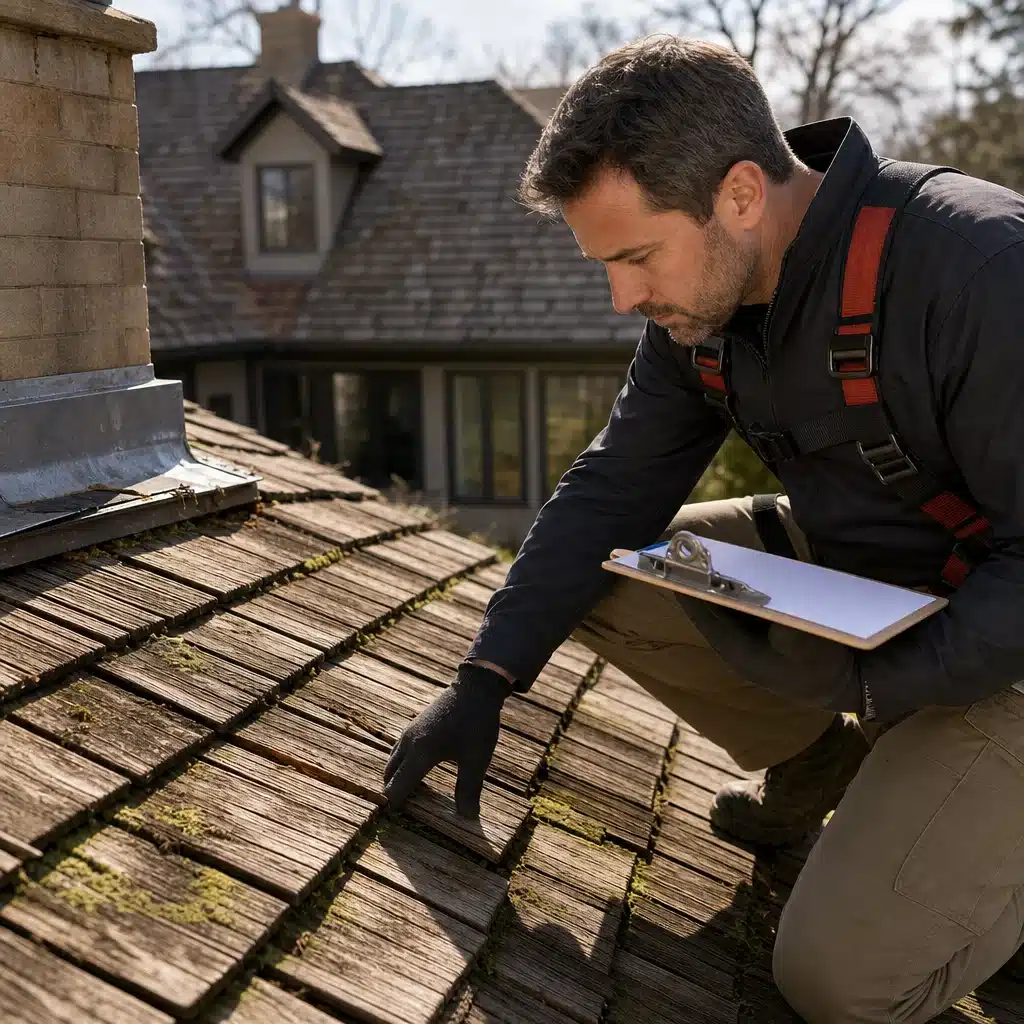
Individual shake failures are the single most common issue we document. Splitting happens when moisture cycles pull the grain apart. Curling and cupping signal that shakes have dried unevenly, often because ventilation underneath is inadequate.
Look for:
- Vertical splits wider than a nickel
- Shakes with lifted corners or a pronounced cup shape
- Missing shakes exposing the underlayment or felt
- Loose shakes that shift when nudged with a gloved hand
A handful of damaged shakes on a 25-square roof is normal wear. Dozens across one slope suggest a systemic issue, and that’s when cedar shake repair should move from “next spring” to “this month.” Replacing individual shakes early prevents water from reaching the deck.
Takeaway: Photograph and count every damaged shake so you can track progression year over year.
3. Inspecting for Moss, Algae, and Moisture Damage
North-facing slopes and areas shaded by mature oaks are prime territory for biological growth. Moss holds moisture directly against the wood, accelerating rot. Black algae streaks are more cosmetic but often indicate the surface stays wet longer than it should.
During inspection, gently probe suspect areas with a wood pick or screwdriver. Healthy cedar resists penetration. Soft, spongy spots mean rot has started, and those shakes need replacement, not cleaning. Never use a pressure washer on cedar. High pressure strips the protective outer fibers and shortens the roof’s remaining life dramatically.
Takeaway: Trim overhanging branches back at least six feet from the roof plane to reduce shade, debris, and moisture buildup.
4. Clearing Debris from Valleys and Gutters
Cedar sheds naturally, and combined with maple seeds, oak leaves, and pine needles, debris collects fastest in valleys and gutters. When water can’t drain freely, it wicks sideways under shakes and rots the decking from above.
Our wood shake roof care routine includes:
- Blowing loose debris off the field of the roof with a leaf blower
- Hand-clearing valleys, especially where two slopes meet a dormer
- Flushing gutters and downspouts until water runs clear
- Checking that downspout extensions carry water at least four feet from the foundation
Do this twice a year at minimum, once after spring pollen drop and once after fall leaves finish falling.
Takeaway: A clogged valley can destroy a roof deck in a single wet season. Put both cleanings on the calendar now.
5. Evaluating Flashing, Ridge Caps, and Sealants
Flashings around chimneys, skylights, and sidewalls fail before the shakes do on many older roofs. Look for rust, lifted edges, gaps where caulk has cracked, and any daylight visible from the attic side.
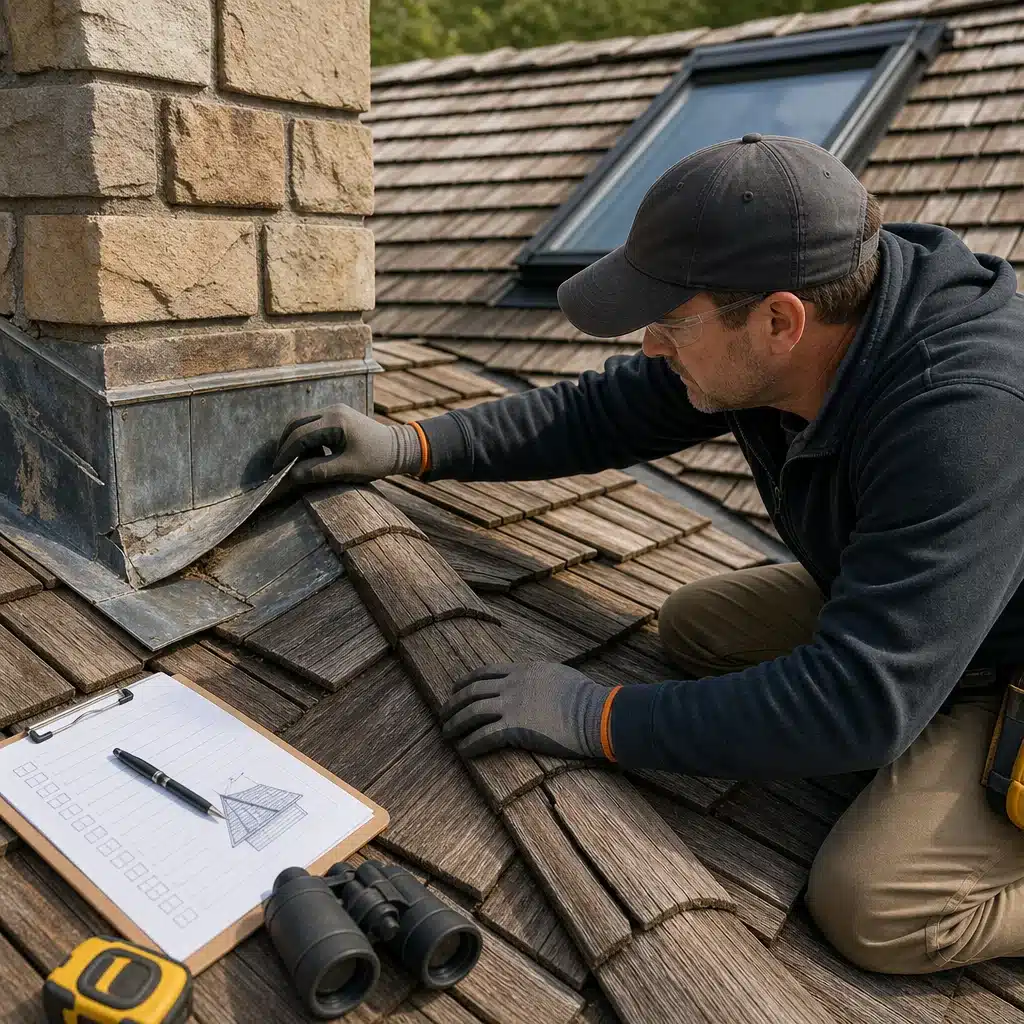
Ridge caps take the worst of the wind and UV exposure. Missing or loose ridge shakes let water directly into the roof structure. Sealants around penetrations should be pliable, not crumbly. If you can flake caulk off with a fingernail, it’s time to reseal.
Takeaway: Budget for flashing replacement at year 20, even if the field of the roof still has life. Waiting until leaks appear inside almost always means interior repairs too.
6. Reviewing Attic Ventilation and Insulation Impact
This is the check most homeowners skip, and it’s the one that quietly ends more cedar roofs than storms do. Cedar needs to breathe from below. If your attic traps heat and humidity, shakes cook in summer and stay damp in winter, leading to premature cupping and rot.
From the attic, look for:
- Blocked soffit vents buried under insulation
- Frost or water stains on the underside of the deck
- Bathroom or dryer exhaust venting into the attic rather than outside
- Insufficient ridge or gable ventilation
Balanced intake and exhaust ventilation can add five to ten years to your cedar roof lifespan. It’s one of the highest-return investments you can make in the entire home envelope.
Takeaway: If you’ve never had ventilation measured, add it to this year’s inspection. Small corrections here pay back for decades.
7. Scheduling Professional Cedar Shake Inspections With Our Team
Homeowner checks catch the obvious. A professional cedar shake roof inspection catches what’s about to become obvious. After 35 years working on Chicago suburban roofs, our crews recognize failure patterns specific to this region: the way west-facing slopes weather faster on homes near open farmland, how ice dams form on shallow-pitch dormers, where wind-driven rain finds sidewall flashings on Tudor-style homes.
We bring several advantages homeowners can’t replicate alone:
- Licensed public insurance adjusters on staff who can document storm damage for claims
- 24/7 emergency roofing response when a tree limb or hail event opens the roof
- Direct experience installing and maintaining premium DaVinci composite slate and shake alternatives
- Detailed photo reports you can use for insurance, resale, or future planning
For a deeper look at what our regional process covers, our guide to Chicago cedar shake inspection walks through the full assessment. General guidance on roof inspection frequency helps you set the right cadence.
Takeaway: Schedule a professional inspection every two years for roofs under 15 years old, and annually after that.
8. Planning Long-Term Maintenance and Premium Replacement Options
Even a well-maintained cedar roof eventually reaches the end of its service life. Planning the next roof five to seven years before you need it puts you in control of budget, timing, and material choice.
For homeowners who love the cedar aesthetic but want to eliminate the maintenance burden, we install DaVinci synthetic slate and shake products. These composite roofs deliver the deep-shadow look of natural cedar with a 50-year limited warranty, Class A fire rating, and impact resistance that natural wood can’t match. They don’t split, curl, host moss, or invite insects, and they handle Chicago’s freeze-thaw cycles without dimensional change.
For homeowners committed to authentic wood, we install premium hand-split and taper-sawn shakes with breathable underlayments and stainless fasteners engineered for our climate.
Takeaway: Start conversations about replacement early. The best outcomes happen when there’s no leak forcing the decision.
Next Steps for Protecting Your Cedar Shake Investment
A cedar shake roof is one of the largest and most visible investments in your home, and it rewards consistent attention. Run through this checklist each spring, keep records, address small problems immediately, and lean on professional eyes for the annual deep look.
When you’re ready for a thorough assessment, our team is the definitive choice for cedar roofs in the Chicago suburbs. Three and a half decades of local experience, in-house insurance adjusters, round-the-clock emergency service, and mastery of both authentic cedar and DaVinci premium alternatives mean we can protect what you have now and deliver the ideal replacement when the time comes. Reach out to schedule your inspection, and we’ll build a maintenance plan tailored to your roof, your home, and your timeline.
Frequently Asked Questions (FAQ)
How often should we inspect a cedar shake roof in the Chicago suburbs?
We recommend a thorough cedar shake inspection at least once a year, ideally in the spring after freeze-thaw cycles have ended. An additional check in the fall helps us catch storm damage and clear debris before winter. Homes surrounded by heavy tree cover often benefit from more frequent visual reviews.
What are the most common signs that our cedar shakes need repair?
The clearest warning signs include cracked, split, or curling shakes, visible moss or algae growth, and dark patches that suggest trapped moisture. We also look for loose ridge caps, deteriorated flashing, and granule-like wood erosion in the gutters. Catching these issues early usually prevents deeper decking damage.
How long can we expect a cedar shake roof to last with proper care?
With consistent maintenance, a quality cedar shake roof in our region typically lasts 30 to 40 years. Routine cleaning, proper attic ventilation, and prompt repair of damaged shakes all extend that lifespan. When replacement becomes the smarter option, we also offer premium DaVinci synthetic slate and shake systems for longer-term durability.