Table of Contents
- Why Property Protection Matters During a Roof Replacement
- Common Risks Homeowners Face When Roofs Are Torn Off
- Our Pre-Project Walkthrough and Property Assessment
- How We Shield Landscaping, Gardens, and Hardscapes
- Protecting Siding, Windows, Gutters, and Outdoor Living Spaces
- Interior Safeguards for Attics, Ceilings, and Fragile Belongings
- Debris Containment, Magnetic Nail Sweeps, and Daily Cleanup
- Safety Protocols for Pets, Children, and Everyday Routines
- Our 35+ Years of Experience Delivering Damage-Free Installations
- Schedule a Worry-Free Roof Replacement With Owen Enterprises
- Frequently Asked Questions (FAQ)
Why Property Protection Matters During a Roof Replacement
A roof replacement is one of the largest exterior projects a homeowner will ever undertake, and it happens directly above everything you own. Tear-off work sends thousands of pounds of shingles, nails, and underlayment tumbling toward your lawn, flowerbeds, driveway, and patio furniture. Without a deliberate protection plan, a routine install can leave behind trampled hostas, cracked pavers, or a stray nail in a tire weeks later.
For homeowners across the Chicago suburbs, protecting property during roof replacement is not a nice extra. It is the difference between a smooth project and hidden costs that surface long after the crew leaves. Our approach treats the yard, the interior, and the family routine as part of the jobsite from day one.
Takeaway: Ask any contractor to walk you through their written property protection plan before signing. If they cannot describe it clearly, expect avoidable damage.
Common Risks Homeowners Face When Roofs Are Torn Off
Even a well-run job carries real hazards when they are not managed. Understanding these risks helps you evaluate any bid you receive.
- Falling debris impact: Tear-off bundles can weigh 60 to 80 pounds. Uncontrolled drops damage gutters, AC condenser fins, and window screens.
- Landscape crushing: Ladders, dumpsters, and tarps left directly on shrubs kill mature plantings that took years to establish.
- Nail scatter: A single tear-off can release thousands of old roofing nails. Missed nails cause flat tires, pet injuries, and lawnmower damage.
- Attic dust and vibration: Hammering loosens decades of dust from rafters. Fragile stored items and ceiling light fixtures can crack or fall.
- Siding scuffs: Ladders and material staging often rub against vinyl, fiber cement, or LP siding, leaving scratches and dents.
Takeaway: Walk your property before work starts and photograph everything. It protects you and gives your contractor a clear baseline.
Our Pre-Project Walkthrough and Property Assessment
Every job begins with an on-site walkthrough between our project manager and the homeowner. We do not treat this as a formality. We map staging zones, dumpster placement, ladder locations, and material drop points before a single shingle is touched.
During the walkthrough we document:
- Existing exterior conditions with dated photos of siding, windows, gutters, decks, and hardscapes
- Vulnerable landscaping such as ornamental trees, perennial beds, and irrigation heads
- Access routes for the crew that avoid septic lids, sprinkler lines, and buried invisible fencing
- Interior concerns including attic-stored belongings, chandeliers, and finished ceilings below the work area
We also confirm the weather window, review the schedule with you, and answer questions about roof replacement preparation such as moving vehicles, unplugging attic electronics, and securing pets. Nothing about the plan is improvised.
Takeaway: A detailed pre-project assessment is the single biggest predictor of a clean, damage-free install.
How We Shield Landscaping, Gardens, and Hardscapes
Chicago suburban homeowners invest heavily in mature landscaping, and it deserves the same respect as the house itself. Our landscape protection during roofing follows a layered system rather than a single tarp thrown over shrubs.
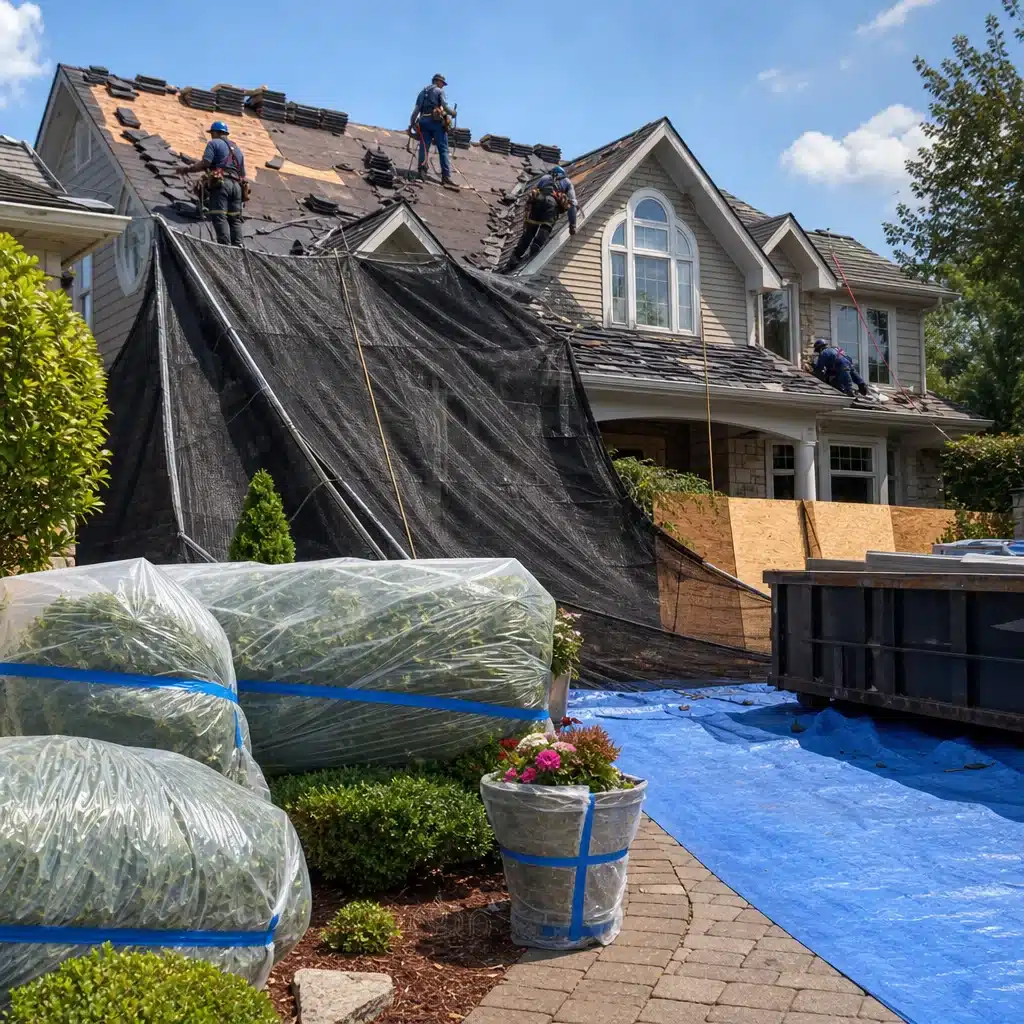
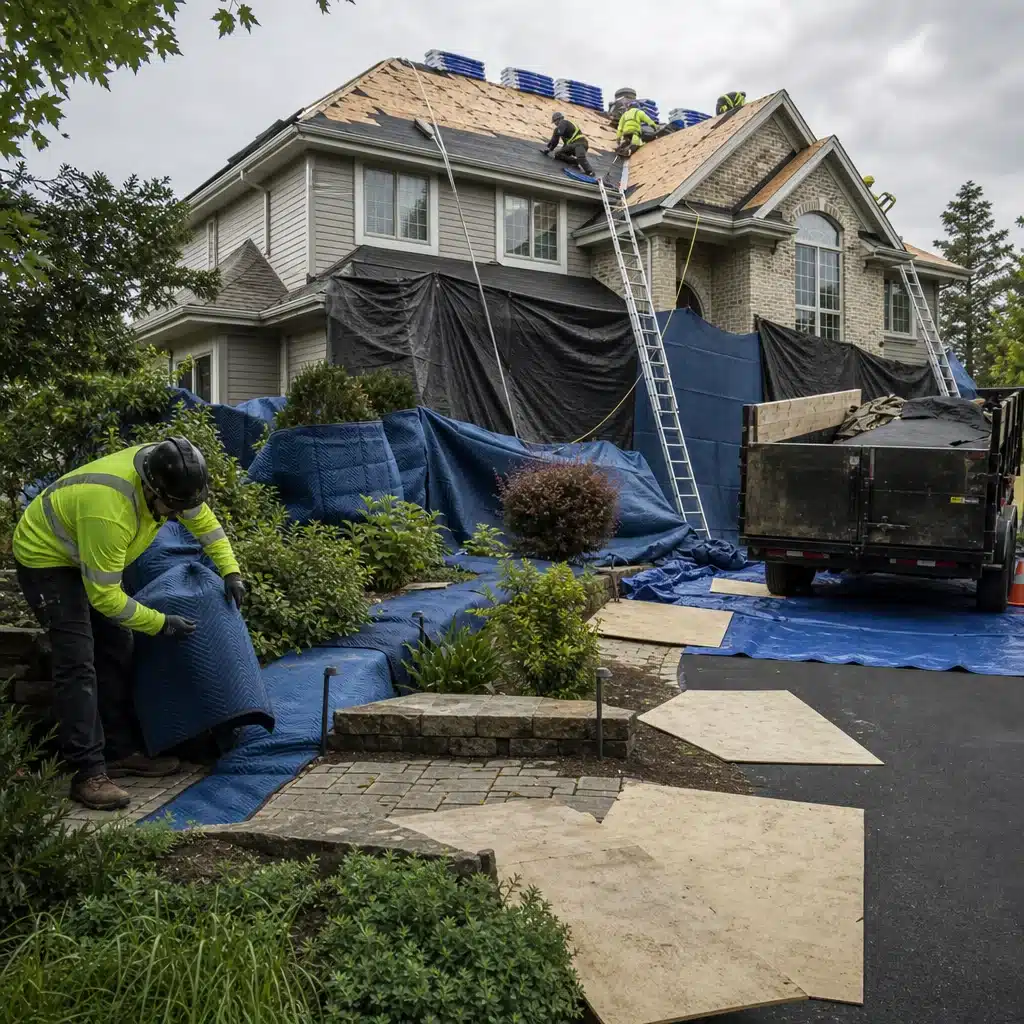
We use plywood catch platforms angled away from garden beds so debris slides into controlled zones instead of onto plants. Heavy-duty tarps drape over foundation plantings and are staked at a distance so weight does not press on branches. For hardscapes, we lay plywood runners across pavers, stamped concrete, and brick walkways to distribute the load of wheelbarrows and dumpsters.
Delicate features get extra attention:
- Japanese maples and hydrangeas are tented with breathable coverings
- Landscape lighting is flagged and marked to prevent crushed fixtures
- Irrigation heads near staging areas are capped and mapped
- Koi ponds and water features are covered with rigid mesh
Takeaway: Ask specifically how your contractor will protect mature plantings. Vague answers usually mean vague protection.
Protecting Siding, Windows, Gutters, and Outdoor Living Spaces
The roof does not exist in isolation. Everything below it is at risk during tear-off, and we treat the whole envelope as one integrated system. Because we install exterior protection services across siding, windows, and outdoor construction, we know exactly how each component reacts to jobsite stress.
Our siding protection uses foam padding at every ladder contact point. We install temporary ladder standoffs so ladders never rest against soft aluminum gutters or delicate window frames. Gutter guards and downspouts are cleared before tear-off, then covered so falling granules do not clog them.
For decks, patios, pergolas, and three-season rooms, we cover surfaces with breathable canvas rather than plastic, which can trap moisture and stain wood. Outdoor kitchens, grills, and furniture are either moved to a safe zone or wrapped and secured.
Takeaway: A roof project should never leave you needing gutter cleaning, siding touch-ups, or deck refinishing afterward.
Interior Safeguards for Attics, Ceilings, and Fragile Belongings
Homeowners are often surprised at how much a roof replacement is felt inside the house. Nailing sends vibrations through the framing, and tear-off releases decades of accumulated dust between the rafters.
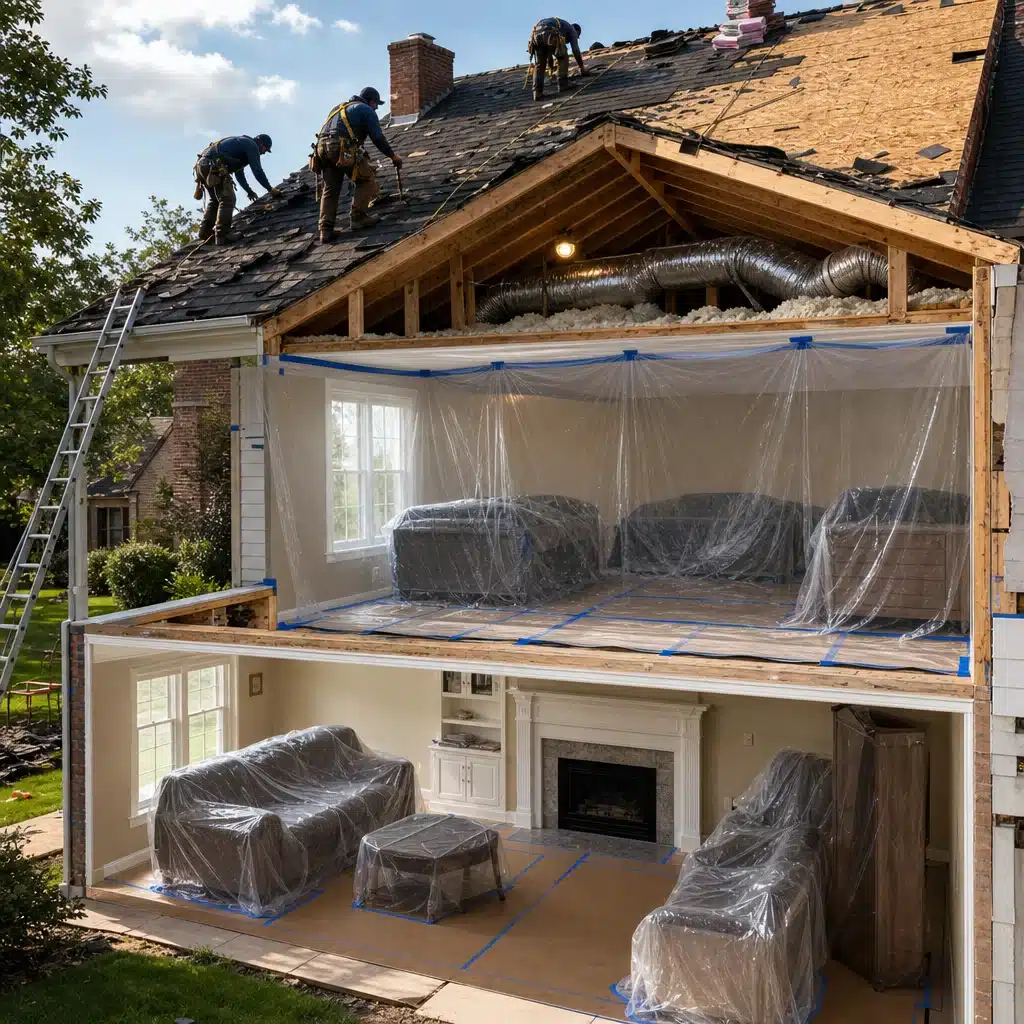
Before work begins, we recommend and often help with:
- Covering attic-stored items with plastic sheeting we provide
- Removing wall-mounted art on shared rafter walls
- Securing chandeliers and pendant lights in rooms directly below the roof deck
- Temporarily relocating fragile shelf items in top-floor rooms
Our crews also stage interior drop cloths in attic access areas so dust does not migrate into living spaces. When we install premium products like DaVinci slate and shake, precision cutting happens on ground-level workstations rather than on the roof, which keeps interior vibration to a minimum.
Takeaway: Spend 30 minutes securing attic and top-floor items before tear-off day. It is the highest-impact prep you can do.
Debris Containment, Magnetic Nail Sweeps, and Daily Cleanup
Roofing debris containment is where shortcuts become obvious. We use enclosed dumpster placement with plywood ramps, catch tarps that funnel material into the container, and ground-level netting around the work perimeter. Nothing is left to gravity alone.
Our daily cleanup routine includes:
- End-of-day tarp sweep: All catch tarps are folded inward and emptied into the dumpster before the crew leaves.
- Magnetic nail sweep: We roll a large industrial magnet across the lawn, driveway, walkways, and street after each work day, and again at final walkthrough.
- Gutter and downspout flush: Loose granules and nail fragments are removed so the system drains cleanly.
- Perimeter walk with the homeowner: Anything we missed gets addressed before we consider the day complete.
We finish every project with a final magnetic sweep in a grid pattern rather than a single pass. It takes longer, but it is the only reliable way to catch stray fasteners.
Takeaway: Confirm your contractor performs multiple magnetic sweeps, not just one at the end of the job.
Safety Protocols for Pets, Children, and Everyday Routines
A safe roof installation process accounts for the people and animals living in the home, not just the structure. Tear-off is loud, disruptive, and unsettling for pets. We coordinate start times, break periods, and staging noise with your schedule as much as possible.
Practical steps we build into every job:
- Clear crew paths that keep foot traffic away from play areas and pet runs
- Fenced-off ground zones with high-visibility barriers around dumpsters and ladders
- Locked gate protocols so dogs cannot slip out when crews access the backyard
- Advance notice on the loudest phases so you can plan naps, remote work calls, or a morning at the park
We also make sure at least one project lead is reachable by phone throughout the day so questions never wait.
Takeaway: Share your family’s daily rhythm at the pre-project meeting. We build the schedule around it whenever possible.
Our 35+ Years of Experience Delivering Damage-Free Installations
Three and a half decades of installing residential roofing across the Chicago suburbs has taught us that a beautiful roof means nothing if the property below it suffers. Our crews are trained in-house, our project managers stay with a job from estimate to final walkthrough, and our licensed public insurance adjusters help homeowners navigate storm claims without the usual confusion.
We install premium systems including DaVinci synthetic slate and shake, architectural asphalt, and full siding and window replacements. Every one of those jobs uses the same protection standards, whether it is a modest ranch or a custom estate home. Our 24/7 emergency response also means that when a tree branch punches through a roof at 2 a.m., we can tarp the damage and secure the interior before conditions worsen.
Takeaway: Longevity in this industry is earned by protecting properties, not just replacing roofs.
Schedule a Worry-Free Roof Replacement With Owen Enterprises
If you are planning a roof replacement in 2026, the contractor you choose determines how your entire property looks and functions when the project is finished. We would rather spend the extra hours protecting your landscaping, siding, and interior than send you a repair bill after the fact.
Here is how to get started:
- Request an on-site estimate and pre-project walkthrough
- Review our written property protection plan
- Choose your roofing system and finalize the schedule
- Enjoy a clean, quiet, damage-free installation backed by 35+ years of local experience
Reach out through owenenterprises.com to schedule your consultation. We will treat your home the way we would want ours treated, from the first ladder placement to the final magnetic sweep.
Frequently Asked Questions (FAQ)
How do you protect landscaping and hardscapes during a roof replacement?
Before we begin, we cover shrubs, flower beds, and delicate plantings with tarps and protective boards. We place plywood sheets over patios, walkways, and driveways to prevent damage from falling debris or equipment. Any outdoor furniture, grills, or decorative items in the work zone are relocated or covered before tear-off starts.
What steps do you take to prevent nails and debris from being left behind?
We deploy ground tarps around the entire perimeter of the home to catch shingles, nails, and other debris as it comes down. At the end of each work day and again at project completion, we run high-powered magnetic sweepers across the lawn, driveway, and surrounding areas. Our crew also performs visual inspections to ensure nothing is left behind that could harm feet, tires, or pets.
How should we prepare the inside of our home before the roof replacement begins?
We recommend removing fragile items from walls and shelves in upper floors and the attic, since vibrations from tear-off can cause pictures and light fixtures to shift. We suggest covering stored items in the attic with drop cloths, which our team can assist with during the pre-project walkthrough. Keeping pets and young children in a quiet area of the home during work hours also helps maintain a calm routine while we complete the installation.