Table of Contents
- The Roofing Challenge Facing Historic Chicago Suburban Homes
- Why Authentic Slate Alone No Longer Meets Modern Demands
- How DaVinci Slate Replicates the Character of Original Materials
- Performance Advantages for Chicago's Harsh Seasonal Climate
- Preserving Architectural Integrity Across Historic Neighborhoods
- Our 35-Year Approach to Installing DaVinci Slate on Legacy Homes
- Complementary Exterior Upgrades That Honor Historic Design
- Getting Started with Our Historic Home Roofing Consultation
- Frequently Asked Questions (FAQ)
The Roofing Challenge Facing Historic Chicago Suburban Homes
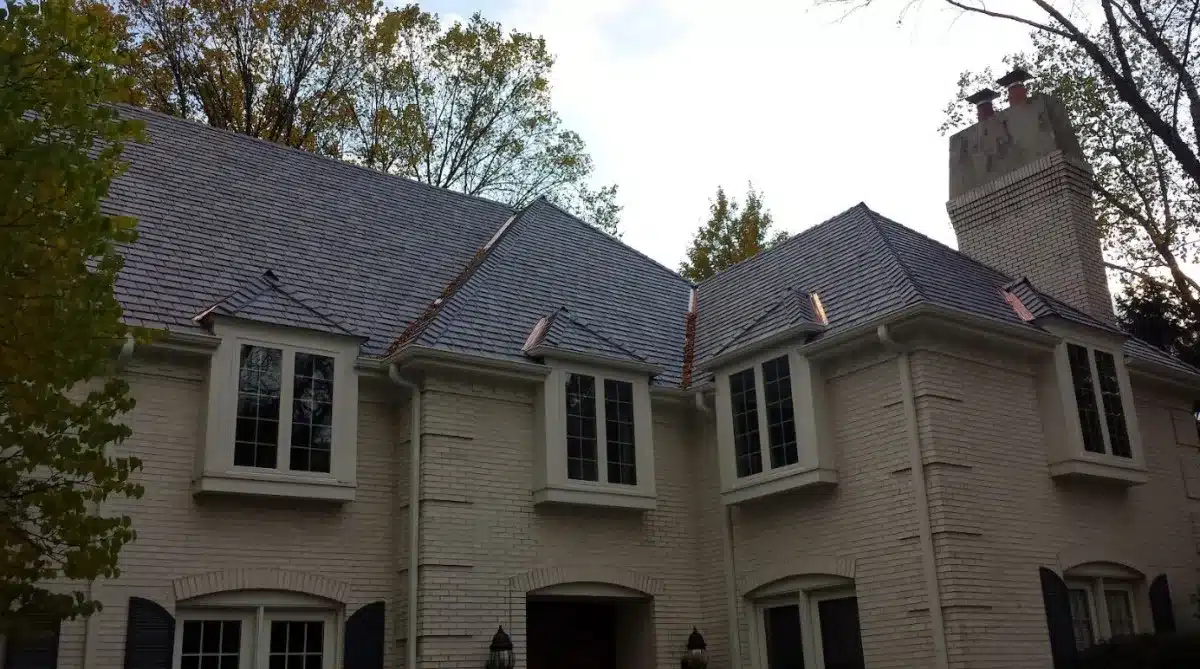
Historic homes across communities like Oak Park, Evanston, Hinsdale, Lake Forest, and Winnetka carry architectural details you simply cannot replicate with a builder-grade roof. Steeply pitched gables, dormers, turrets, and eyebrow windows were designed to showcase authentic slate, and swapping in asphalt shingles instantly flattens a century of craftsmanship.
The trouble is that many of these roofs were installed in the 1890s through the 1930s. Even the best natural slate eventually reaches the end of its service life, and homeowners are left balancing preservation guidelines, structural realities, and budget. Cracked slates around chimneys, spalling at valleys, and rusted flashing are usually the first signs a full roof replacement conversation needs to start.
Actionable next step: If your roof is more than 90 years old or you see slates on the ground after storms, schedule a full attic and exterior inspection before committing to any patching work.
Why Authentic Slate Alone No Longer Meets Modern Demands
Natural quarried slate is beautiful, but it comes with limitations that matter for a modern historic home roof replacement. Genuine slate weighs 800 to 1,500 pounds per square, which can exceed the framing capacity of homes built before modern engineering standards. Reinforcing rafters and decking to carry that weight adds significant cost, sometimes tens of thousands of dollars, before a single tile goes on.
Sourcing is another issue. Quality quarries in Vermont, New York, and Pennsylvania have limited output, lead times can stretch for months, and matching the exact color and grain of a hundred-year-old roof is often impossible. Add in the shrinking pool of installers trained in traditional slate work, and the total investment can easily run two to three times the cost of premium alternatives.
That does not mean giving up the look. It means choosing a material engineered to deliver the same visual weight without the structural and supply chain headaches.
How DaVinci Slate Replicates the Character of Original Materials
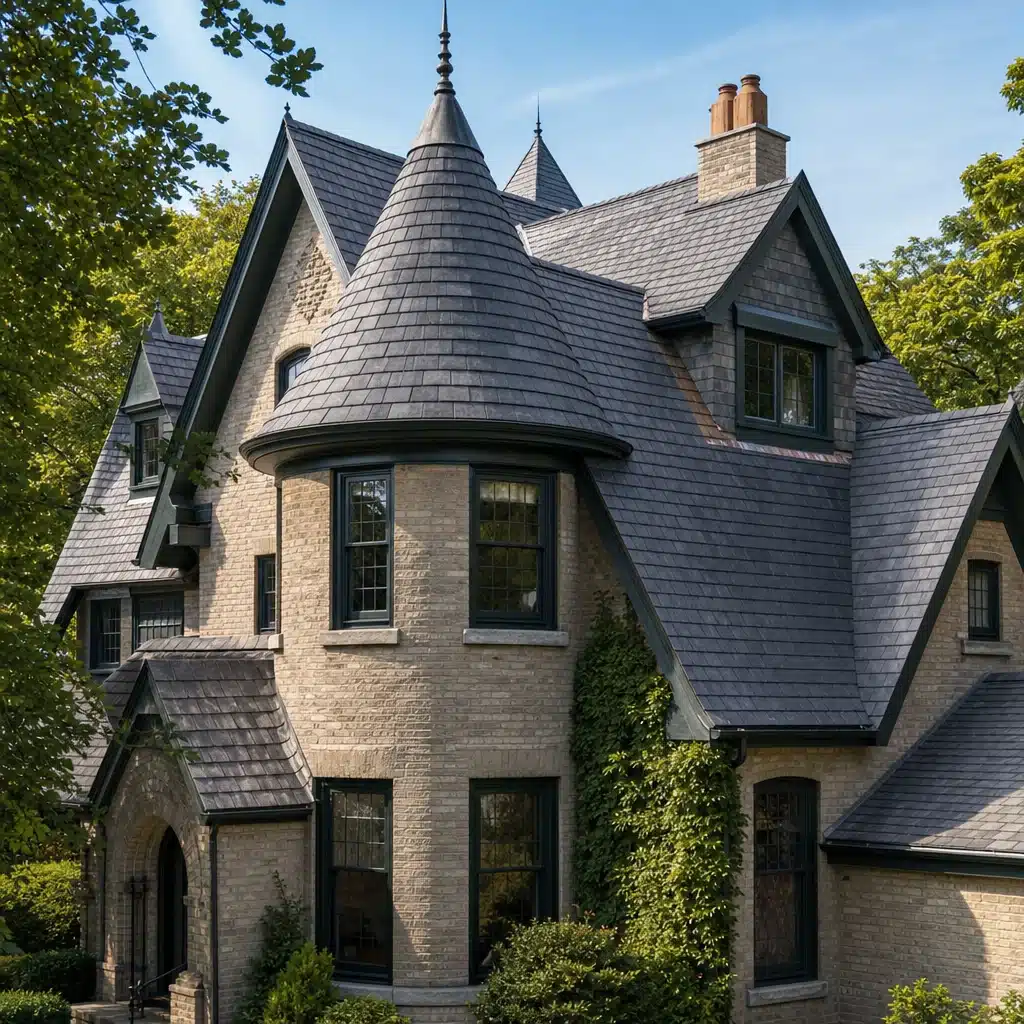
DaVinci Roofscapes manufactures composite slate roofing that is molded from actual quarried slate, so every tile carries the irregular thickness, chiseled edges, and natural surface texture that define authentic slate. From the street, and even from ten feet away, the tiles read as the real thing.
A few details make synthetic slate tiles convincing on historic properties:
- Variable widths and thicknesses that mimic hand-split quarry stock rather than uniform machined tiles
- Multi-width and single-width profiles to match original coursing patterns, including graduated installations where courses narrow toward the ridge
- Custom color blends developed to match aged slate palettes like weathered gray, mottled purple, deep green, and warm brown tones
- Optional hip and ridge accessories shaped to preserve the crisp geometry of original rooflines
For homeowners who want the full case for the material itself, we cover this in more depth in our breakdown of DaVinci synthetic slate advantages.
Performance Advantages for Chicago’s Harsh Seasonal Climate
Chicago suburbs put roofs through a punishing annual cycle: subzero January nights, freeze-thaw swings in March, hail-prone spring storms, humid summer heat, and heavy autumn winds off the lake. Natural slate can crack under repeated freeze-thaw stress, and asphalt breaks down under UV and thermal cycling.
DaVinci composite slate roofing is engineered specifically for these conditions:
- Class 4 impact resistance, the highest UL 2218 rating, which often qualifies homeowners for insurance premium discounts
- Class A fire rating when installed with the proper underlayment assembly
- 110 to 120 mph wind ratings verified under ASTM D3161 and D7158 testing
- 50-year limited warranty covering color fade, cracking, and impact
- Roughly one-quarter the weight of natural slate, eliminating most structural reinforcement work
A quick scenario: after a July hailstorm rolls through DuPage County with 1.5 inch hail, an aged natural slate roof often loses dozens of tiles and needs immediate tarping. A DaVinci roof of the same age typically comes through with no functional damage, and our licensed public insurance adjusters can document any cosmetic claims correctly the first time.
Preserving Architectural Integrity Across Historic Neighborhoods
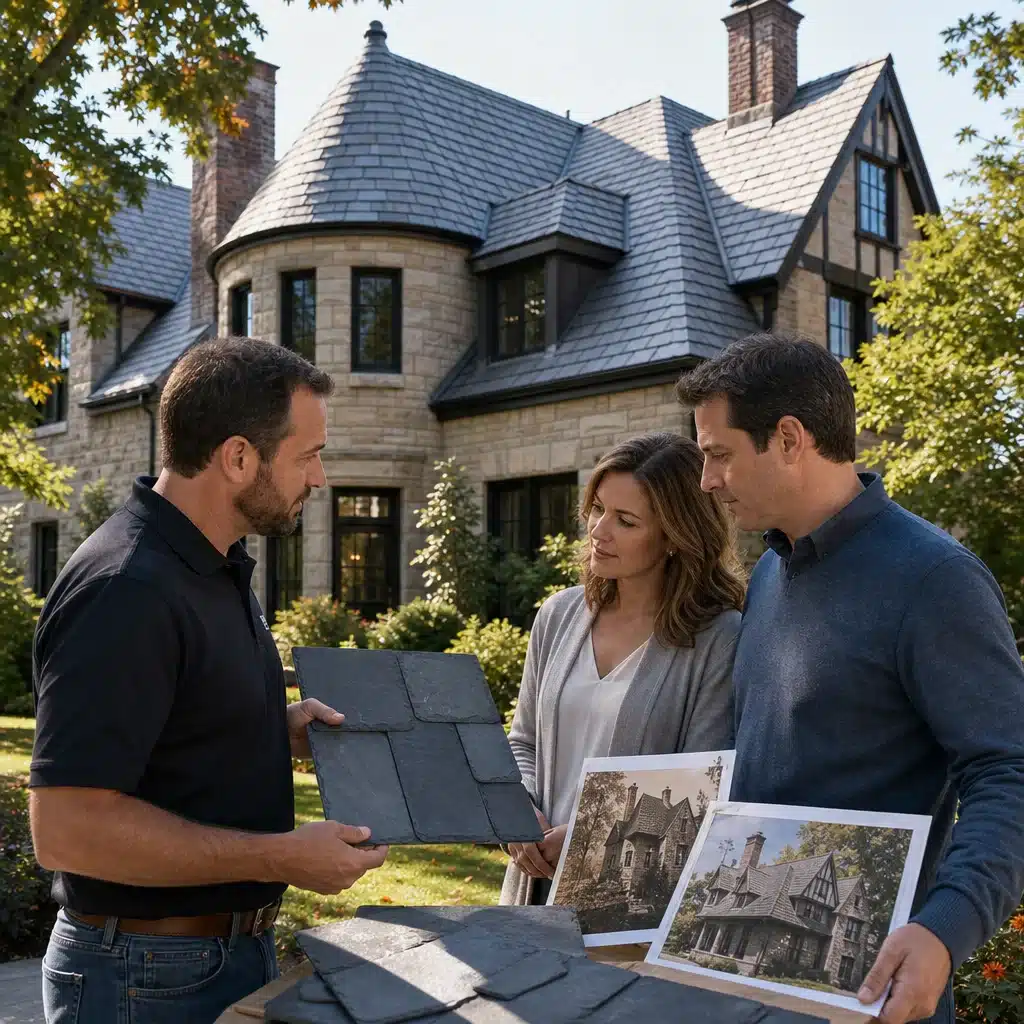
Many of the communities we serve have local landmark commissions, historic district guidelines, or HOA architectural review boards. Boards in places like Riverside, Geneva, and Barrington care about roof pitch appearance, tile shape, color palette, and coursing pattern. Bringing them a spec sheet for a random asphalt shingle rarely goes well.
DaVinci has been approved on landmark and historic district projects across the country, in part because the tiles satisfy the Secretary of the Interior’s Standards for Rehabilitation, which allow modern substitute materials when they match the visual qualities of the original. We handle the documentation, sample boards, and mock-up sections that review boards typically request, so approval moves forward without repeated design revisions.
If your project sits inside a designated historic district, ask us early about board timelines. Some commissions meet only once a month, and a well-prepared submittal package can save weeks. Our team has walked through this process on projects like our historic roof restoration work in Lake Bluff.
Our 35-Year Approach to Installing DaVinci Slate on Legacy Homes
Installing a luxury slate roof correctly on a 1910 Tudor or a 1925 Colonial Revival is not the same job as roofing a new build. Over more than three decades, we have refined a process built around older homes:
- Full structural assessment. We evaluate rafter sizing, decking condition, and historic framing details before we quote a system.
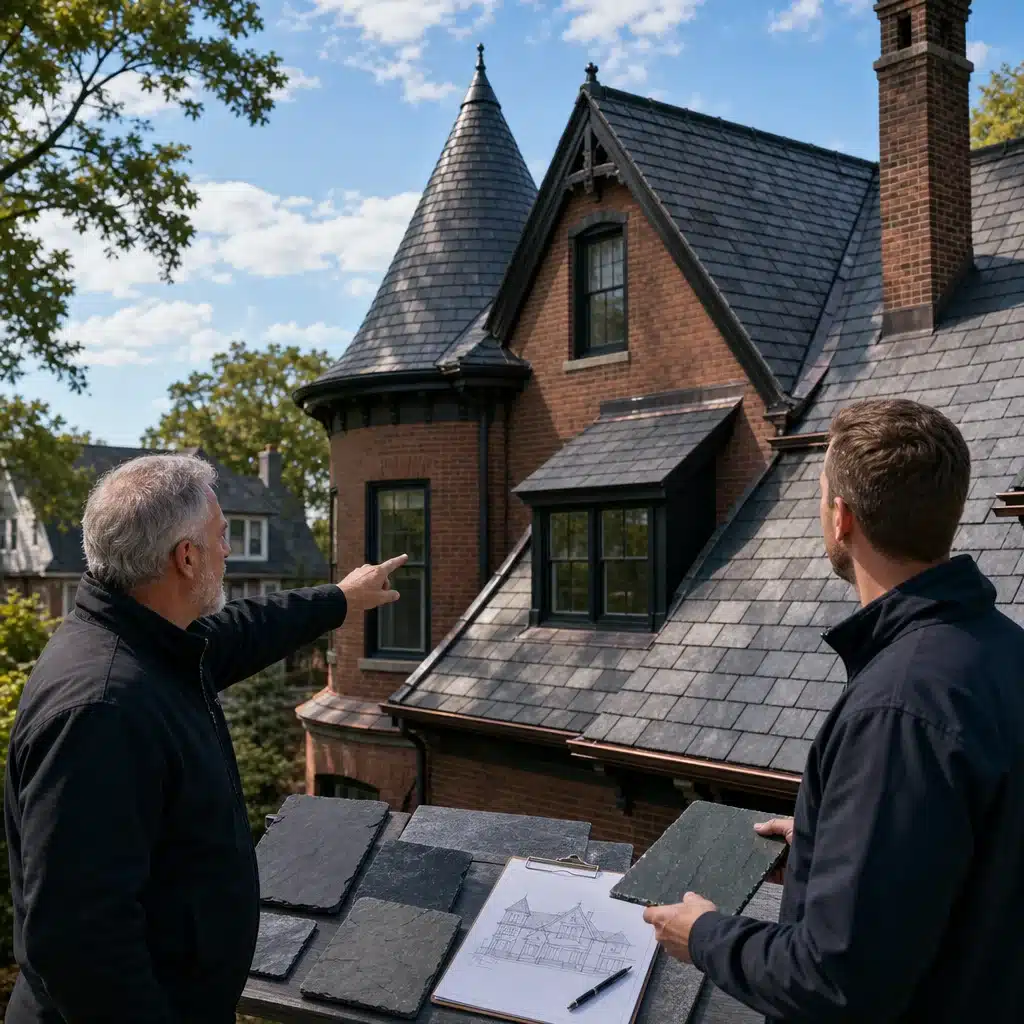
- Custom color and profile matching. We pull physical samples on site, review them at multiple times of day, and confirm selections against neighboring rooflines.
- Detailed tear-off and deck repair. Century-old decking often has plaster keys, mixed board widths, or previous repair patches that need proper preparation.
- Copper and lead-coated copper flashings. We fabricate valley, chimney, and dormer flashings to match traditional profiles rather than defaulting to stock aluminum.
- Precise coursing and blending. Our crews stage tiles from multiple bundles to distribute color variation naturally across the field.
- Historic-appropriate ventilation. Where soffit and ridge venting would disrupt sightlines, we design concealed ventilation that meets modern code without visual compromise.
For emergency situations, our 24/7 response team can secure a compromised historic roof the same day, protecting interior plaster, original woodwork, and hardwood floors while the permanent installation is planned.
Complementary Exterior Upgrades That Honor Historic Design
A new roof often reveals opportunities to refine the rest of the envelope. On a historic home, we approach these upgrades as coordinated design decisions rather than independent projects:
- Siding and trim restoration in fiber cement or cedar profiles that match original reveals, corner boards, and frieze details
- Window replacement with simulated divided lite patterns, historically accurate sash proportions, and period-appropriate exterior casings
- Copper gutters and half-round downspouts that complement slate rooflines far better than stock aluminum K-style
- Outdoor living additions such as pergolas, covered porches, and decks designed to reflect the home’s original detailing rather than compete with it
Scheduling these together with the roof project reduces staging costs, shortens overall timelines, and ensures color and material choices work as a whole.
Getting Started with Our Historic Home Roofing Consultation
If you own a historic Chicago suburban property and are weighing options for the next roof, the best first step is a detailed on-site consultation. We look at attic framing, existing tile condition, flashing details, ventilation, and any signs of long-term water intrusion, then walk you through DaVinci profiles and color blends that fit your home’s era and neighborhood context.
Here is what to have ready for that first visit:
- Approximate year of construction and any known previous roof work
- Photos of interior ceiling stains, if any
- HOA or historic district contact information, if applicable
- Recent insurance claims or storm damage reports
We will provide a written scope, a transparent investment range, and a realistic project timeline. Reach out through owenenterprises.com to schedule your consultation, and we will bring the samples, references, and expertise your home deserves.
Frequently Asked Questions (FAQ)
Is DaVinci slate roofing appropriate for historic homes in Chicago’s suburbs?
Yes, we regularly install DaVinci composite slate on historic properties throughout the greater Chicago suburbs because it replicates the depth, color variation, and hand-cut edges of authentic slate. This allows us to maintain the architectural character of century-old homes while meeting current building codes and performance standards.
How does DaVinci slate hold up against Chicago’s freeze-thaw cycles and severe weather?
DaVinci tiles are engineered to resist impact, high winds, and the repeated freeze-thaw stress common to our region. In our 35 years of installations, we have found the material significantly reduces the cracking, spalling, and weight-related structural strain that often affect natural slate on older homes.
What does the process look like when we replace a historic slate roof?
We begin with an on-site consultation to evaluate the existing roof structure, historical details, and any neighborhood preservation guidelines that apply. From there, we help select DaVinci profiles and color blends that match the original aesthetic, coordinate any needed deck repairs, and complete the installation with attention to flashing, ventilation, and trim details that preserve the home’s integrity.