Table of Contents
- 1. Manufacturer vs. Workmanship Warranties: Know the Difference
- 2. Coverage Length: Why 50-Year and Lifetime Terms Matter
- 3. Transferability Clauses That Boost Home Resale Value
- 4. Roofing Warranty Essentials for Chicago Weather Conditions
- 5. Siding and Window Warranty Protections Homeowners Overlook
- 6. Common Exclusions and Fine Print That Void Coverage
- 7. Why Proper Installation Determines Warranty Validity
- 8. How Our 35+ Years of Local Expertise Backs Every Warranty We Offer
- Frequently Asked Questions (FAQ)
1. Manufacturer vs. Workmanship Warranties: Know the Difference
Warranties are one of the most misunderstood parts of any exterior remodeling project. In the Chicago suburbs, where hailstorms, ice dams, and freeze-thaw cycles put roofs, siding, and windows through constant stress, the fine print on your warranty can be the difference between a free repair and a five-figure out-of-pocket surprise. After 35+ years serving local homeowners, we have seen every scenario the paperwork allows and every loophole it hides.
Here are the eight warranty facts every Chicago homeowner should understand before signing a contract in 2026.
Every exterior remodeling project actually comes with two separate warranties, and confusing them is the most common mistake we see.
- Manufacturer warranty: Covers the physical product (shingles, siding panels, window sashes) against defects like premature cracking, delamination, or seal failure. Issued by companies like GAF, DaVinci, James Hardie, or Andersen.
- Workmanship warranty: Covers how the product was installed. If a shingle blows off because it was nailed incorrectly, that is a workmanship issue, not a manufacturer defect.
Here is the catch: a beautiful lifetime manufacturer warranty is worthless if your contractor installs the product wrong, because most manufacturers void coverage when installation does not follow their specifications. That is why our workmanship warranty and manufacturer warranty protection are designed to work together, so no claim falls through the cracks.
Takeaway: Always ask for both warranties in writing before work begins, and confirm the length of each.
2. Coverage Length: Why 50-Year and Lifetime Terms Matter
Not all long-term warranties are equal. A “lifetime” shingle warranty often means the useful life the manufacturer assigns to the product, which may prorate down to as little as 20% coverage after year 10.
When comparing exterior remodeling warranties, look at three numbers:
- Non-prorated period: The years you receive 100% coverage.
- Total term: The full warranty length, including prorated years.
- Labor coverage window: Many manufacturer warranties only pay for materials, not the labor to reinstall them, unless you have an upgraded certified installer warranty.

We install premium systems like DaVinci synthetic slate and shake, which carry 50-year limited warranties with strong non-prorated periods. Paired with our workmanship warranty, that translates to real, verifiable coverage decades into the future rather than a marketing headline.
Takeaway: Ask the contractor to underline the non-prorated period on the warranty document before signing.
3. Transferability Clauses That Boost Home Resale Value
If you plan to sell your home within the next 10 to 15 years, transferability is a warranty feature that pays dividends at closing.
- Most premium roofing warranties allow one transfer to a subsequent homeowner, often within the first 20 years.
- Some require a written transfer request within 30 to 60 days of the sale.
- A few high-tier warranties allow multiple transfers, which is a strong selling point in a competitive suburban market.
Buyers in Naperville, Hinsdale, Arlington Heights, and surrounding towns increasingly ask for warranty documentation during inspection. A transferable 50-year roofing warranty or lifetime siding warranty terms can add measurable value to your listing.
Takeaway: Keep every warranty certificate, invoice, and inspection report in a dedicated folder so you can transfer coverage smoothly at resale.
4. Roofing Warranty Essentials for Chicago Weather Conditions
Chicago-area roofs face a punishing rotation of hailstorms, straight-line winds, sub-zero winters, and humid summers. Standard roofing warranty coverage does not always account for that reality.
When we design a roofing system, we look for warranties that specifically cover:
- Wind ratings up to 130 mph.
- Algae and streaking for at least 10 years.
- Ice dam-related damage when proper ventilation and ice-and-water shield are installed.
- Impact resistance on Class 4 rated products, which can also lower your homeowners insurance premium.
Because we are licensed public insurance adjusters, we also help homeowners navigate the overlap between warranty claims and storm insurance claims. When a hailstorm hits, that dual expertise means faster resolution and fewer denied claims. Our full residential roofing systems are engineered specifically for this climate.
Takeaway: Confirm your warranty explicitly addresses wind, hail, and ice dam scenarios common to northern Illinois.
5. Siding and Window Warranty Protections Homeowners Overlook
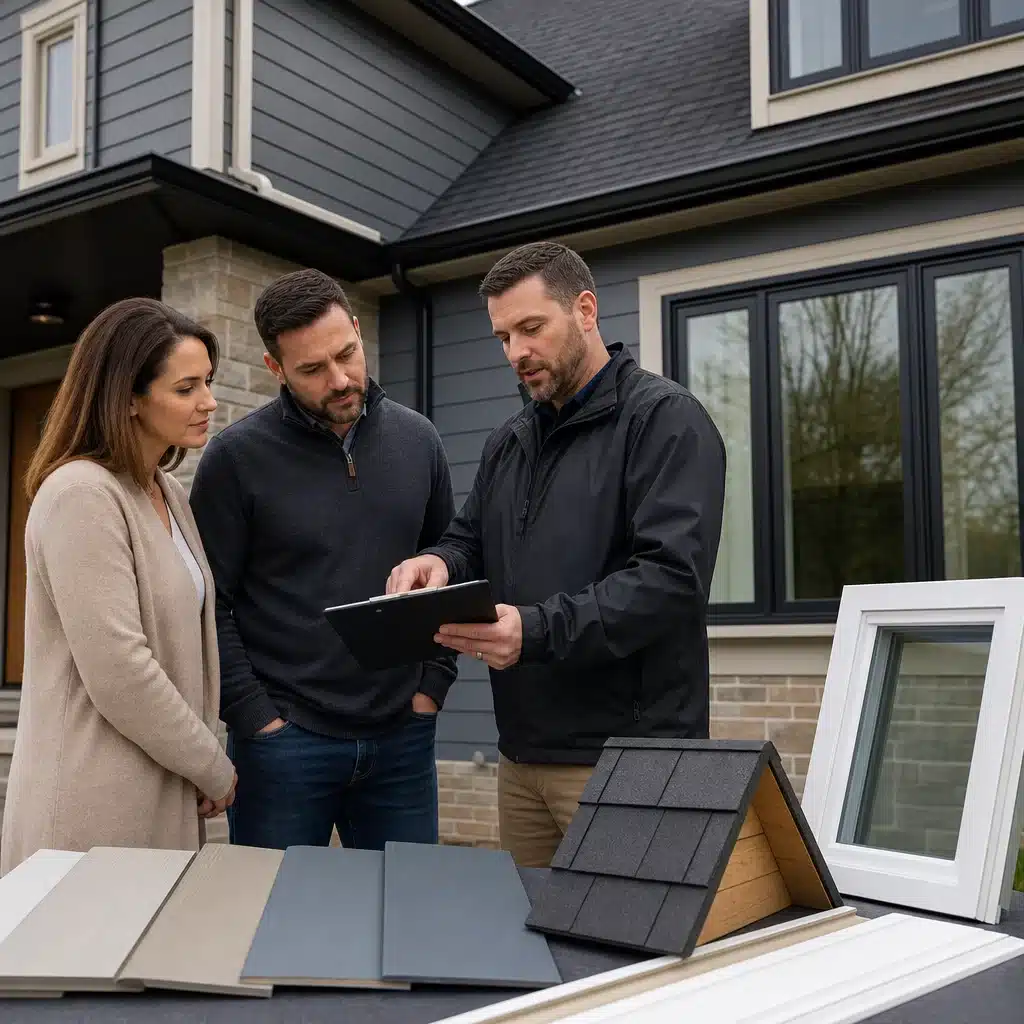
Siding and windows carry warranty details that often get overshadowed by the roofing conversation, but they matter just as much.
Siding warranty terms to verify:
- Fade resistance coverage (many fiber cement and engineered wood products include this, most vinyl does not).
- Hail and impact coverage limits.
- Coverage for caulking, trim, and accessory components, which are frequent failure points.
Window replacement warranty details to verify:
- Glass seal failure coverage (look for 20 years or more).
- Hardware, balances, and locking mechanisms (often shorter terms).
- Coverage for accidental glass breakage, which some premium lines now include.
We match each product to the exposure of your home. A west-facing wall in Oak Park needs different siding protection than a shaded north elevation in Wheaton, and the warranty should reflect that.
Takeaway: Request a component-by-component breakdown of coverage, not just a headline warranty length.
6. Common Exclusions and Fine Print That Void Coverage
Warranty denials almost always trace back to a handful of exclusions. Watch for these:
- Improper ventilation: The single most common reason roofing warranties get voided. Without balanced intake and exhaust, shingles age prematurely and manufacturers walk away.
- Mixed materials: Using a different brand of underlayment, flashing, or fasteners than the shingle manufacturer specifies.
- Pressure washing: Can void siding coverage instantly.
- DIY repairs or unauthorized contractors: Any subsequent work by a non-certified installer typically voids the original warranty.
- Acts of God carve-outs: Some warranties exclude hail, wind above a certain speed, or “unusual weather events.”
Read every exclusion before you sign. If a contractor cannot explain them clearly, that is a red flag.
Takeaway: Ask your contractor to hand you a written list of actions that would void your warranty, so you know exactly what to avoid.
7. Why Proper Installation Determines Warranty Validity
Even the strongest manufacturer warranty is contingent on certified installation. Manufacturers audit claims aggressively, and if the install does not meet spec, the claim is denied.

Proper installation on a Chicago-area home typically requires:
- Correct nail placement, count, and depth per shingle strip.
- Manufacturer-approved underlayment and ice-and-water shield extending well past code minimum.
- Balanced attic ventilation calculated to the square footage.
- Flashing details at chimneys, valleys, and wall intersections that match the manufacturer’s diagrams.
- Documentation and photos of each stage for warranty registration.
We are certified installers for the premium product lines we carry, which unlocks enhanced warranty tiers that unlicensed or general contractors cannot offer. Those enhanced tiers often extend labor coverage, non-prorated periods, and transferability, turning a good warranty into a great one. For a deeper look at how installation and long-term maintenance interact, our exterior warranties guide walks through the details.
Takeaway: Verify your contractor’s certification level with each manufacturer before signing, not after.
8. How Our 35+ Years of Local Expertise Backs Every Warranty We Offer
A warranty is only as reliable as the company standing behind it. Over 35 years of serving Chicago suburban homeowners means we have installed, inspected, and honored warranties across multiple generations of products and multiple decades of Midwest weather.
Here is what that means for you:
- A workmanship warranty from a company that will still be here when you need to use it.
- In-house licensed public insurance adjusters who bridge the gap between warranty claims and storm insurance claims.
- 24/7 emergency roofing services so a warranty issue during a February ice storm gets addressed immediately, not weeks later.
- Certified installation on premium systems including DaVinci slate and shake, ensuring you qualify for the strongest available manufacturer warranty protection.
- Full-service coverage across roofing, siding, windows, decks, and pergolas, so one contractor stands behind your entire exterior.
When we quote a project, we walk you through the exact terms of every warranty, mark the important dates, and register your coverage on your behalf. That is the difference between a promise on paper and a promise you can actually collect on.
If you are planning a roofing, siding, window, or outdoor living project in 2026, we are ready to show you what a warranty backed by real local expertise looks like. Reach out for a consultation, and we will build a protection plan that fits your home and holds up for the long haul.
Frequently Asked Questions (FAQ)
What is the difference between a manufacturer warranty and a workmanship warranty?
A manufacturer warranty covers defects in the actual materials, such as shingles, siding panels, or window components, and is issued by the product maker. A workmanship warranty covers the quality of the installation itself, which we stand behind directly. Both are important because a material defect and an installation error are handled through separate claims processes.
Will my exterior remodeling warranty stay valid if I sell my home?
Many of the warranties we offer include transferability clauses, which allow coverage to pass to a new owner, often within a defined window after the original installation. This can be a strong selling point when listing your home. We review the specific transfer terms with you at the time of installation so there are no surprises later.
What can void an exterior remodeling warranty?
Improper installation is one of the most common reasons coverage is voided, which is why manufacturers often require certified contractors for full protection. Other issues include unauthorized modifications, lack of routine maintenance, and damage from events specifically excluded in the fine print. We walk homeowners through these exclusions before work begins so coverage remains intact for the full term.