Table of Contents
- Why Chicago Suburban Weather Puts Asphalt Roofs to the Test
- Common Warning Signs Your Asphalt Roof Needs Attention
- When a Targeted Repair Is the Smarter Investment
- When Full Replacement Delivers Better Long-Term Value
- Cost, Lifespan, and Insurance Factors to Weigh Before Deciding
- How Our 35+ Years of Local Expertise Guides Your Decision
- Our Inspection, Emergency Response, and Insurance Claim Process
- Premium Materials and Upgrades We Offer for Lasting Protection
- Schedule Your Free Roof Assessment With Owen Enterprises
- Frequently Asked Questions (FAQ)
Why Chicago Suburban Weather Puts Asphalt Roofs to the Test
Roofs in Naperville, Arlington Heights, Oak Park, and the rest of the Chicago suburbs deal with a punishing mix of freeze-thaw cycles, lake-effect wind, summer hailstorms, and heavy wet snow. Asphalt shingles are engineered to handle weather, but our region tends to compress a decade of wear into just a few brutal seasons.
Ice dams alone can lift shingle edges and force water under the underlayment. Add straight-line winds that exceed 60 mph during summer derechos, and even a five-year-old roof can suddenly leak. That is why the asphalt roof repair versus replacement question is not just about age; it is about how a specific roof has weathered specific storms.
Takeaway: Track storm dates on your calendar. If your home sat through a hail event or a wind advisory, schedule an inspection within 30 days so damage stays within most insurance claim windows.
Common Warning Signs Your Asphalt Roof Needs Attention
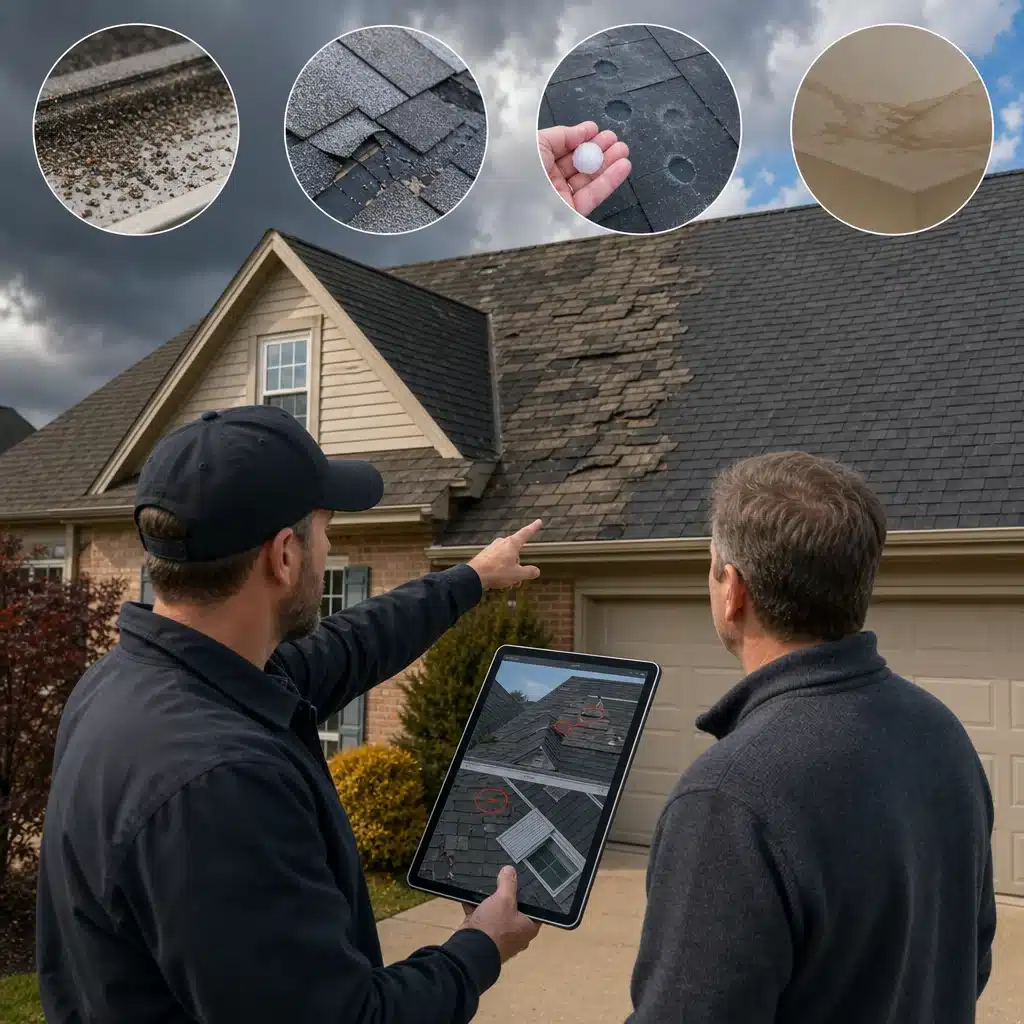
Some issues you can spot from the driveway. Others hide until water is already dripping into a bedroom. Here are the signs you need a new roof or, at minimum, a professional look:
- Granules in gutters or downspout splash zones. Heavy granule loss means UV protection is failing.
- Curling, cupping, or clawing shingles, especially on south- and west-facing slopes.
- Dark bruises or circular impact marks from hail, often the size of a quarter.
- Missing shingles or exposed nail heads after a windstorm.
- Sagging rooflines or spongy decking felt when walking the roof.
- Interior clues: ceiling stains, attic daylight, or musty insulation.
- Rising energy bills tied to compromised attic ventilation.
Takeaway: Do a slow walk around your home twice a year, ideally in spring and late fall, with binoculars. Photograph anything that looks different from last time.
When a Targeted Repair Is the Smarter Investment
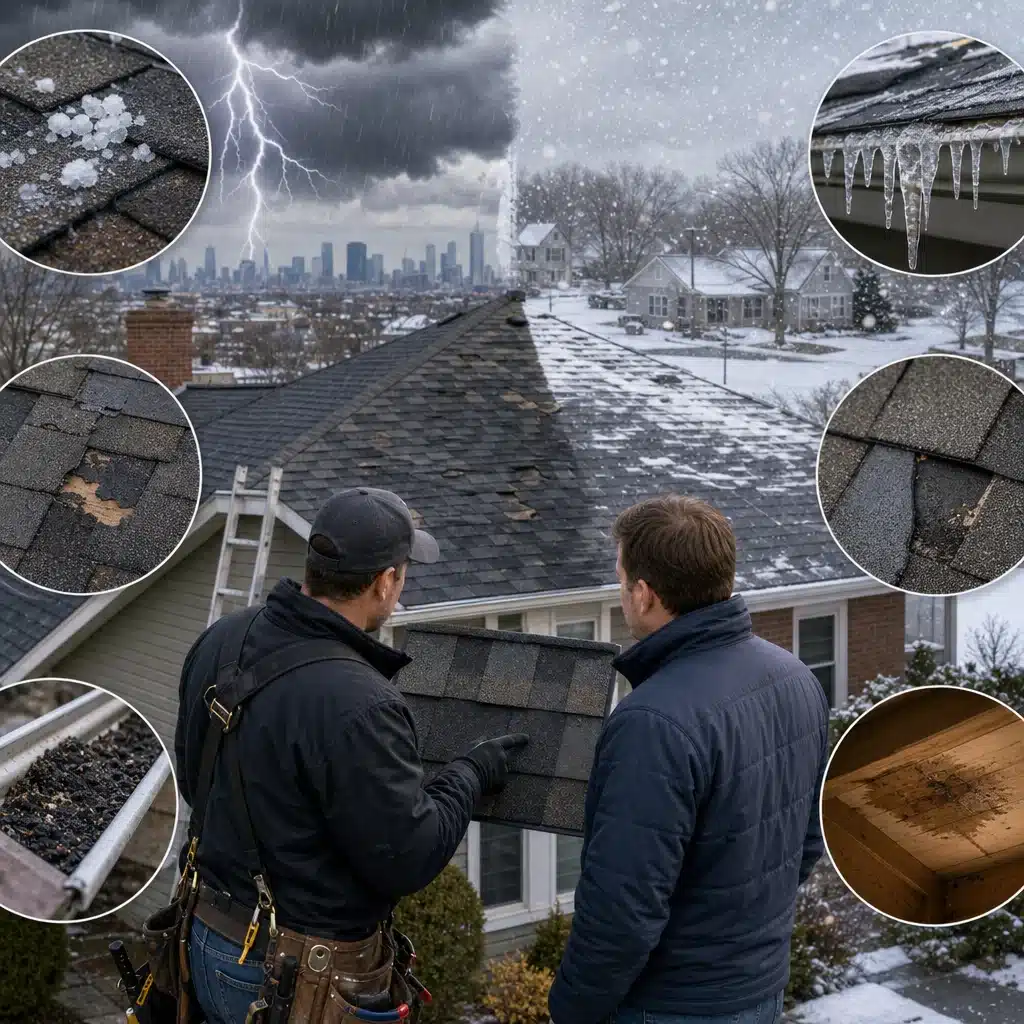
Asphalt shingle repair makes sense when damage is isolated and the rest of the roof still has meaningful life left. Good repair candidates typically share a few traits: the roof is under 12 to 15 years old, the underlayment and decking are dry, and the affected area is smaller than roughly one roofing square (100 square feet).
Practical repair scenarios we see often:
- A single wind-lifted section over a garage after a July storm.
- Flashing failure around a chimney or skylight causing a localized leak.
- A tree branch strike that damaged 10 to 20 shingles in one spot.
- Popped or backed-out nails creating small entry points.
The trade-off to understand: replacement shingles rarely match aged shingles perfectly, so expect a visible patch. If curb appeal matters and the repair is on a prominent slope, weigh that against cost.
Takeaway: If damage covers less than 30% of the roof and the system is under 15 years old, ask for a repair quote first. It often lands between $400 and $1,800 depending on complexity.
When Full Replacement Delivers Better Long-Term Value
Sometimes patching becomes a losing game. Knowing when to replace asphalt shingles saves money over a five-year horizon and prevents interior damage that costs far more than any roof.
Replacement is usually the right call when:
- The roof is 18+ years old, even if it looks acceptable from the ground.
- You have had multiple leaks in different areas over two seasons.
- More than 30% of shingles show granule loss, curling, or hail bruising.
- Decking feels soft in several spots or shows widespread moisture staining in the attic.
- You are already planning siding or window work and want a matched aesthetic.
- An insurance adjuster has approved a full replacement after a storm event.
A new system also unlocks modern benefits older roofs cannot offer: improved ice-and-water shield coverage, ridge ventilation, algae-resistant shingles, and Class 4 impact-rated products that may qualify for insurance discounts.
Takeaway: If you are pouring $1,500 into repairs every couple of years, that money is better applied to a full replacement that resets your 25 to 50 year clock.
Cost, Lifespan, and Insurance Factors to Weigh Before Deciding
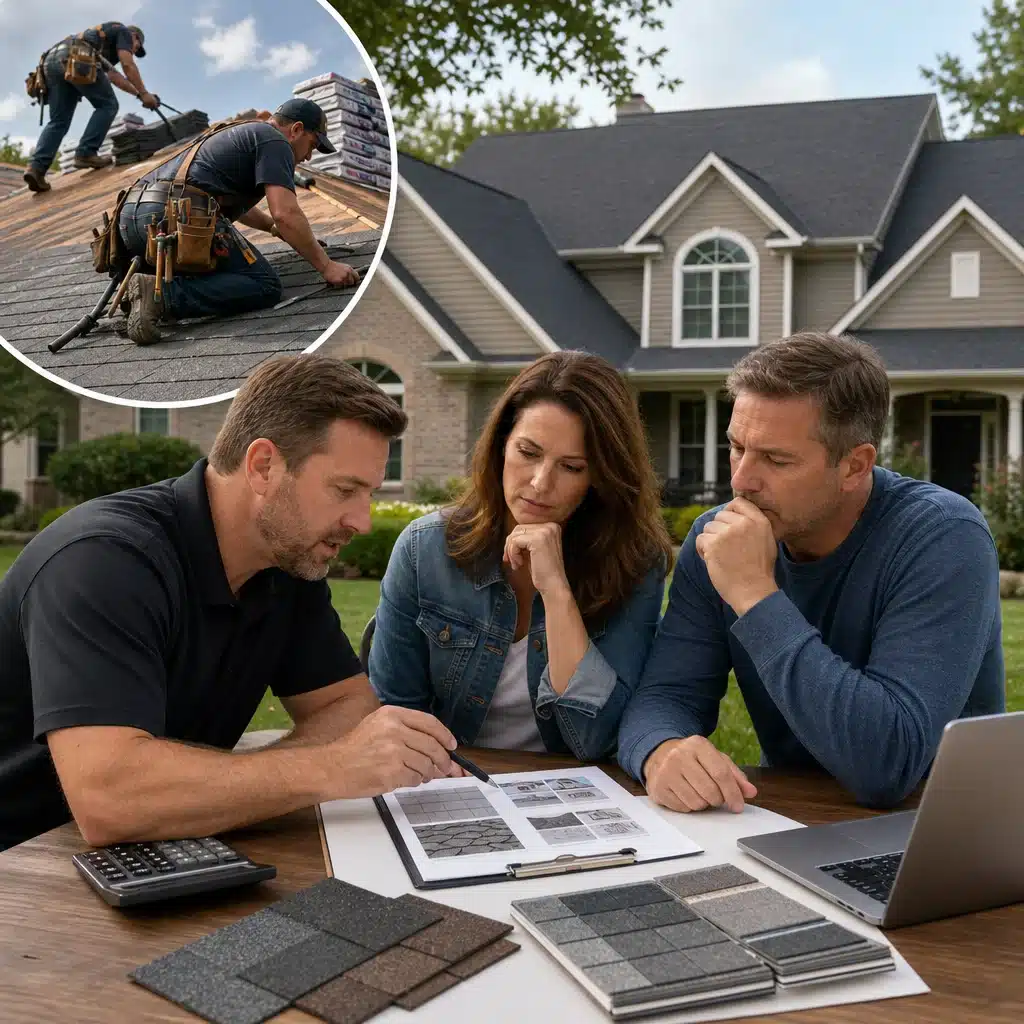
Roof replacement cost in the Chicago suburbs generally runs $9,000 to $22,000 for a standard asphalt system on a typical single-family home, with premium architectural or designer shingles pushing higher. Steep pitches, multiple facets, tear-off of layered roofing, and skylights all move the number.
Weigh these variables together, not in isolation:
- Remaining lifespan. A 20-year-old 3-tab roof has already exceeded its expected life. Any repair is a stopgap.
- Resale timeline. Selling within two years? A new roof often returns 60 to 70% at closing and speeds up offers.
- Insurance coverage. Storm damage roof repair or replacement may be largely covered after deductibles. Wear-and-tear rarely is.
- Financing versus repeated repairs. Compare a monthly payment on a new roof against annual repair spending plus interior damage risk.
Takeaway: Get an itemized inspection report with photos before you request quotes. It lets contractors bid on the same scope and helps insurance conversations go faster.
How Our 35+ Years of Local Expertise Guides Your Decision
We have inspected roofs across the Chicago suburbs for more than three decades, which means we have watched specific neighborhoods react to specific storms year after year. That pattern recognition matters. We know which subdivisions were built with lightweight decking, which developments received the same builder-grade shingles that all fail around year 17, and which streets took the worst of the 2020 derecho.
That local knowledge shapes honest recommendations. When a repair genuinely solves the problem, we say so. When we can see that a homeowner will be back in 18 months paying for the same leak, we explain why replacement protects the investment better.
Takeaway: Ask any contractor how long they have worked in your specific municipality and what they have seen on roofs your age. The answer tells you a lot.
Our Inspection, Emergency Response, and Insurance Claim Process
Our process is built to remove guesswork and reduce stress, especially after a storm.
- Free on-site assessment. We photograph every slope, flashing detail, and attic condition, then deliver a written report.
- 24/7 emergency response. If a tree is through your roof or shingles are gone at 11 p.m., our emergency roof services team tarps and secures the home to prevent interior damage.
- Licensed public adjuster support. Our in-house licensed adjusters can represent you directly to your insurance carrier, documenting damage properly and negotiating a fair settlement. Learn more about working with public adjusters for claims.
- Clear scope and pricing. You receive a line-item proposal with material choices, warranty terms, and timeline.
- Professional installation and cleanup. Magnetic sweeps, dumpster placement protection, and daily site tidiness are standard.
Takeaway: After any major storm, call for the free assessment before calling insurance. Documented evidence strengthens every claim.
Premium Materials and Upgrades We Offer for Lasting Protection
Not every roof should be plain asphalt. For homeowners who want distinctive curb appeal and multi-generational performance, we install premium systems alongside our standard shingle lines.
- DaVinci synthetic slate and shake. Class 4 impact-rated, Class A fire-rated, and virtually maintenance-free with a 50-year warranty.
- Architectural and designer asphalt shingles with algae resistance and enhanced wind ratings up to 130 mph.
- Full underlayment upgrades including ice-and-water shield extended to 6 feet from eaves in problem areas.
- Ridge and soffit ventilation systems that extend shingle life and reduce ice dams.
- Coordinated exterior projects so a new roof, siding, windows, and outdoor living features work as one design.
Takeaway: If you plan to stay in your home 15+ years, price a premium option next to standard asphalt. The lifetime cost difference is smaller than most homeowners expect.
Schedule Your Free Roof Assessment With Owen Enterprises
Whether you have one suspicious stain on a ceiling or an entire slope missing shingles, the fastest way to get clarity is a professional inspection. We provide free, no-pressure roof assessments across the Chicago suburbs, along with detailed photo reports you can use for planning or insurance.
Call us or request an assessment through owenenterprises.com to get on the schedule. If it is an active emergency, our 24/7 line responds around the clock. We will help you decide, with evidence, whether targeted repair or full replacement is the right investment for your home in 2026.
Frequently Asked Questions (FAQ)
How do we decide whether an asphalt roof needs repair or full replacement?
We start with a thorough inspection of the shingles, flashing, decking, and attic ventilation, then weigh the roof’s age, the extent of damage, and how localized the problem is. If issues are isolated and the roof still has meaningful lifespan left, a targeted repair usually makes sense. When we find widespread granule loss, multiple leaks, or damage across a roof past 18 to 20 years old, replacement is typically the better long-term investment.
What should Chicago suburban homeowners do after a major storm?
We recommend calling us as soon as it is safe so we can dispatch our 24/7 emergency response team to tarp exposed areas and prevent interior damage. From there, we document the damage in detail and, because we are licensed public insurance adjusters, we can guide you through filing a storm damage claim with your insurer. Acting quickly protects both your home and your claim eligibility.
How long does a new asphalt shingle roof typically last in our climate?
In the greater Chicago area, a properly installed asphalt shingle roof generally lasts 20 to 30 years, depending on the shingle grade, ventilation, and exposure to wind and hail. We install premium shingle systems with upgraded underlayment and ice and water shield to stand up to freeze-thaw cycles and heavy storms. Regular inspections after severe weather help us extend that lifespan as long as possible.