Table of Contents
- Why Elgin Commercial Properties Demand the Right Roofing System
- Common Roofing Challenges Facing Elgin Business Owners
- TPO Roofing: A Reliable Choice We Install for Elgin Facilities
- EPDM Rubber Roofing for Long-Term Durability
- Modified Bitumen and Built-Up Roofing Systems We Recommend
- Metal Roofing Solutions for Commercial Buildings
- How We Match the Right System to Your Building and Budget
- Our 35+ Years of Local Roofing Expertise in the Chicago Suburbs
- Emergency Commercial Roofing and Insurance Claim Support
- Schedule Your Elgin Commercial Roofing Consultation With Us
- Frequently Asked Questions (FAQ)
Why Elgin Commercial Properties Demand the Right Roofing System
Elgin sits in one of the more demanding climate zones in the Midwest. Between lake-effect moisture, freeze-thaw cycles that can swing 40 degrees in a week, hail events in late spring, and heavy summer UV exposure, a commercial roof here works harder than most people realize. When we specify Elgin commercial roofing systems, we start with that climate reality, then layer in the specific demands of the building itself.
A distribution warehouse near Randall Road has different priorities than a medical office off Route 20 or a restaurant on Grove Avenue. Foot traffic, rooftop equipment, insulation values, drainage slope, and occupancy hours all shape the right specification. Getting this match right can mean the difference between a roof that lasts 12 years and one that performs cleanly for 25 or more.
Takeaway: Before comparing product brochures, document your building’s actual conditions, load, and use. That data drives every good decision that follows.
Common Roofing Challenges Facing Elgin Business Owners
Local property owners tend to call us about the same recurring issues:
- Ponding water on aging flat roofs after heavy rain, often tied to compressed insulation or clogged internal drains.
- Seam failures and shrinkage on older single-ply membranes that were installed with mechanical fasteners that have loosened over time.
- Storm and hail damage that isn’t obvious from the ground but shows up as bruising, punctures, or fractured granules.
- Rooftop HVAC penetrations that leak around curbs and pitch pans after years of thermal movement.
- Ice damming and blow-off where parapet walls, coping caps, or flashing weren’t detailed for wind uplift.
Each of these problems is fixable, but the fix depends on whether we’re doing targeted commercial roof repair in Illinois conditions, a full recover, or a tear-off and replacement. We inspect first, then recommend, so you don’t overbuy or underbuild.
Takeaway: If your roof is more than 12 years old and you’ve patched the same area twice, request a full core sample and moisture scan before the next repair.
TPO Roofing: A Reliable Choice We Install for Elgin Facilities
Thermoplastic polyolefin, or TPO, has become one of the most requested systems for good reason. Its white reflective surface reduces cooling loads in summer, its heat-welded seams create a monolithic waterproof plane, and its cost per square foot is competitive for larger footprints.
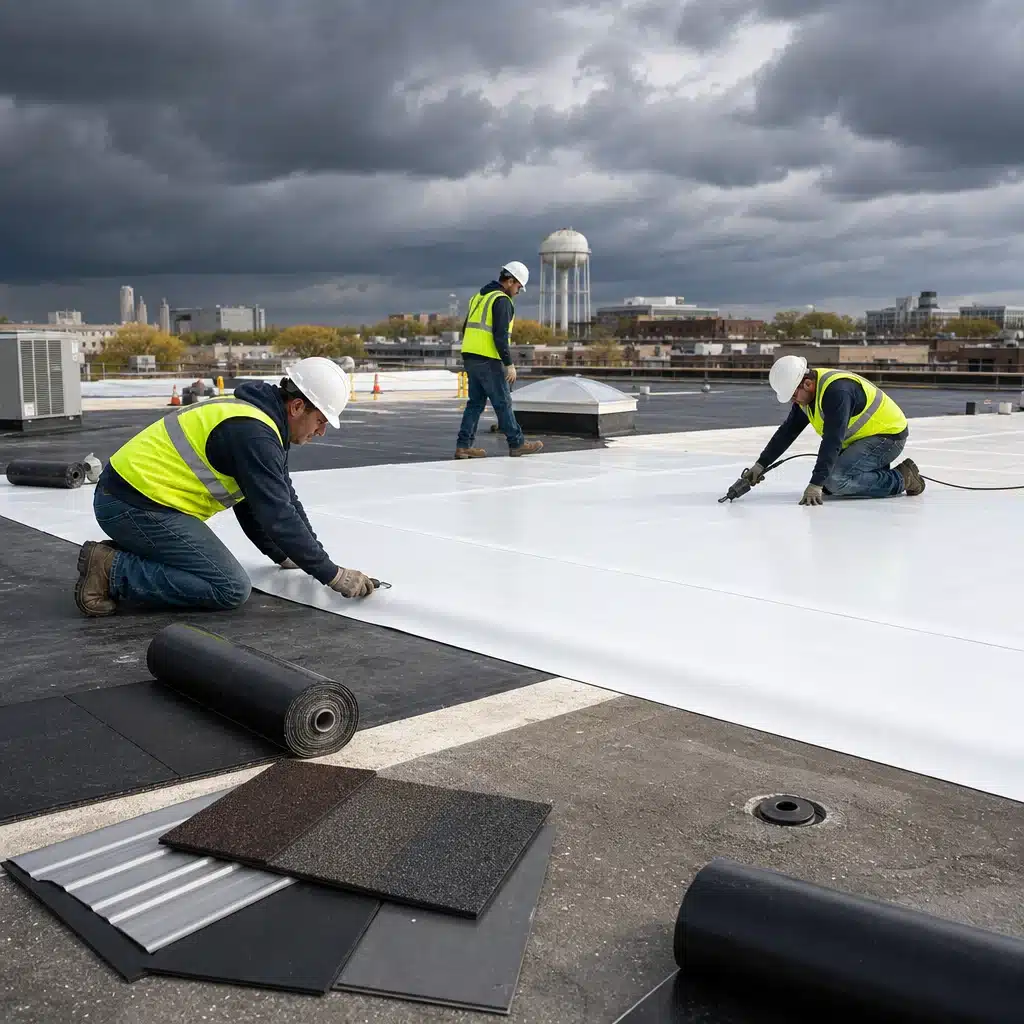
Where TPO roofing installation shines in Elgin:
- Retail centers and office parks that want lower summer energy bills
- Warehouses and light industrial buildings with wide open decks
- Recover projects where weight is a concern
We install TPO in 60-mil and 80-mil thicknesses depending on foot traffic and hail exposure. For properties near open fields west of Elgin, we typically recommend the thicker membrane and reinforced walkway pads around any serviced equipment.
Takeaway: Ask your contractor to specify membrane thickness, insulation R-value, and attachment method in writing. Vague quotes almost always mean shortcuts.
EPDM Rubber Roofing for Long-Term Durability
EPDM, a synthetic rubber membrane, remains a workhorse in commercial roofing options Elgin owners consider, especially for buildings where long service life matters more than reflectivity. Well-installed EPDM regularly runs 25 to 30 years, and it handles temperature swings and UV exposure with minimal degradation.
We often recommend EPDM for:
- Older masonry buildings where a dark, flexible membrane conforms well to irregular decks
- Facilities with heavy rooftop chemical or grease exposure, since EPDM resists many contaminants better than some alternatives
- Owners planning to hold the property long term and wanting the lowest lifecycle cost
EPDM can be fully adhered, mechanically fastened, or ballasted. Each attachment method has trade-offs around wind uplift, aesthetics, and insulation performance, and we walk through those clearly during the proposal stage.
Takeaway: If you’re planning to own the building for 15+ years, price out EPDM and TPO side by side on a lifecycle basis, not just installed cost.
Modified Bitumen and Built-Up Roofing Systems We Recommend
For low-slope roofs with heavy traffic, complex penetrations, or a preference for multi-ply redundancy, modified bitumen and built-up roofing (BUR) systems remain excellent options. These asphalt-based assemblies use multiple layers of reinforced membrane and are finished with granulated cap sheets, cool-roof coatings, or gravel surfaces.
Where these systems earn their place:
- Buildings with frequent rooftop service work where puncture resistance matters
- Properties where multiple layers provide reassurance against catastrophic leaks
- Historic or mixed-use structures where a traditional assembly ties into existing details
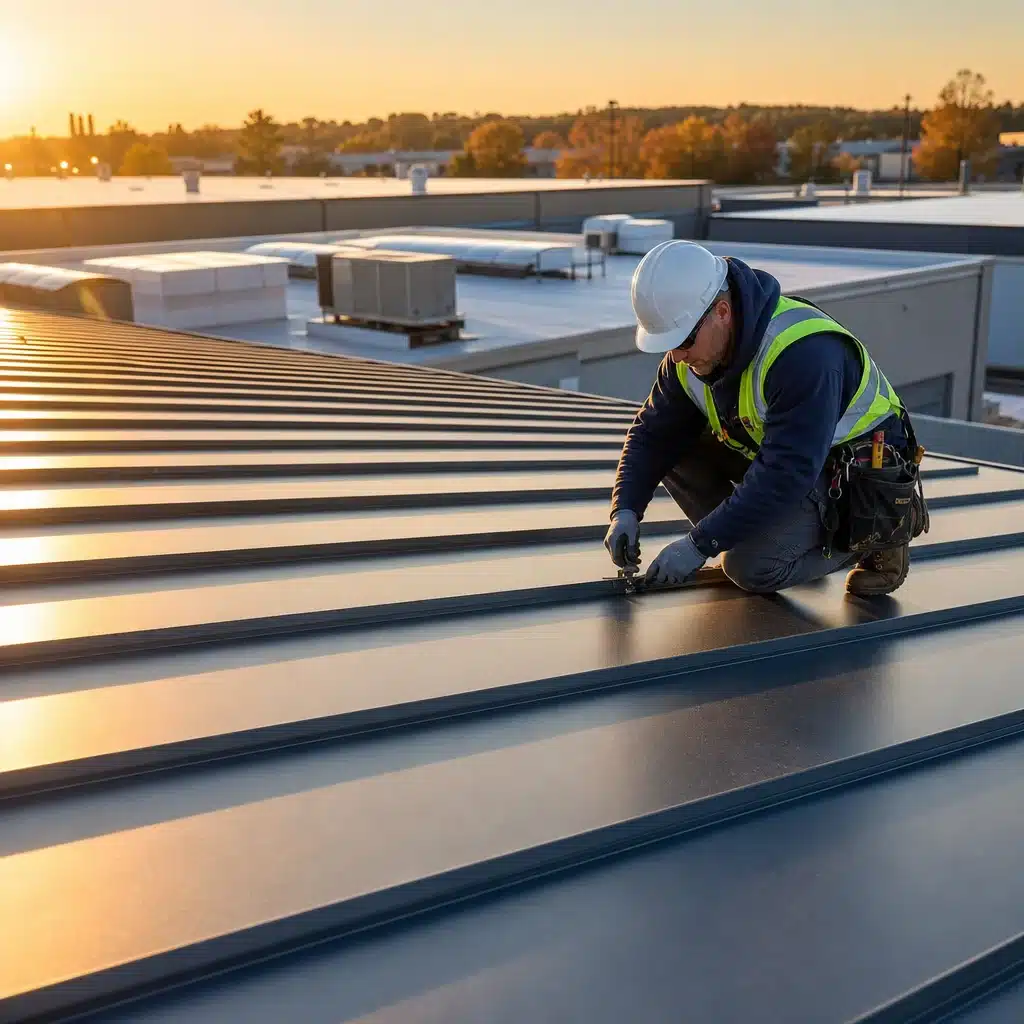
Modern modified bitumen can be torch-applied, cold-applied with adhesives, or self-adhered. In occupied buildings and tight urban lots, we typically prefer cold-applied or self-adhered methods to eliminate open-flame risk.
Takeaway: For any occupied commercial building, ask specifically whether the installation method involves open flame and confirm your contractor’s fire watch protocol.
Metal Roofing Solutions for Commercial Buildings
Standing seam and architectural metal roofing continues to grow in Elgin’s commercial market, particularly for retail, hospitality, mixed-use developments, and steeper-sloped structures. A properly installed metal roof can last 40 to 60 years, resists hail well when specified in the right gauge, and offers a clean architectural line that helps with tenant appeal and property value.
Our commercial metal roofing work includes steel, aluminum, and zinc systems in a range of finishes and profiles. Concealed-fastener standing seam is our default for most commercial applications because it eliminates the exposed screw failures that plague older exposed-fastener panels.
Metal pairs well with:
- Solar-ready designs, since standing seam allows non-penetrating clamp mounting
- Buildings targeting long ownership horizons and predictable maintenance budgets
- Facades where the roof is highly visible from the street
Takeaway: If you’re within a few years of a solar decision, choose your roof system with that in mind. Retrofitting the wrong roof to accept panels is expensive.
How We Match the Right System to Your Building and Budget
There’s no universally best roof. There is, however, a best-fit system for your building, use, timeline, and budget. Our specification process typically follows five steps:
- On-site assessment, including core samples, moisture survey, drainage review, and penetration inventory.
- Structural and code review, especially insulation R-value requirements under current Illinois energy code.
- Ownership horizon conversation, since a 7-year hold and a 25-year hold justify different investments.
- Side-by-side proposals, comparing two or three systems with installed cost, projected lifecycle cost, warranty terms, and maintenance requirements.
- Clear scope documentation, so nothing important is left to interpretation on install day.
For flat roof replacement Elgin projects, we also coordinate with tenants and operations managers to minimize business disruption, staging work in phases when needed.
Takeaway: Insist on at least two engineered options with lifecycle math, not just a single quote. It changes the conversation from price to value.
Our 35+ Years of Local Roofing Expertise in the Chicago Suburbs
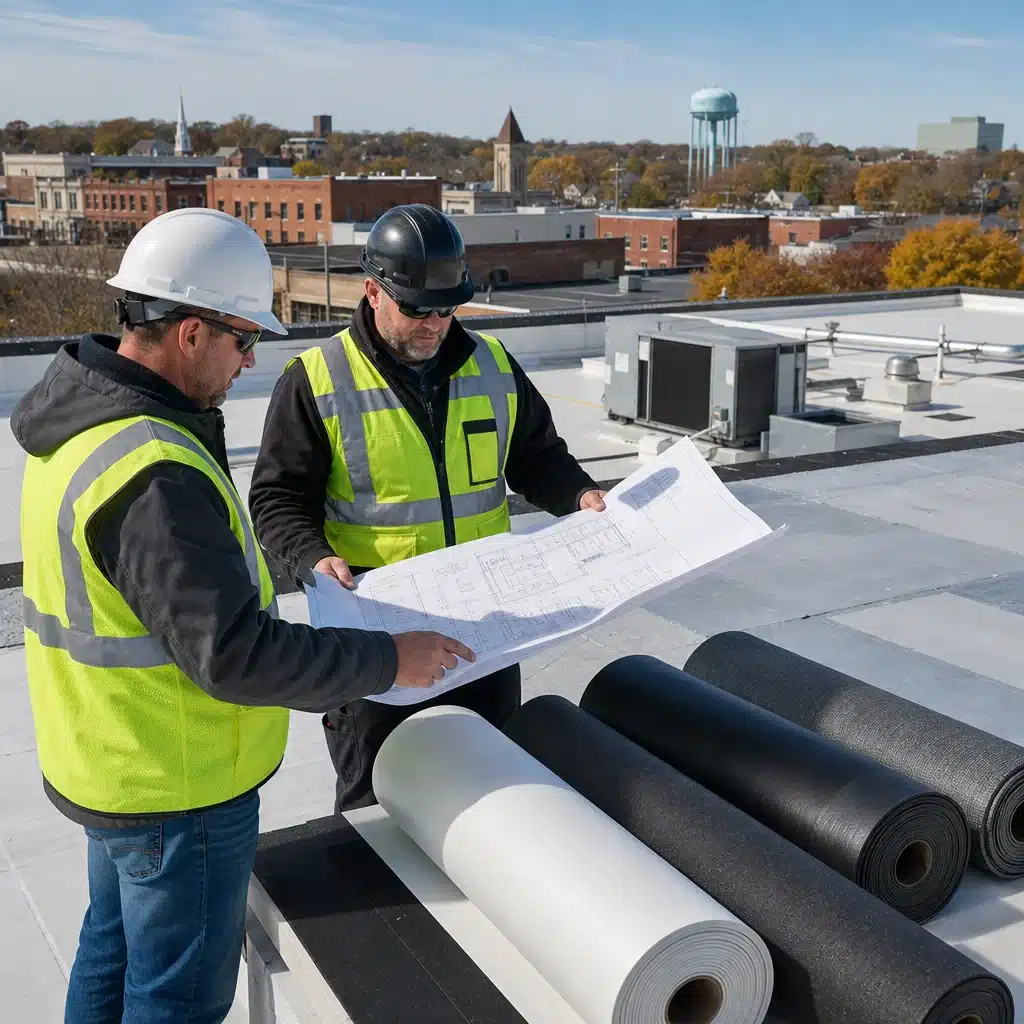
We’ve spent more than 35 years working on homes and commercial buildings across the Chicago suburbs, and that longevity matters in ways that go beyond marketing. We know which insulation assemblies pass local inspection cleanly, which membrane manufacturers stand behind their warranties in this climate, and which detail failures we see repeatedly on buildings put up by out-of-town crews.
That accumulated pattern recognition shows up in tighter details, fewer callbacks, and roofs that perform the way the spec sheet promises. It also means we can talk candidly about what has and hasn’t worked on similar buildings in Elgin, St. Charles, South Elgin, Bartlett, and neighboring communities.
Takeaway: Ask any contractor for three commercial references on similar system types within 20 miles of your building. The answers tell you a lot.
Emergency Commercial Roofing and Insurance Claim Support
Storms don’t wait for business hours. When a hailstorm rolls through or a wind event peels back a section of membrane, we respond around the clock with temporary dry-in work to protect interiors, inventory, and operations. Our emergency roof repairs team is set up for exactly this.
Because we’re licensed public insurance adjusters as well as contractors, we can document damage, prepare comprehensive claim packages, and advocate for a fair settlement with your carrier. That combination is unusual, and it saves commercial owners significant time and money when a claim is complicated.
Takeaway: Before the next storm season, save an emergency roofing contact in your phone and photograph your current roof condition. Both steps speed up any future claim.
Schedule Your Elgin Commercial Roofing Consultation With Us
If you’re evaluating repair, recover, or full replacement options, we’d welcome the chance to walk your roof, discuss goals, and put clear numbers in front of you. Whether you’re leaning toward TPO, EPDM, modified bitumen, or metal, we’ll give you a straightforward recommendation grounded in your building’s actual conditions and your ownership plans.
Reach out through owenenterprises.com to schedule an on-site assessment. We’ll bring the expertise, the core sampler, and the honest conversation. You bring the questions.
Frequently Asked Questions (FAQ)
Which commercial roofing system works best for buildings in Elgin?
The right system depends on your roof size, slope, foot traffic, and budget. For most flat and low-slope commercial buildings in Elgin, we typically recommend TPO for its energy efficiency, EPDM for long-term durability, or modified bitumen for buildings that need extra puncture resistance. During our on-site assessment, we evaluate your structure and usage to match you with the most cost-effective option.
How quickly can we respond to a commercial roof emergency?
We offer 24/7 emergency response for commercial roof leaks, storm damage, and structural failures throughout the Chicago suburbs. In most cases, we can have a crew on-site the same day to tarp, seal, or stabilize the roof and prevent further interior damage. From there, we document the damage and coordinate directly with your insurance carrier.
Do we handle insurance claims for commercial roof damage?
Yes. Our team includes licensed public insurance adjusters who represent your interests during the claims process, not the insurance company’s. We manage documentation, damage assessments, and negotiations so you receive a fair settlement for repairs or full replacement.