Table of Contents
- How Hail Impacts Chicago Suburban Roofs
- Warning Signs of Hail Damage Every Homeowner Should Check
- Our Professional Hail Damage Inspection Process
- Repair Criteria: When a Targeted Fix Is the Right Call
- Replacement Criteria: When a Full Roof Replacement Makes Sense
- Navigating Insurance Claims With Our Licensed Public Adjusters
- Premium Materials We Install for Long-Term Hail Resistance
- Why Chicago Homeowners Trust Owen Enterprises After a Storm
- Next Steps: Scheduling Your Free Post-Storm Roof Evaluation
- Frequently Asked Questions (FAQ)
How Hail Impacts Chicago Suburban Roofs
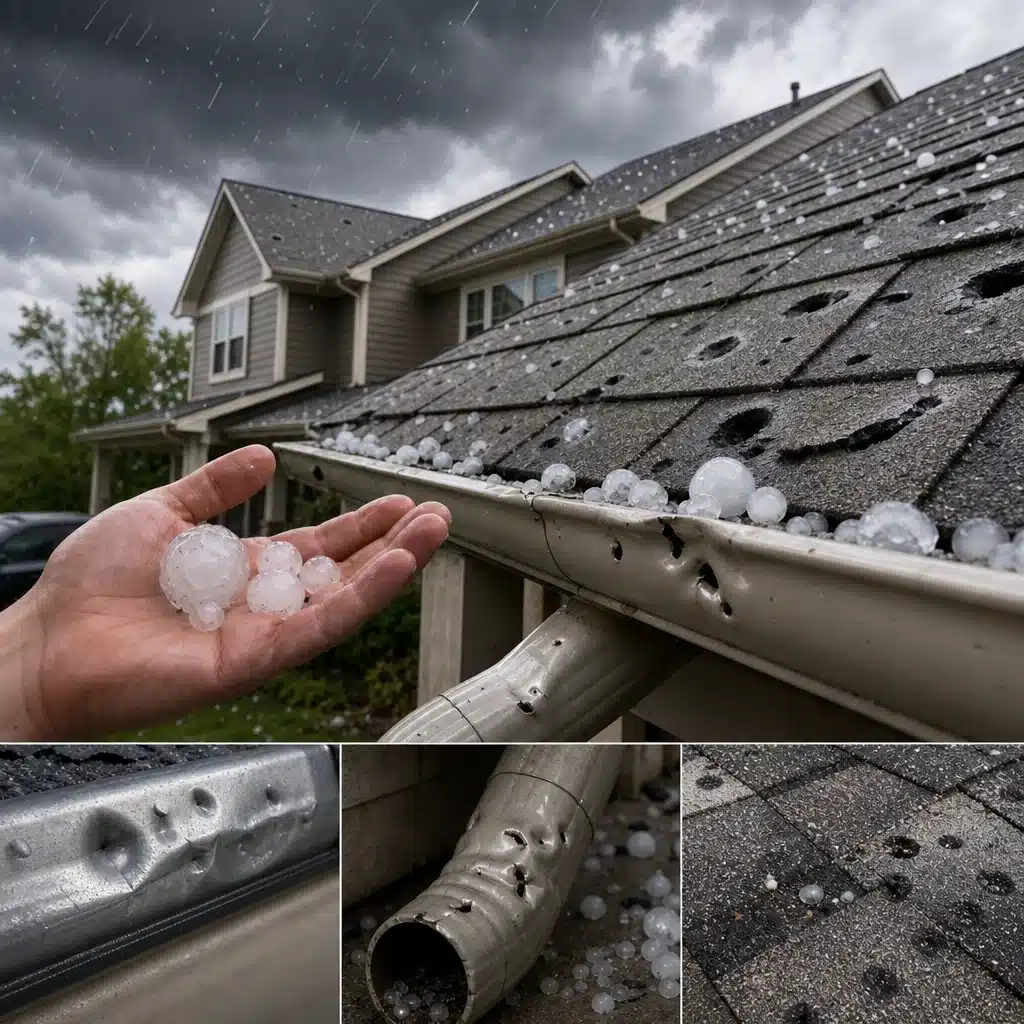
Chicago’s climate produces a specific breed of hailstorm: fast-moving supercells that drop stones anywhere from pea-sized to golf-ball-sized, often driven sideways by 40-plus mph winds. That combination is punishing for asphalt shingles, which lose granules on impact, and for softer accessories like vents, gutters, and aluminum flashing that dent or crack under pressure.
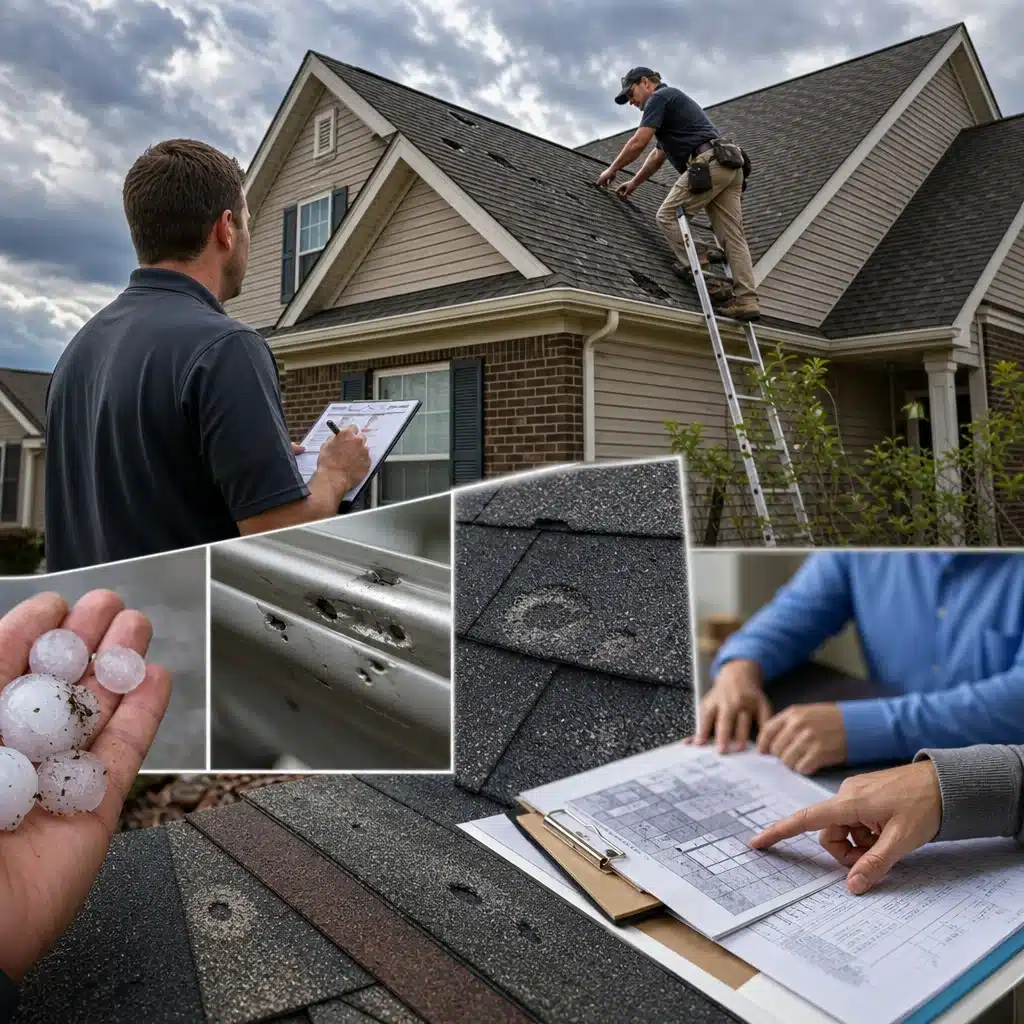
The damage is not always obvious from the driveway. A storm in Naperville or Arlington Heights might leave a roof looking intact while quietly stripping the protective granules that shield the asphalt from UV rays. Six to eighteen months later, homeowners see leaks, curling shingles, or interior staining, and the original storm date has long passed the insurer’s claim window.
Takeaway: If a significant hail event rolls through your zip code, schedule an inspection within 30 days even if the roof looks fine from the ground.
Warning Signs of Hail Damage Every Homeowner Should Check
You can perform a safe visual check from the yard before we arrive. Look for:
- Dented gutters, downspouts, or gutter covers. Aluminum shows impacts clearly and is a reliable indicator that shingles took hits too.
- Granules in downspout splash zones. Piles of black, sand-like grit at the base of downspouts signal asphalt wear.
- Dinged AC fins, grill covers, or mailbox tops. These softer metals bruise before shingles do.
- Cracked skylights or shattered vent hoods. Plastic components are often the first casualty.
- Interior water stains on ceilings near exterior walls or around chimneys.
Skip the ladder. Steep pitches, wet shingles, and hidden soft spots make DIY roof walks risky, and stepping on bruised shingles can worsen the damage.
Takeaway: Document what you see with dated phone photos. That timeline evidence supports both our assessment and any future insurance claim.
Our Professional Hail Damage Inspection Process
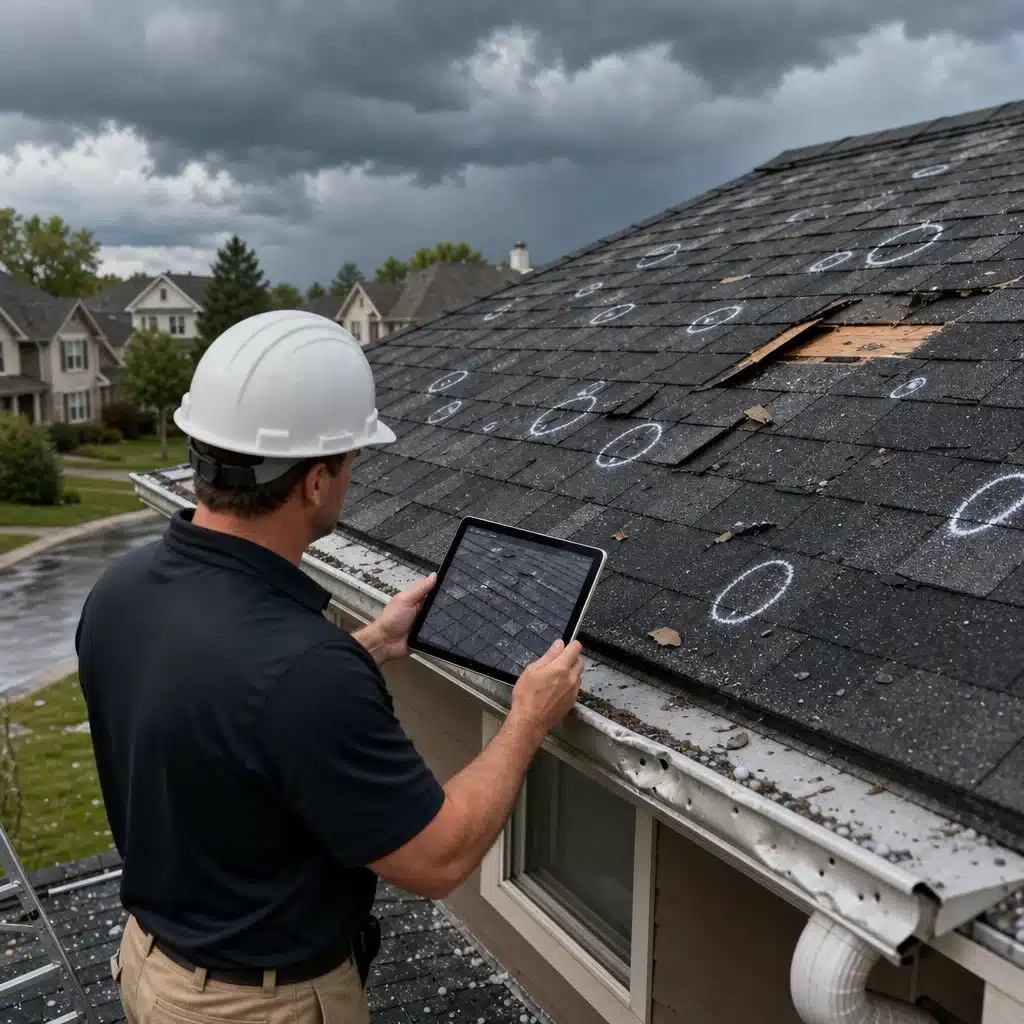
A proper roof hail damage assessment is more than a walk-around. Our inspection follows a consistent protocol so nothing gets missed and every finding is documentable.
- Ground survey and exterior walk. We photograph siding, windows, gutters, and outdoor units to establish the full storm impact footprint.
- On-roof grid inspection. We chalk test squares on each roof slope, count impacts, and measure bruise diameters. Insurers typically require a minimum number of hits per 10×10 square to approve replacement.
- Accessory and penetration check. Vents, pipe boots, ridge caps, and flashing are inspected individually since these often fail before the field shingles do.
- Attic evaluation. We look for moisture, daylight, and compressed insulation that indicate impact energy transferred through the deck.
- Written report with photo evidence. You receive a clear summary showing what we found, where, and our recommendation.
Takeaway: Ask for the inspection report in writing before signing anything. Reputable contractors will always provide one.
Repair Criteria: When a Targeted Fix Is the Right Call
Not every storm calls for a full tear-off. Hail damage roof repair is often the right recommendation when:
- The roof is less than 10 years old and shingles are still pliable.
- Impacts are isolated to one or two slopes, typically the west or south exposure facing the storm.
- Bruise counts fall below insurer thresholds for full replacement.
- Accessories like vents or flashing sustained damage but the field shingles are largely intact.
- Matching shingles are still available from the manufacturer in your color and profile.
In these cases, we perform targeted hail damage roof repair that restores integrity without the cost of a full replacement. A well-executed repair on a newer roof can extend service life another decade or more.
Takeaway: Repairs make sense when damage is localized and the underlying roof system still has meaningful life left.
Replacement Criteria: When a Full Roof Replacement Makes Sense
Deciding when to replace a hail damaged roof comes down to five practical factors:
- Widespread bruising across multiple slopes exceeding insurer test-square thresholds.
- Age of 15-plus years, when shingles are already brittle and near end of life.
- Prior storm damage layered on new damage, compounding wear.
- Discontinued shingle lines where color and profile matching is impossible, creating a patchwork appearance and potential warranty issues.
- Deck or structural damage revealed during inspection.
Full hail damage roof replacement is also worth considering when the repair estimate approaches 40 to 50 percent of a new roof’s cost. At that point, homeowners get better long-term value from a new system with a fresh manufacturer warranty.
Takeaway: If your roof is over 15 years old and took a direct hit, plan for replacement rather than incremental repairs.
Navigating Insurance Claims With Our Licensed Public Adjusters
Storm damage roofing claims are where many homeowners lose money, not because their damage isn’t real, but because the paperwork and negotiation favor the insurer. We hold licensed public insurance adjuster credentials, which means we can legally represent your interests during the claim process, not just the contractor side.
Here is how the flow typically works with us:
- We complete the inspection and produce documentation that matches Xactimate-style scoping.
- We help you file the insurance claim roof damage report with accurate storm dates and evidence.
- We meet the field adjuster on the roof to walk the damage together, ensuring nothing gets missed or minimized.
- We negotiate supplements for code upgrades, decking, and accessories the initial estimate often overlooks.
- Once approved, we schedule the work and coordinate payment directly with your carrier.
Learn more about how we handle insurance claims with public adjusters so you know what to expect at every step.
Takeaway: Never sign a final settlement before an independent adjuster or licensed contractor reviews it.
Premium Materials We Install for Long-Term Hail Resistance
Rebuilding a roof after hail is a chance to upgrade to materials engineered for Midwest weather. The systems we recommend most often:
- DaVinci synthetic slate and shake. Class 4 impact-rated, UV-stable, and visually indistinguishable from natural slate. Backed by a 50-year limited warranty and highly resistant to cracking under hail.
- Class 4 impact-resistant asphalt shingles from top manufacturers, which qualify many homeowners for annual insurance premium discounts.
- Synthetic underlayment and ice-and-water shield at eaves, valleys, and penetrations for redundant leak protection.
- Upgraded ventilation to extend shingle life and prevent ice damming during Chicago winters.
We also install matching siding and window systems when the same storm damaged multiple exterior surfaces, so the whole envelope gets restored in one coordinated project.
Takeaway: Ask about Class 4 shingles specifically. The upfront cost is modest and the insurance discount often pays it back.
Why Chicago Homeowners Trust Owen Enterprises After a Storm
Thirty-five-plus years working on suburban Chicago homes has taught us how these neighborhoods weather storms and how insurers here operate. That local track record shapes everything from our material recommendations to how we scope claims.
What homeowners tell us matters most:
- 24/7 emergency response when a tree limb punctures the deck at 2 a.m.
- Licensed public adjusters on staff, not a referral to a third party.
- Written estimates and warranties, no pressure tactics or door-knocker urgency.
- Full-service exterior scope, so roofing, siding, windows, and outdoor living projects run through one accountable team.
- Cleanup standards that leave your lawn and landscaping the way we found them.
Takeaway: Choose a contractor who lives in the market year-round, not a storm-chaser working out of a rented truck.
Next Steps: Scheduling Your Free Post-Storm Roof Evaluation
If a recent storm rolled through your suburb or you noticed granules, dents, or interior stains, get an inspection on the calendar before insurance deadlines start closing. Our free post-storm roof evaluations include the full grid inspection, written report, and a straightforward recommendation on repair versus replacement.
Here is what to do next:
- Gather evidence. Note the approximate storm date and take photos of any visible damage.
- Locate your policy. Have your homeowner’s insurance declarations page handy for the inspection.
- Book the visit. Call us or request an appointment through owenenterprises.com, and we will typically be on your roof within a few business days.
- Review the report together. We walk you through findings, options, and next steps with no obligation.
Whether your roof needs a targeted repair or a full replacement, we will give you the honest assessment and the documentation to back it up.
Frequently Asked Questions (FAQ)
How do we decide between hail damage repair and a full roof replacement?
We base the decision on the density, size, and location of the impacts across your roof. If damage is isolated to one slope or a small area and the shingles still have significant service life, a targeted repair is usually appropriate. When we find widespread bruising, granule loss across multiple slopes, or compromised underlayment, a full replacement is the more durable long-term solution.
Will our homeowners insurance cover hail damage to our roof in the Chicago suburbs?
Most Illinois homeowners policies cover sudden hail damage, though coverage details depend on your specific policy, deductible, and the age of your roof. Our licensed public insurance adjusters review your policy, document the damage with a detailed assessment, and represent your interests throughout the claim. This helps ensure the scope and payout accurately reflect the actual storm damage.
How soon after a hailstorm should we schedule an inspection?
We recommend scheduling an inspection within two weeks of a significant hailstorm. Early documentation strengthens your insurance claim and prevents small issues like fractured shingles or exposed mat from turning into leaks and interior damage. Our post-storm evaluations are free, and we can typically get out to your property within a few days of your call.