Table of Contents
- Why Winter Roof Replacement in Libertyville Is More Common Than You Think
- Common Winter Roofing Problems That Trigger Urgent Replacement
- How Cold Weather Affects the Roof Replacement Timeline
- Our Step-by-Step Winter Roof Replacement Process
- Typical Timeline: From Inspection to Final Cleanup
- How Our 24/7 Emergency Roofing Services Prevent Costly Delays
- Materials Built for Libertyville Winters: DaVinci Slate and Shake
- Working With Our Licensed Public Insurance Adjusters to Speed Up Claims
- Preparing Your Home for a Winter Roof Installation
- Why Libertyville Homeowners Trust Us With Winter Roof Replacements
- Schedule Your Winter Roof Assessment Today
- Frequently Asked Questions (FAQ)
Why Winter Roof Replacement in Libertyville Is More Common Than You Think
Most homeowners assume roof replacements only happen in warm weather, but Libertyville winters tell a different story. Freeze-thaw cycles, heavy lake-effect snow, and ice dams routinely expose weaknesses in aging roofs, and waiting until spring often means living with active leaks, saturated insulation, and rising energy bills for months.
Winter is also a smart time to schedule work. Contractor calendars open up after the fall rush, permitting moves faster, and manufacturers of premium materials typically have stock ready to ship. With over 35 years installing roofs across the Chicago suburbs, we’ve refined our cold weather roof installation process to keep projects on schedule from December through March.
Takeaway: If your roof is showing signs of failure now, don’t wait. A winter replacement can prevent structural damage and lock in current pricing before spring demand spikes.
Common Winter Roofing Problems That Trigger Urgent Replacement
Cold weather stresses every component of your roof system. The problems we see most often in Libertyville include:
- Ice dams that force water under shingles and into ceilings, walls, and insulation.
- Cracked or brittle shingles from repeated freeze-thaw cycles, especially on older asphalt roofs.
- Flashing failures around chimneys, skylights, and vents where thermal movement pulls seals apart.
- Collapsed or sagging sections from heavy wet snow loads exceeding 20 pounds per square foot.
- Wind damage from Lake Michigan gusts that lift or tear off shingles overnight.
Any one of these can escalate quickly. A small ice dam leak in January can rot decking by February, turning a straightforward reroof into a much larger structural project.
Takeaway: If you see water stains, hear dripping in the attic, or notice missing shingles in the yard, schedule an inspection within 48 hours.
How Cold Weather Affects the Roof Replacement Timeline
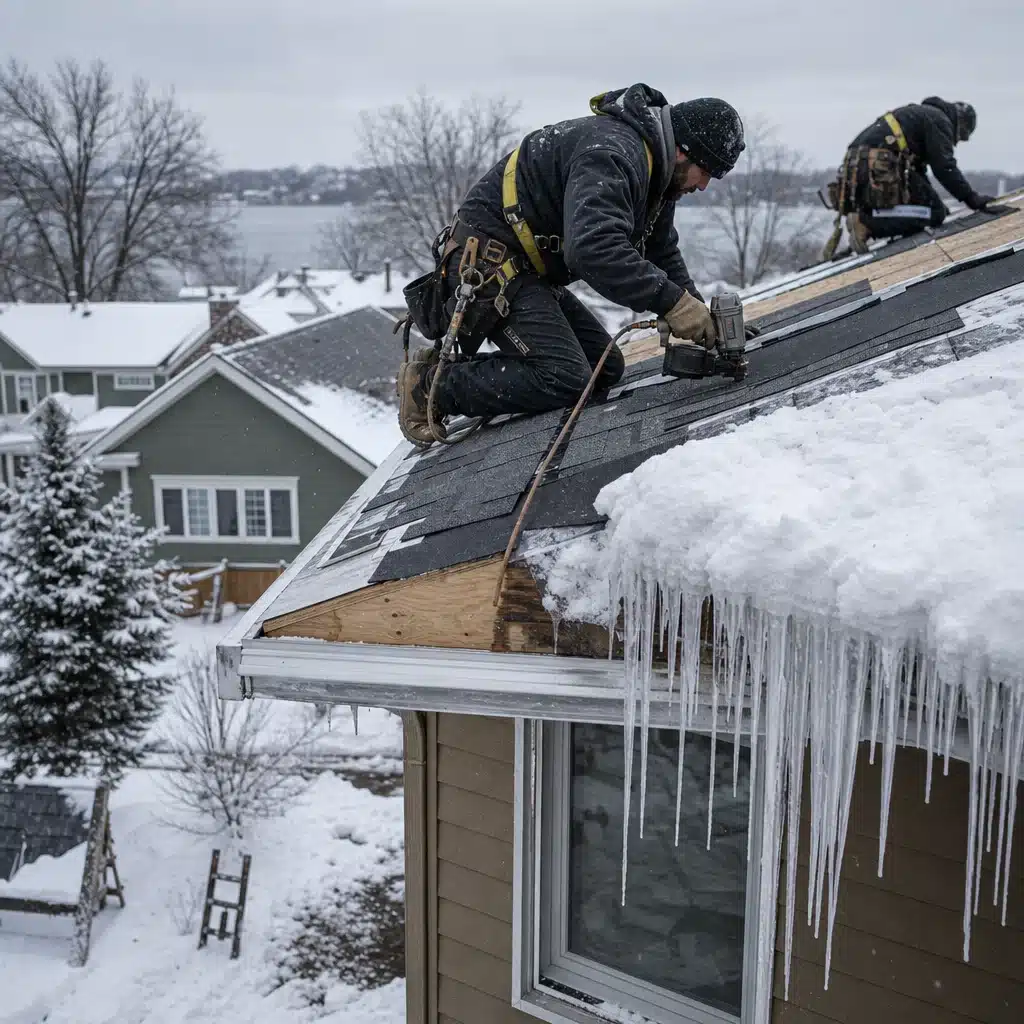
Cold weather doesn’t stop a roof replacement, but it does change how we plan and execute the work. Asphalt shingles need careful hand-sealing when temperatures drop below 40°F because the adhesive strips won’t self-activate until sunlight warms them. Synthetic underlayments perform better than felt in freezing conditions, and crews work in shorter, more focused shifts to maintain safety on icy surfaces.
Snow removal adds a step. Before tear-off begins, we clear the roof deck and stage tarps to protect landscaping and gutters. Material deliveries are timed around forecasts, and we monitor wind chill to keep crews safe and productivity steady.
The result is a winter roofing timeline that runs slightly longer than summer projects, but rarely by more than a day or two on standard installations.
Our Step-by-Step Winter Roof Replacement Process
We follow a consistent process refined over three decades of Chicago suburbs roofing schedule management:
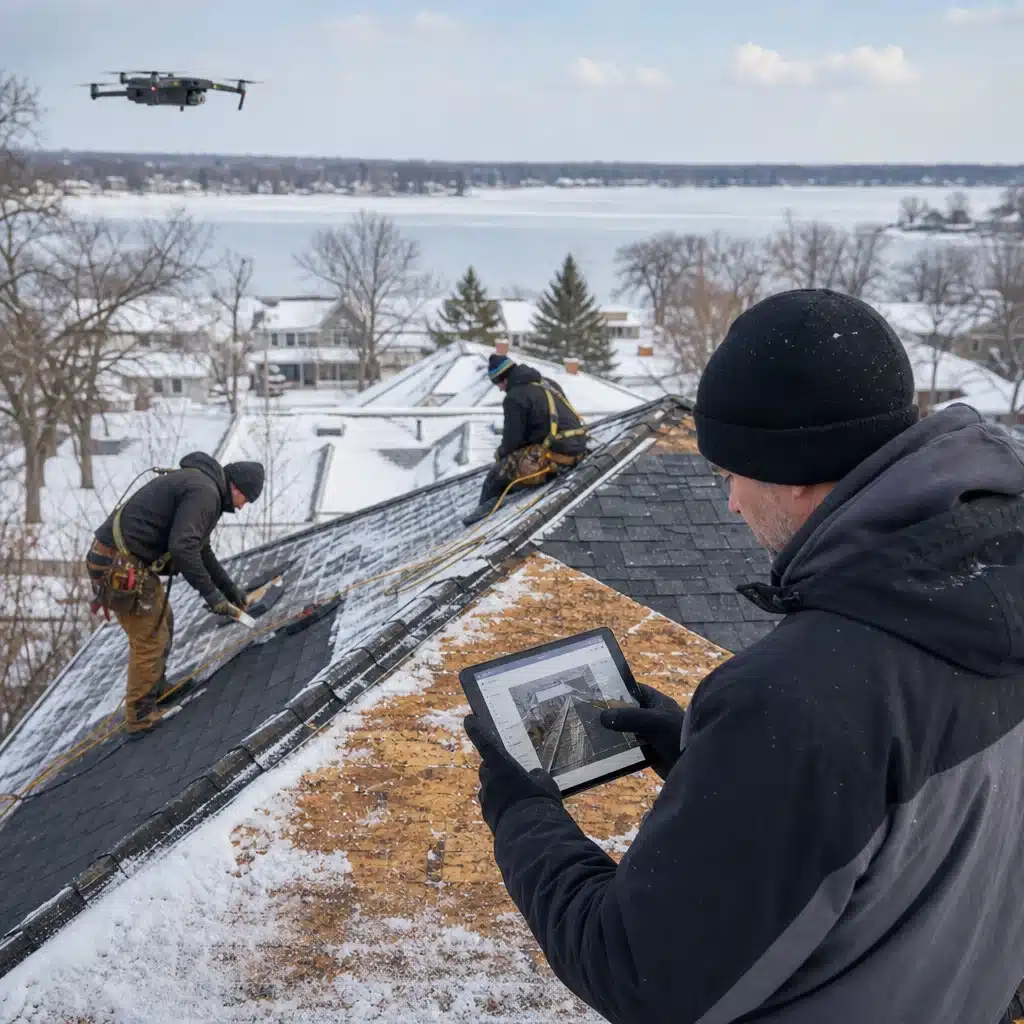
- On-site inspection and drone assessment to document existing conditions.
- Detailed proposal and material selection with samples reviewed in your home.
- Permit filing with the Village of Libertyville and HOA approval when required.
- Material staging and weather window scheduling based on 10-day forecasts.
- Tear-off and deck inspection to catch rot, delamination, or fastener issues.
- Ice and water shield installation extending at least six feet up from eaves for ice dam protection.
- Underlayment, flashing, and shingle or slate installation with hand-sealing where needed.
- Ventilation upgrades to prevent future ice dam formation.
- Final walkthrough and magnetic sweep for nails and debris.
Every step includes photo documentation, which is useful for warranties and insurance claims.
Typical Timeline: From Inspection to Final Cleanup
Here is what most Libertyville homeowners can expect from first call to final cleanup on a winter project:
- Day 1: Initial inspection and estimate delivered.
- Days 2 to 5: Material selection, contract signing, and permit application.
- Days 7 to 14: Permit approval and material delivery scheduling.
- Installation days: Standard asphalt roofs take 1 to 3 days. DaVinci slate or shake typically takes 4 to 7 days depending on complexity, roof pitch, and weather.
- Final day: Cleanup, magnetic nail sweep, final inspection, and warranty documentation.
Total elapsed time is usually 2 to 4 weeks from first contact to project completion. Emergency roof replacement in Libertyville can compress this significantly when active leaks demand immediate action.
Takeaway: Ask your contractor for a written timeline with weather contingencies before signing.
How Our 24/7 Emergency Roofing Services Prevent Costly Delays
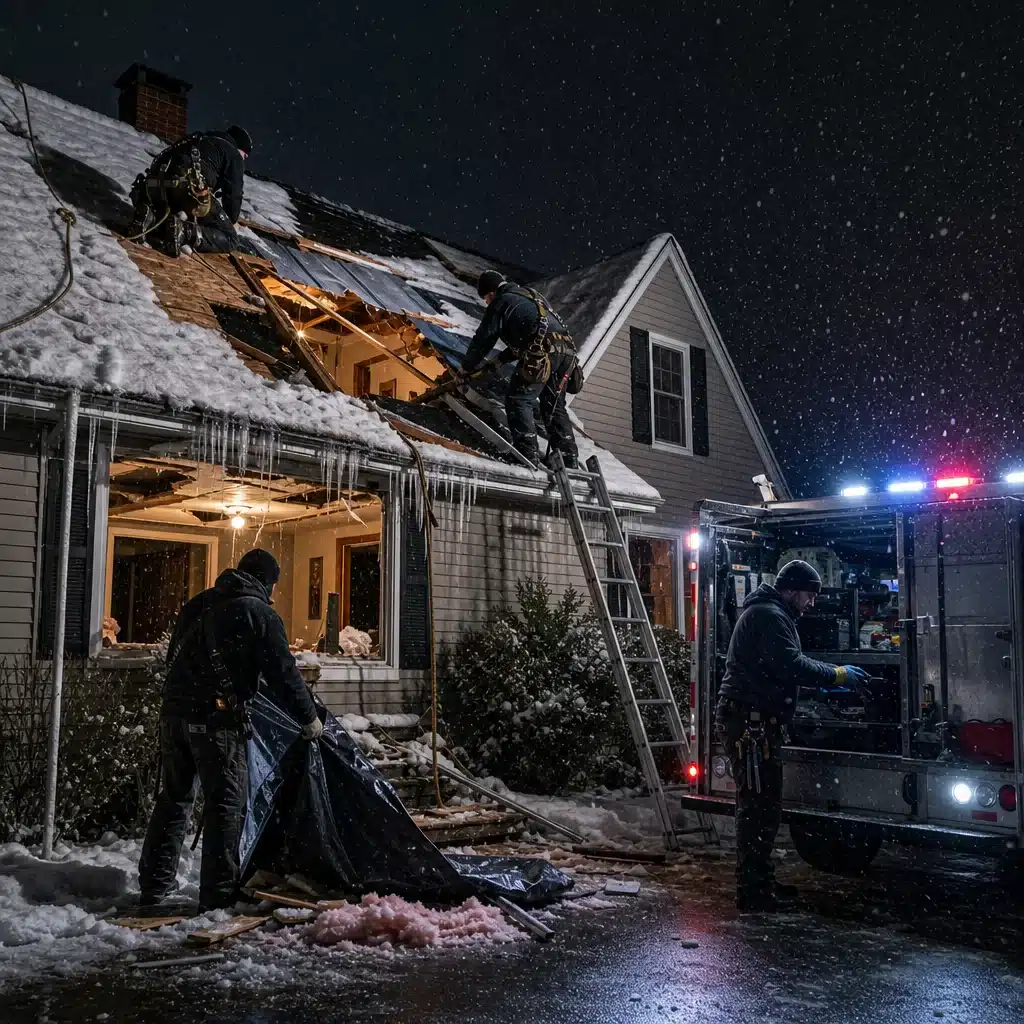
When a tree limb crashes through the roof at 2 a.m. or an ice dam breaks loose and floods a bedroom, waiting until business hours isn’t an option. Our emergency roof services dispatch crews around the clock to tarp, dry-in, and stabilize damaged roofs before secondary damage compounds.
Fast response matters financially. Every hour water sits in insulation increases the risk of mold remediation, drywall replacement, and hardwood floor damage. A same-night tarp installation often saves homeowners tens of thousands in interior repairs and keeps insurance claims focused on the roof itself rather than a cascade of related losses.
Materials Built for Libertyville Winters: DaVinci Slate and Shake
Not every roofing material handles Chicago suburb winters well. We specialize in DaVinci composite slate and shake because it is engineered specifically for extreme climates. Key advantages include:
- Class 4 impact resistance against hail and ice.
- Class A fire rating for the highest safety tier.
- 50-year limited warranty backed by the manufacturer.
- Freeze-thaw stability that natural slate can’t always match.
- Authentic appearance without the weight that requires structural reinforcement.
For homes in established Libertyville neighborhoods where architectural character matters, DaVinci delivers the look of hand-split cedar or quarried slate without the maintenance headaches. Installed correctly, it typically outlasts the home’s second owner.
Working With Our Licensed Public Insurance Adjusters to Speed Up Claims
Storm damage claims are where many replacements stall. Insurance carriers move slowly, adjusters miss damage during quick inspections, and homeowners end up negotiating alone. Our in-house licensed public adjusters represent you throughout the claims process, not the insurance company.
That means we document damage thoroughly, prepare estimates using the same software carriers use, attend adjuster meetings on your behalf, and negotiate supplements when scopes are incomplete. Homeowners we represent typically see faster approvals and higher settlements because the paperwork is airtight from day one.
Takeaway: Before signing anything with your insurance carrier, get a second opinion from a licensed public adjuster.
Preparing Your Home for a Winter Roof Installation
A few simple steps make the installation smoother:
- Clear driveway access for dumpster and material delivery.
- Move vehicles out of the garage or driveway on tear-off days.
- Remove wall decor in upper floors since vibration can shift frames.
- Cover attic belongings with plastic sheeting to protect from dust and debris.
- Confine pets to a quiet part of the home away from the work zone.
- Communicate with neighbors about the schedule, especially for shared driveways.
We handle site protection, landscape covering, and cleanup, but these small preparations help the project move at full speed.
Why Libertyville Homeowners Trust Us With Winter Roof Replacements
Three and a half decades of local work has taught us what Libertyville homes need. We understand the older construction in neighborhoods like Green Oaks and Copeland Manor, the HOA requirements in newer developments, and the specific ways lake-effect weather stresses roofs on north-facing exposures.
Our crews are employees, not day-labor subcontractors, which shows in workmanship and accountability. Every project includes photo documentation, manufacturer-certified installation, and a workmanship warranty backed by a company that has been answering the phone at the same address for over 35 years.
We also handle siding, windows, and outdoor living construction, so when a roof project reveals related exterior issues, we can address everything under one contract with one point of contact.
Schedule Your Winter Roof Assessment Today
If your roof is showing wear, leaking, or was damaged in a recent storm, the smart move is to act before conditions worsen. A winter roof assessment takes about an hour, includes a detailed report with photos, and comes with no obligation.
Call us to schedule an inspection, or request an appointment through our website. We will walk you through what we find, explain your options in plain language, and if replacement is the right call, give you a realistic winter roofing timeline so you know exactly what to expect. Libertyville winters are hard on roofs, but with the right team and the right materials, your next roof can be your last one.
Frequently Asked Questions (FAQ)
Can a roof really be replaced during a Libertyville winter?
Yes, we replace roofs throughout the winter months as long as conditions allow safe installation. We adjust our sealing methods and use materials rated for cold-weather application, such as hand-sealing shingles when temperatures drop below 40°F. Most winter replacements take one to three days once we mobilize on site.
How quickly can we respond to an emergency winter roof failure?
Our 24/7 emergency line is staffed year-round, and we typically dispatch a crew for tarping or temporary weatherproofing within hours of your call. From there, we schedule a full inspection and coordinate replacement based on weather windows, material availability, and the severity of the damage.
Will working with your public insurance adjusters shorten the claim process?
In most cases, yes. Our licensed public insurance adjusters document damage, prepare the claim, and negotiate directly with your carrier, which reduces back-and-forth and helps us move to installation sooner. This is especially valuable during winter when delays can lead to additional interior damage.